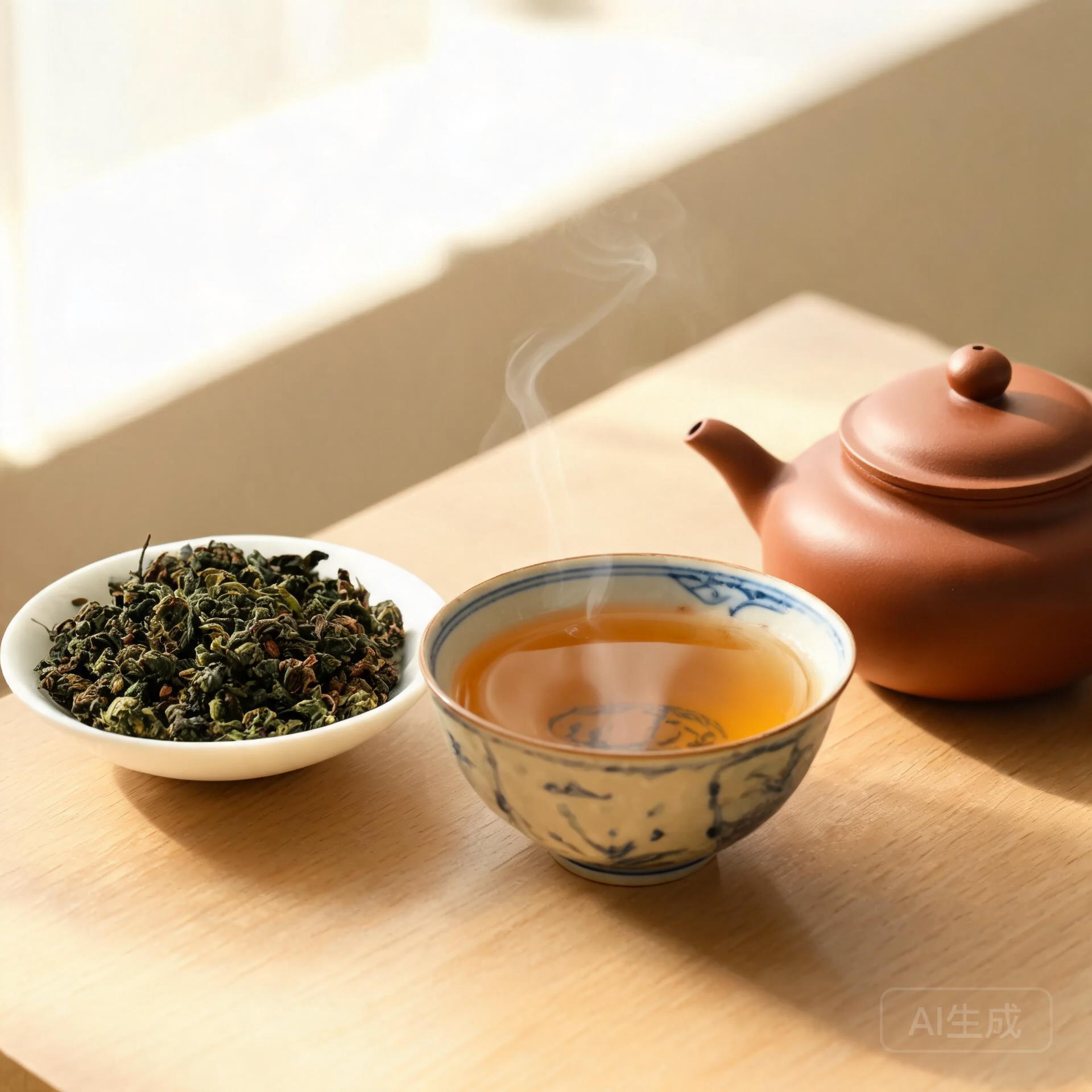
The common tricks
The most common trick with oolong is roasting, because a roast covers almost every fault a leaf can have.
A heavy roast at 6 grams per 150ml brewed five times will tell you what is under it, and a poor leaf is finished by the third.
A tired light oolong, a poor base leaf and a badly stored tea can all be roasted into something saleable.
Origin claims come next. Wuyi rock tea is sold by the site, and there is far more of it than there are sites.
Tieguanyin is the loosest name in the category, with traditional roasted and modern green versions sold as the same tea.
The third is the old tree claim, which is unverifiable and attached to a great deal of ordinary tea.
Competition certificates are printed by the thousand, and most refer to competitions nobody can check.
Milk oolong is the fourth, and it splits into a naturally creamy cultivar and a leaf sprayed with flavouring.
The fifth is substitution: you taste one tea in the shop and are sold a cheaper one from a different tin.
None of these are exotic. They work because the buyer has no reference point for what the tea should be.
That is also the good news, because a reference point is something you can actually get.
Why they work
Fraud in tea works on information asymmetry rather than on chemistry, and oolong has plenty of it.
Most buyers cannot taste the difference between a roasted poor leaf and a roasted good one.
Roasting genuinely changes the tea, so it is not simply a lie: it is a real process used to hide something.
Origin claims are hard to check because the differences between sites are subtle and the names are long.
Old tree claims are impossible to check, since nobody measures the trees and there is no register.
Certificates look official, and very few buyers ask which competition and which year.
The flavouring trick works because most people have never smelled a real creamy oolong or a real seven-round jasmine.
Substitution works because the transaction is fast and the buyer is standing in a shop being polite.
All of them are helped by the fact that oolong costs enough to make a lie worth telling.
The category rewards knowledge more than money, which is unusual in food, and the knowledge is not hard to acquire: one verified tea, tasted properly and remembered, beats any certificate a seller can print.
Defence
The first defence is a reference. Buy one oolong you have verified and taste everything else against it.
The second is to ask specific questions and wait for specific answers: which roast, which year, which area.
A seller who knows answers in a sentence. One who is guessing talks for a minute.
Buy samples rather than whole tins, and buy from two sellers at the same stated grade.
Treat a heavy roast with suspicion until you have tasted what sits under it.
Brew it five times. A poor leaf roasted heavily is finished by the third steep, whatever it smelled like dry.
Ignore certificates unless the seller can name the competition and the year.
For milk oolong, ask whether it is the Jin Xuan cultivar or a flavoured tea, and see how they answer.
Compare prices per gram across sellers, because a genuine origin gap is large and consistent.
Keep notes. A year of them makes you very hard to fool, and that is the whole point.
Twenty five grams is enough to judge any oolong, since at 6 grams a session that is four pots.
When in doubt
When you cannot verify a claim, price the tea as though the claim were false, because it often is.
A Wuyi tea from an unknown site is worth a generic Wuyi price rather than a core site price.
A Tieguanyin of unknown roast is worth the lower of the two prices.
A certificate you cannot check is worth nothing, so do not add anything for it.
Ask the seller what they drink themselves, which is a surprisingly effective question.
Buy less. Twenty five grams of an uncertain tea is a lesson, and 250 grams is a mistake.
If a price looks wrong for the claim, the claim is wrong rather than the price.
Walk away from anything sold on a story rather than on a name, a year and a roast level.
There is always another oolong, and the category is large enough that you never need to gamble.
Doubt is cheap to act on and expensive to ignore, and with oolong it is usually right.
A light oolong has about 18 months, and a heavy roast has ten years or more, so the roast decides the price.