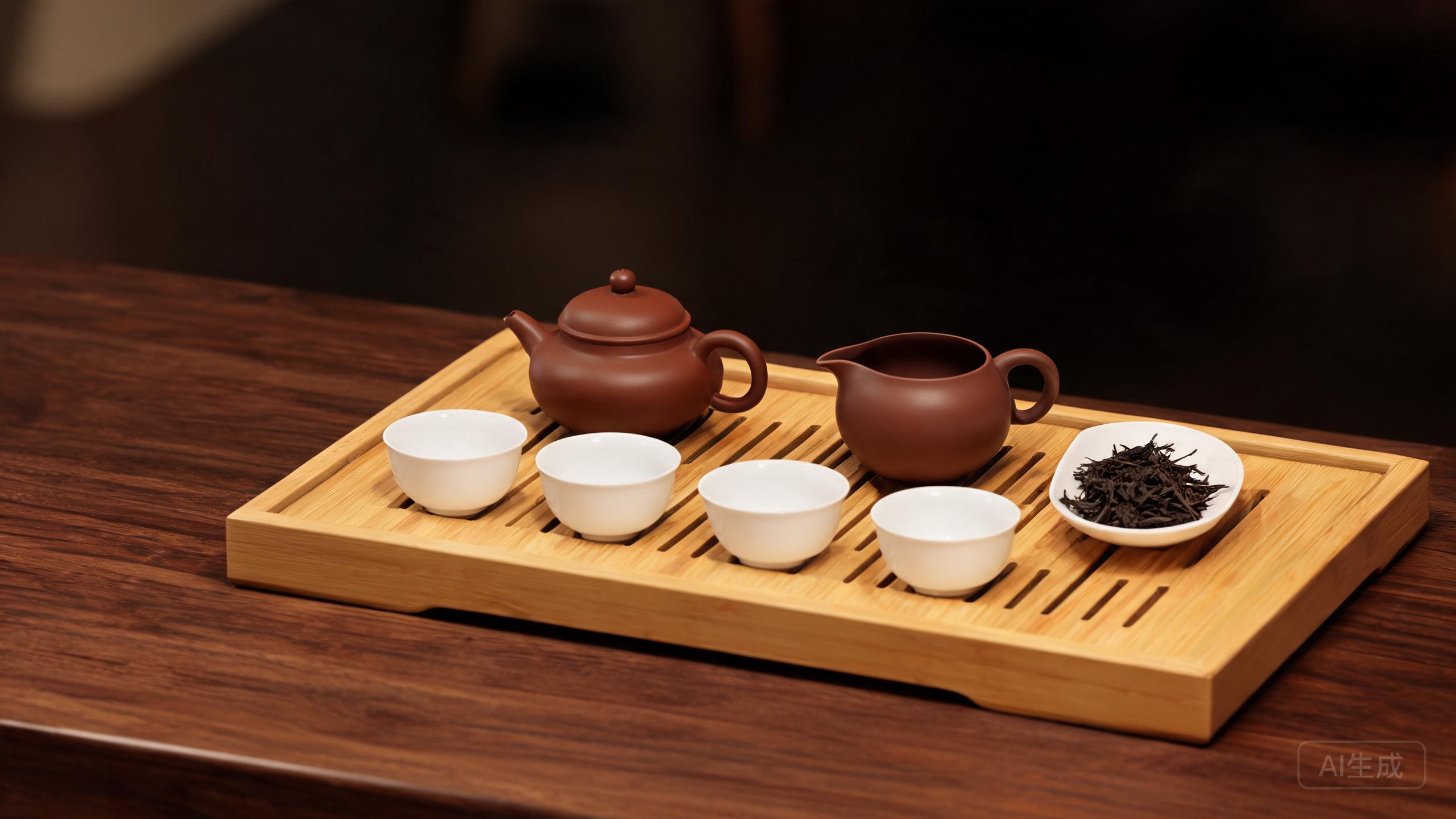
Three ways to brew Oolong tea
Oolong is the category where the three methods diverge most, because it is the category built for repeated steeps.
Gongfu is the native method and the one the leaf was made for. Western works but wastes most of what you paid for. Grandpa style is possible but unusual.
The reason is the dose. Oolong wants about 1 gram per 14 millilitres, and a Western pot at a teaspoon per cup is roughly a tenth of that.
A rolled oolong also needs several steeps to open. One long steep gets you the outside of the pellet and not much else.
That said, all three have their place, and the last section says which.
Roast level matters here too. A charcoal roasted oolong holds up to all three methods, and a very light one really only suits gongfu.
Gongfu: small pot, high leaf, short pours
Seven grams in a 100 millilitre gaiwan, boiling water, 20 seconds for the first steep, then add five seconds per round.
Discard the first steep of a ball rolled oolong. It is spent opening the leaf, and drinking it is a fair trade for the eight that follow.
Use porcelain for light oolongs and clay for roasted ones. The material matters more here than in any other category.
Watch the leaf. By the fourth steep the pellets should be fully open, and if they are not, the water was too cool.
A good rolled oolong will run eight to ten steeps this way. The middle ones are usually the best, which is the whole argument for the method.
Smell the empty gaiwan lid between steeps. That is where the aroma collects, and at that moment it tells you more than the liquor does.
Western: a normal teapot, longer steep
Five grams in 300 millilitres, boiling water, three minutes, then remove the leaf. That is the Western version and it is drinkable.
It is also the version that makes people think oolong is unremarkable, because three minutes cannot extract a leaf that needs eight steeps.
If you must use it, raise the dose to 8 grams and keep to three minutes. That is closer to the right concentration.
Broken leaf oolong, and most bagged oolong, suits this method better, because the smaller pieces give up more in the time available.
Use a pot with a basket you can lift out. Oolong left in a pot for ten minutes is genuinely unpleasant.
Warm the pot first. A cold ceramic pot drops boiling water by five to ten degrees, which is enough to matter for a rolled leaf.
Grandpa: leaf in the cup
Grandpa style works for oolong, with one adjustment. Use 3 grams in 300 millilitres and boiling water rather than 80.
The lower ratio keeps it from turning harsh, and boiling water is needed to open the rolled leaf at all.
It suits the greener, less roasted oolongs. A heavy charcoal roast at a low ratio tastes thin and slightly burnt.
Expect the flavour to come and go across the day. The first glass is light, the second is the best one, and it fades after that.
It is a working method rather than a tasting one, and that is the honest way to describe it.
Use a glass rather than a mug, because you can see whether the pellets have opened. Closed pellets after ten minutes means the water was never hot enough.
Which to choose
For most oolong, gongfu is the right answer. The leaf was made for it and the price reflects it.
Use the Western method for broken grades, bagged oolong, and mornings when you cannot watch a timer every 20 seconds.
Use grandpa style for a light oolong at a desk, with boiling water and a low dose.
Whatever you choose, use boiling water. Oolong is the one category where cooler water is almost always a mistake.
And weigh the leaf at least once. The difference between 3 grams and 7 grams is the difference between a thin cup and a real one.
If you drink oolong several times a week, a 100 millilitre gaiwan and a small scale are the only two things worth buying.
One last practical note: keep a thermos of boiling water beside you. Refilling a gaiwan eight times from a kettle that reheats each round is the tedious part.