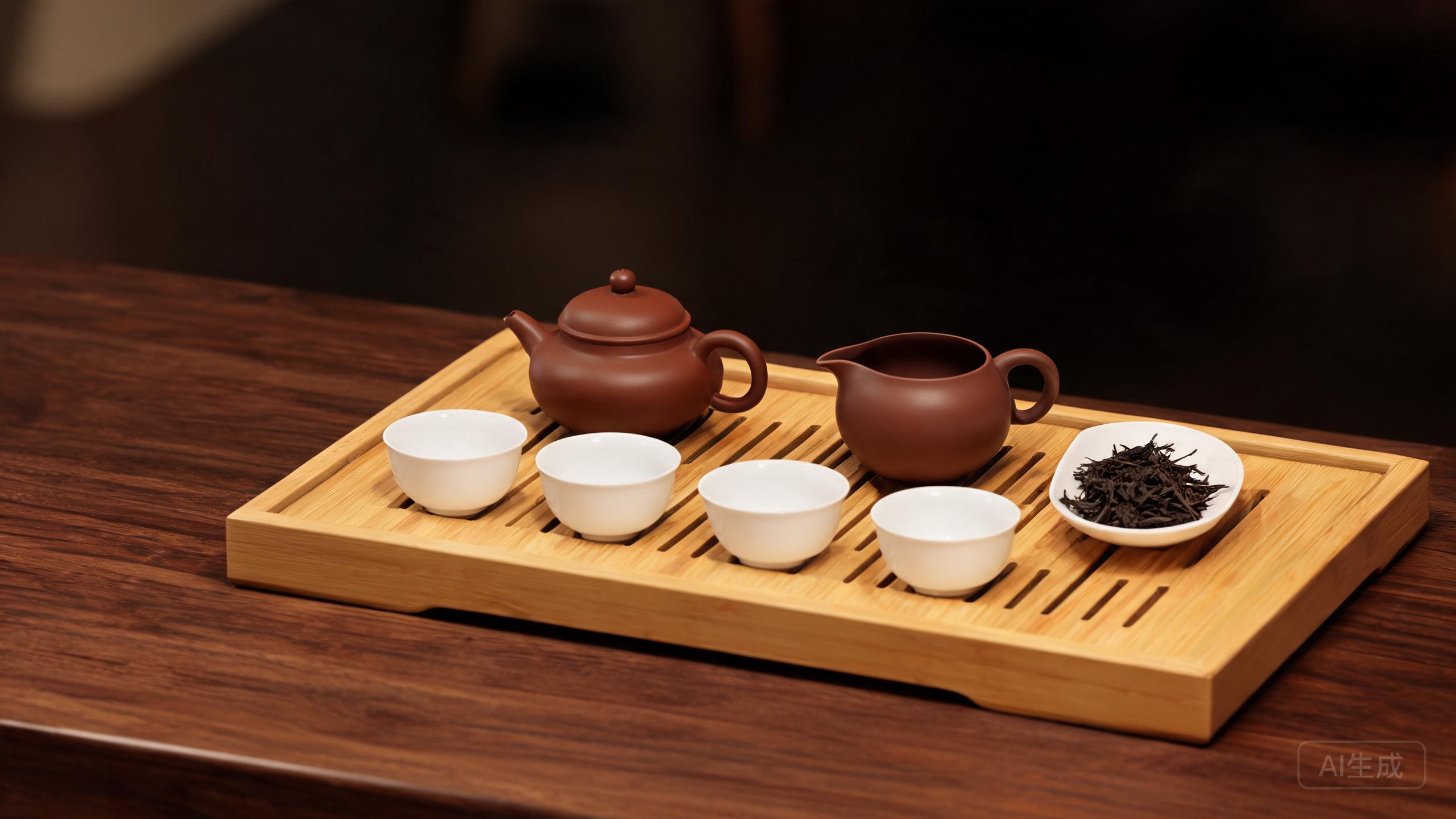
Why ware changes the cup
Oolong spans the widest range of any category, from a lightly oxidised style at around 15 percent to a heavily roasted one near 70. Ware choice has to track that range rather than the name on the tin.
Heat is the main lever. Oolong is brewed at or near boiling, and it benefits from a vessel that holds that temperature across many short steeps.
The second lever is floor space. Rolled oolong unfurls to several times its dry volume, so a squat wide vessel does better than a tall narrow one.
The third is aroma management. Roasted oolongs build up a seasoning inside unglazed clay over years, which is either the whole appeal or a defect depending on what you want from the cup.
Volume matters as much as material. A 100 millilitre gaiwan and a 100 millilitre clay pot behave differently, but either one beats a 400 millilitre pot of the same clay, because oolong wants roughly 1 gram per 13 millilitres.
The roast level also sets the water temperature, and the two choices interact. A light oolong at 90 degrees in porcelain is a different drink from the same leaf at 100 in clay.
Best ware for Oolong tea
A porcelain gaiwan of 100 to 120 millilitres is the universal choice. Seven to eight grams, boiling water, first steep 20 seconds, then add five seconds each round.
Yixing or other unglazed clay suits roasted and heavily oxidised oolong. The clay smooths the roast edge and holds heat well. Keep one pot to one style.
Thin porcelain is better for the green style oolongs. They sit close to green tea in character, and a clay pot will swallow their floral top note.
A small ceramic pot with a wide body works well for ball rolled oolong, which needs floor space more than it needs depth.
If you drink mostly one style, buy one dedicated vessel. Drink across the range and one gaiwan plus one clay pot covers everything.
A heavier walled porcelain pot around 150 millilitres is a good middle option for the medium roast oolongs most people actually drink. It holds heat better than a gaiwan without the seasoning a clay pot brings.
A porcelain tasting set of a gaiwan, a pitcher and two small cups costs very little and removes most of the guesswork. It is the fastest way to learn what a leaf does across steeps.
What to avoid
Avoid brewing oolong in a large teapot with one long steep. It works, but you lose the thing oolong does best, which is changing across eight or ten steeps.
Avoid a vessel too small for the dose. Seven grams of rolled oolong expands a great deal, and a cramped pot gives you broken leaf and bitter liquor.
Avoid a clay pot already seasoned with a different oolong. The seasoning is real, and it will fight the tea you are brewing now.
Avoid glass for roasted oolong. It sheds heat too quickly across a long session, and the last steeps will be noticeably weaker than the first.
Avoid a gaiwan too hot to hold. A thick rim helps, and a small one is easier to control than a large one filled to the brim with boiling water.
Avoid buying a large clay pot as a first purchase. You will season it before you know what you like, and a badly matched seasoning is difficult to undo.
The one rule
Match the ware to the roast level, not to the category. Light oolongs want porcelain, dark roasted ones want clay, and that is the only distinction that matters.
When a light oolong tastes flat, you probably used a clay pot that absorbed the aroma. Switch to porcelain and see whether the fragrance comes back.
When a roasted oolong tastes harsh, the clay pot is the fix rather than the cause, provided it is dedicated. Otherwise lower the water to 90 degrees.
Oolong rewards ware more than any other category, because it is the category where you drink the same leaf ten times in a row.
One test: brew 7 grams in porcelain and the same 7 grams in a dedicated clay pot, side by side. Most people find the clay version rounder but less fragrant, which tells you which you prefer.