- Why tea was pressed at all
- The four shapes and what they mean
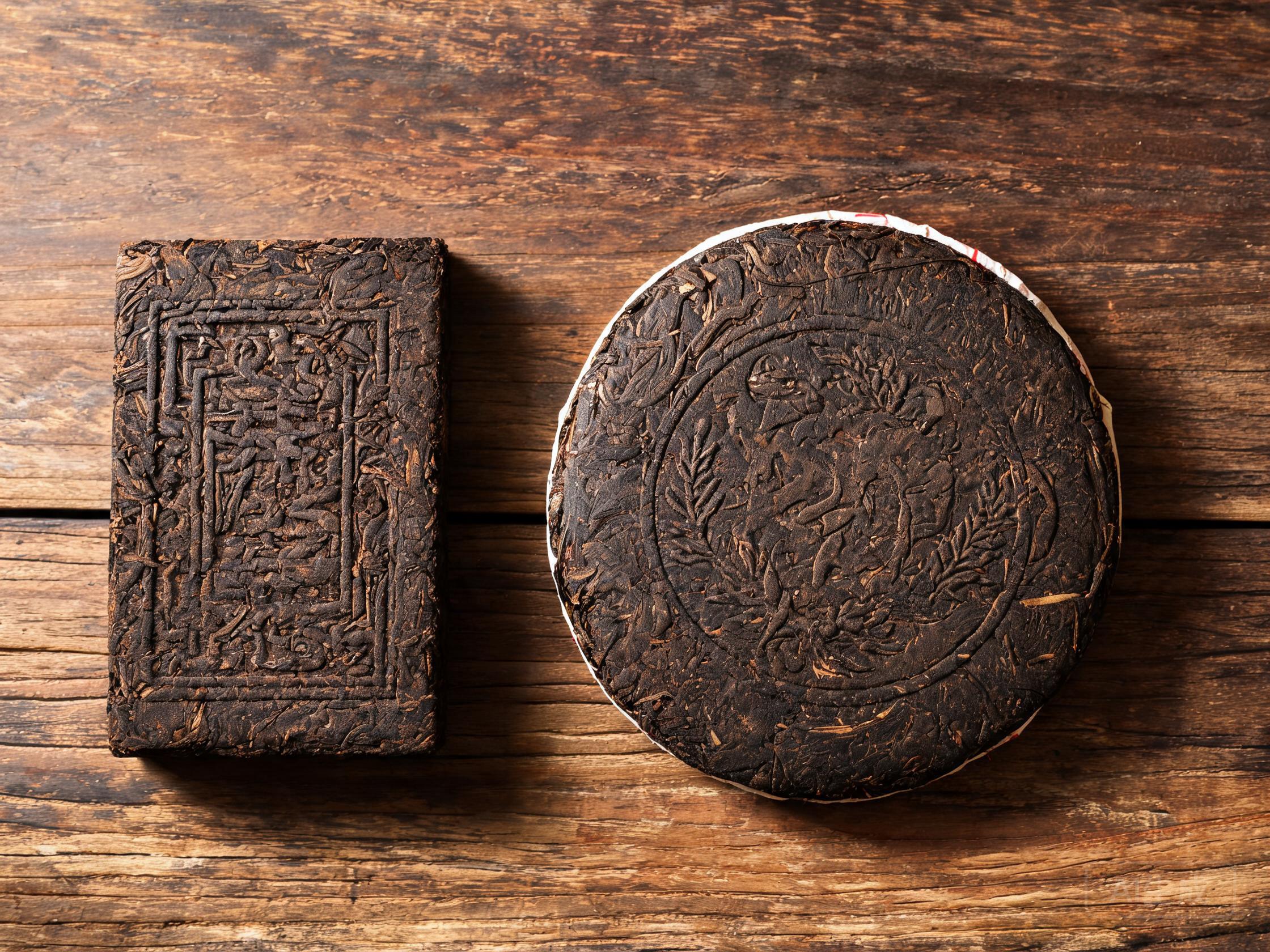
- Bingcha — the round cake
- Zhuancha — the brick
- Tuocha — the bowl
- Fangcha and other shapes
- How a cake is actually made
- Does a compressed tea taste different from loose leaf?
- How to break and brew a compressed tea
- What to look for when buying
- Frequently asked questions
- Frequently asked questions
- Is compressed tea the same as pu-erh?
- Does pressing make tea stronger?
- How long does a tea cake last?
- Can I break a cake with a knife?
- Why is a pu-erh cake 357 grams?
Compressed tea is tea leaf that has been steamed to make it pliable, then pressed into a mould and dried so it holds a fixed shape. The most common shapes are the round cake (bingcha), the flat brick (zhuancha), the bowl-shaped tuo (tuocha) and the square tile. Pu-erh is the best-known compressed tea outside China, but Fujian white tea cakes, Hubei green bricks and Anhua dark tea bricks are also pressed. Pressing does not add flavour by itself. What it changes is how the leaf ages: a dense cake holds moisture and oxygen exchange to a slower, steadier rate than loose leaf, which is why older teas were pressed in the first place and why aged cakes remain the reference format for collectors.
Why tea was pressed at all
The usual explanation is transport. Loose tea is mostly air, and a mule load of loose leaf carries a fraction of the tea that a mule load of bricks does. In the Tang and Song dynasties, tea pressed into cakes moved along the trade routes into Tibet, Mongolia and Central Asia, and in some periods pressed tea functioned as a form of currency in those markets. That history is documented well enough that “tea money” is not a metaphor.
Transport does not explain why pressing continues today, when tea is shipped in containers. The second reason is ageing. A compressed cake is a slow-reacting environment. Air reaches the centre of a 357-gram cake over months rather than hours, and moisture moves through the mass gradually. For post-fermented teas such as pu-erh, this slower exchange is what producers want, because rapid oxidation produces flat, sour tea rather than the deep, woody profile that aged pu-erh is valued for.
A third reason is simply that some shapes are practical to trade. A standard cake is a known weight, easy to stack, easy to count and easy to inspect. Before packaging was branded, a uniform shape was the quality control.
The four shapes and what they mean
Shape is a useful signal, though not a guarantee of quality. In practice the format tells you something about the tea’s origin and intended use.
Bingcha — the round cake
The round cake is the standard pu-erh format. The familiar weight is 357 grams, a figure usually traced to a historical packaging convention rather than to any technical requirement, and smaller cakes of 100, 200 and 250 grams are common. Cakes are pressed in a cloth bag over a stone or metal mould, which leaves the dimple on the reverse face and the cloth texture on the surface. A cake is the easiest format to store and to inspect: you can see the leaf grade across the surface, and you can break off a portion without disturbing the rest.
Zhuancha — the brick
Bricks are rectangular and denser than cakes. The classic examples are the Hubei green brick (qingzhuan) and the Hunan dark brick (heizhuan), both traditionally sold to pastoral markets where the tea was boiled with milk or butter. Bricks are pressed harder than cakes, which makes them slower to break apart and, for ageing purposes, slower to change. If you buy an old brick, expect to need a tea pick and some patience.
Tuocha — the bowl
Tuo is a bowl or nest shape, traditionally pressed with a hollow in the centre so the pieces could be stacked and shipped. The name is often said to derive from the shape resembling a bowl, though the etymology is debated. Tuocha is commonly sold in small units of 100 grams or less, which makes it the most practical format if you want to try a compressed tea without committing to a full cake.
Fangcha and other shapes
Square tiles, coins, mushrooms and small birds have all been pressed at various times. Some are novelty formats, but a few have genuine regional standing, such as the mushroom-shaped tea made for the Tibetan trade. As a buyer, treat unusual shapes as interesting rather than as evidence of quality.
How a cake is actually made
The process is short and the variables are few, which is why small differences in each step show up clearly in the cup.
- Weighing. Leaf is weighed to the target cake weight, usually with some allowance for moisture loss.
- Steaming. A short burst of steam softens the leaf so it binds. Over-steaming produces a dull, stewed note that never goes away.
- Shaping. The steamed leaf goes into a cloth bag inside a mould and is pressed, either by a stone press, a lever press or a hydraulic press. Hand-stone pressing is slower and leaves a looser, more uneven cake.
- Drying. The cake is dried slowly, often in a humid room, then wrapped. Drying too fast can crack the cake and trap moisture inside.
For ripe (shou) pu-erh, the leaf is pile-fermented before pressing. That fermentation is a separate controlled process that takes weeks, and it happens before the leaf ever reaches the mould. The pressing step itself is the same.
Does a compressed tea taste different from loose leaf?
In a blind comparison of the same leaf, pressed and loose, the pressed version usually brews slightly slower and tastes a little rounder for the first few years. The difference comes from density rather than from pressing as such. A tight cake releases its compounds more gradually, and the first infusions can seem thin compared with loose leaf of the same material.
Over years, the gap widens, and this is the real argument for pressing. Loose pu-erh stored for a decade tends to taste flatter than a cake from the same production, because it has had more air contact and has lost more aromatic compounds. That is an observation supported by the trade’s accumulated practice rather than by controlled trials, and it should be treated as a strong tendency rather than a law.
How to break and brew a compressed tea
You do not need specialist equipment, but you do need a proper tea pick or a sturdy, thin-bladed knife. A blunt tool crushes leaf and produces a dusty, bitter brew.
- Work from the edge, not the centre. Push the pick along the grain of the leaf rather than straight in.
- Aim for pieces about the size of a thumbnail, with as much whole leaf as possible.
- Break off enough for one session and leave the rest of the cake intact. Wrapped and stored well, a cake keeps for years.
- Rinse once with water just off the boil and discard the rinse. This wakes the leaf and removes surface dust.
- Brew at 95–100°C. Compressed tea is forgiving of heat and unforgiving of short steeping — start at 15–20 seconds and work upward.
A common mistake is using too little leaf. Because a cake is dense, 5 grams of compressed tea looks like less than 5 grams of loose leaf, and under-leafing produces a thin result that people then blame on the tea.
What to look for when buying
- Visible leaf structure. A decent cake shows recognisable leaf and bud across the surface, not uniform dust.
- Even colour with some variation. Perfectly uniform colour often means blended or dyed material.
- A clean smell. Wet basement, fish or ammonia indicate storage problems; a light, dry, woody scent is normal.
- Compression you can work with. Very hard cakes are not automatically better; they are just harder to break.
- A readable label. Wrapper text should give producer, year, leaf grade and net weight. If it does not, you cannot verify age later.
Age claims are the most common source of confusion. A wrapper printed with an old year proves nothing on its own, and vintage pu-erh is one of the most counterfeited tea categories. If age matters to you, buy from a seller who can describe storage conditions, not just a year.
Frequently asked questions
Frequently asked questions
Is compressed tea the same as pu-erh?
No. Pu-erh is a type of tea; compressed is a shape. Most pu-erh is sold compressed, but pu-erh also exists as loose leaf (maocha). Conversely, white tea, green tea and dark tea from other provinces are also pressed into cakes and bricks without being pu-erh at all.
Does pressing make tea stronger?
No. Pressing does not increase caffeine or concentration. If anything, it slows extraction, so the first infusion may taste weaker than the same leaf brewed loose. Strength in the cup comes from leaf quantity, water temperature and steeping time.
How long does a tea cake last?
A well-stored cake keeps for decades, and post-fermented teas are often bought to age. The limiting factors are humidity, odour and temperature swings. A cake stored in a damp, smelly room degrades faster than one kept dry and clean, regardless of its original quality.
Can I break a cake with a knife?
A thin, rigid knife works, but a purpose-made tea pick is safer and produces less broken leaf. Avoid serrated blades, which shred the leaf and generate dust.
Why is a pu-erh cake 357 grams?
The 357-gram figure comes from historical packaging conventions rather than from a technical requirement. Seven cakes were bundled as a tong, and the weight per cake settled at a figure that made the bundle a convenient trading unit. Other weights are perfectly normal.