- What the price actually pays for
- The claim that does not hold
- How a fake is made and how to spot it
- Where the money goes wrong
- The gift market and the tin
- What the name has meant historically
- Frequently asked questions
- Why is silver needle so expensive?
- Is it the best white tea?
- Does it have the most antioxidants?
- Should I age it?
- How can I spot a fake?
- Is it a good gift?
Baihao Yinzhen is called the top of white tea because it is the most labor-intensive grade, not because it is the best one to drink or to keep. It costs five to twenty times a white peony and it is the worst white tea to age. The reputation rests on picking cost and appearance, and a buyer who understands that can decide whether the premium is worth paying.
This page is about the position and the market rather than the leaf. The cultivars, the picking standard and the grades are a separate subject. What follows is why the name commands what it does and where the money goes wrong.
What the price actually pays for
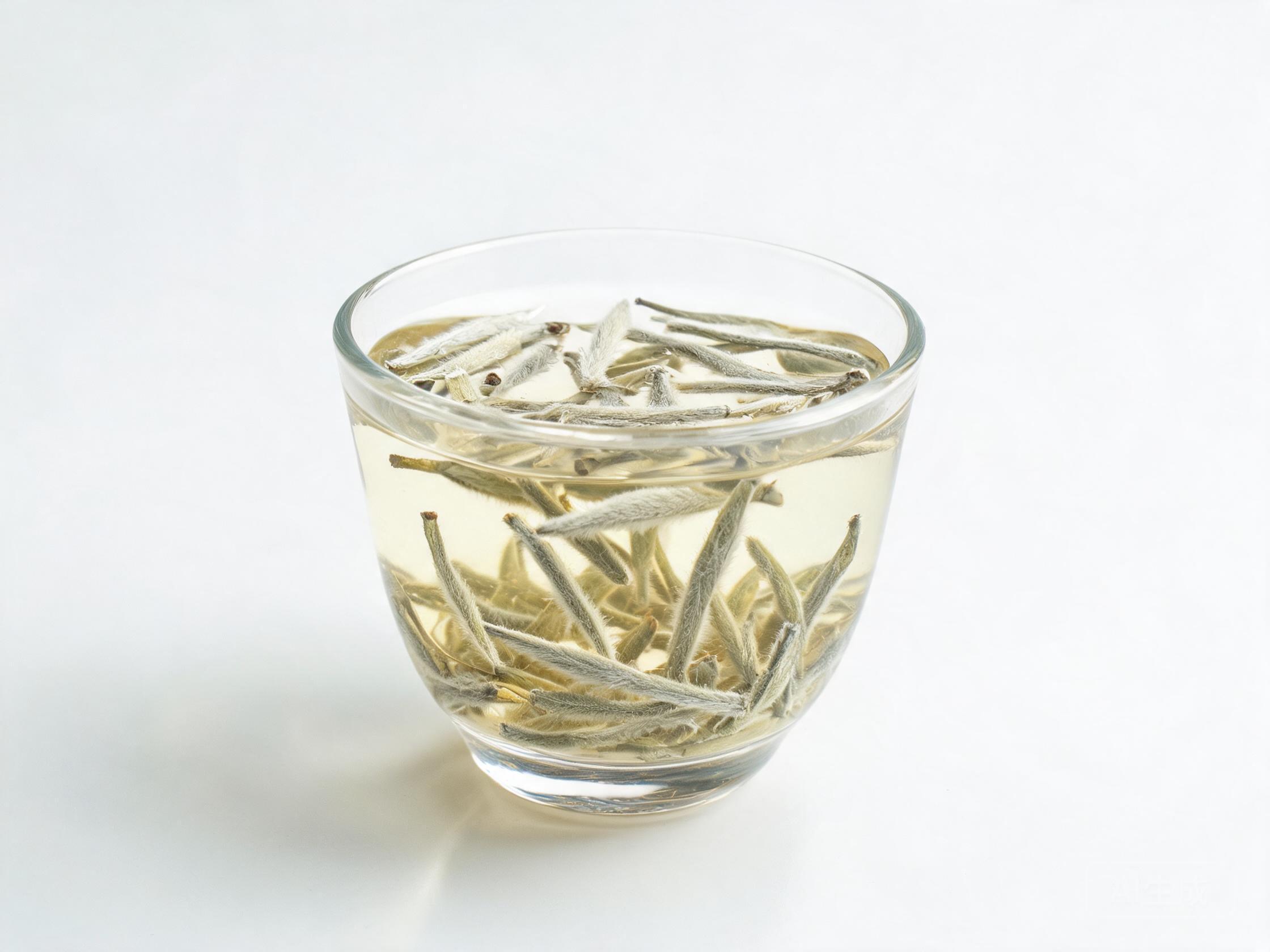
Three things. The picking, which is one bud at a time and tens of thousands per kilogram. The sorting, which discards bruised and discoloured buds by hand. And the season, which is a few weeks in spring and cannot be extended.
What it does not pay for is age, rarity in a collector’s sense, or any measured quality advantage over the other grades. A silver needle is not rarer than a white peony in the way that a mother-tree Da Hong Pao is rarer than a blend; it is simply more expensive to make.
| Product | Relative price | Picking standard | Ages well |
|---|---|---|---|
| Silver needle, top grade | 100 | Single bud | No |
| Silver needle, second grade | 60 | Single bud, less even | No |
| White peony, top grade | 25 | Bud and one or two leaves | Somewhat |
| Shoumei, cake | 8 | Leaf and stem | Yes |
| Gongmei, cake | 12 | Leaf and stem, Cai Cha | Yes |
The claim that does not hold
Silver needle is often described as the highest grade of white tea, which is true only if grade means picking order. In the sense that matters to a drinker, a white peony is often the better tea: more catechin, more body, more flavor, and a fraction of the price.
The confusion is built into the naming. Silver needle is picked first, and the first pick is traditionally the most valued in any tea. That convention is about scarcity of timing, not about what is in the cup.
A second claim, that silver needle has the most antioxidants, is wrong. It has 110 to 140 mg of catechins per gram against white peony’s 130 to 160, because buds carry fewer catechins than leaves. The most expensive grade measures lowest on the compound most often cited.
How a fake is made and how to spot it
The main fraud is substitution rather than adulteration. A tea sold as Fuding silver needle may be Yunnan moonlight white, which is a genuine bud tea from a different cultivar, or a Fujian bud tea from a lesser garden.
The second is dilution. A tin of silver needle with white peony leaf mixed in is cheaper to fill and hard to detect in a photograph. Looking at the dry leaf is the only check: a true silver needle has no leaf at all.
The third is mislabelling by grade. A second-grade silver needle sold as top grade is dishonest and the difference is small enough that most buyers cannot tell.
The reliable checks are the bud shape and the origin. Fuding buds are short and fat with dense hair; Yunnan buds are long and curved with little hair. A seller who cannot say which province the tea came from is not selling a specific product.
- The premium pays for picking labor, not for drinking quality.
- Silver needle has fewer catechins than white peony.
- It is the worst white tea to age, because the aroma is fragile.
- Yunnan moonlight white is often sold as silver needle.
- A true silver needle has no leaf in the tin.
- Ask for the province, not just the name.
Where the money goes wrong
The first mistake is buying silver needle to age. The aroma that justifies the price is the first thing to go, and a five-year-old silver needle is a mild tea that cost ten times a shoumei that tastes better.
The second is buying it for health. It has the lowest catechin content of the white grades, and the research on white tea is thin enough that no grade-specific claim is supportable.
The third is buying it as a gift without tasting it. Silver needle is a beautiful object and a delicate drink, and a recipient who expects a flavorful tea may be disappointed by how subtle it is.
The place where the premium does make sense is as an experience. A good Fuding silver needle is unlike any other tea: pale, sweet, faintly of hay and melon, and gone in three infusions. Paying for that once is reasonable. Paying for it as a daily tea is a choice few drinkers sustain.
The gift market and the tin
Silver needle is the white tea most often sold as a gift, and the packaging reflects it. A lacquered tin with a window, a silk bag, a certificate: the object is designed to be given.
The gift framing inflates the price beyond the picking cost, and it also shapes what is inside. A gift tin is often the second grade rather than the top, because the buyer will not open it and compare.
That is not fraud and it is worth knowing. A buyer paying gift prices is buying presentation, and a drinker who wants the tea should buy loose from a producer instead.
The same pattern appears across Chinese tea, and white tea is the clearest case because the grade is visible. A tin of fat even buds is impressive and a tin of thinner ones is not, and the difference is smaller in the cup than on the shelf.
- Gift tins usually hold second grade, not top.
- The packaging is a large part of the price.
- Buy loose from a producer to get the tea rather than the box.
- The visual grade difference is bigger than the taste difference.
- A certificate is not a quality guarantee.
- Ask for the picking date, which a gift tin rarely gives.
What the name has meant historically
Silver needle was an export product before it was a domestic luxury. Through the late nineteenth and early twentieth centuries, white tea from Fujian went to Southeast Asia and to Hong Kong, sold to Chinese communities abroad.
The grade hierarchy was codified in that trade, with silver needle at the top because it was the most expensive to pick and the most impressive in the box. The domestic market inherited that hierarchy rather than creating it.
That history explains why the reputation is so durable. It was built by exporters selling to buyers who judged by appearance, and appearance is exactly what silver needle excels at.
It also explains why the reputation is awkward for a modern drinker. The qualities that made it a good export good, uniformity and visual appeal, are not the qualities that make a tea worth drinking every day.
- Silver needle was an export product before a domestic luxury.
- The grade hierarchy was codified in the export trade.
- Export buyers judged by appearance, which silver needle excels at.
- The domestic market inherited the hierarchy.
- Visual uniformity is not the same as drinking quality.
- The reputation is about trade history, not about the cup.
A final comparison puts the price in perspective. For the cost of one hundred grams of top-grade silver needle, a drinker can buy roughly a kilogram of good shoumei, which yields about ten times as many cups and improves for years rather than fading. That is not an argument against silver needle; it is a description of what a buyer is choosing between.
The honest case for the premium is that the tea is unique. Nothing else tastes like a fresh Fuding bud, and a drinker who wants that specific experience cannot get it more cheaply. The case against is that the experience is brief, delicate and unrepeatable, and most drinkers will get more pleasure per dollar elsewhere in the same category.
Either choice is reasonable. What is not reasonable is buying it for the wrong reason, which is the mistake this page has tried to name: buying it to age, buying it for catechins, or buying it as a gift without knowing what the recipient likes.
One number frames the whole trade. Fuding produces a few hundred tonnes of white tea a year across all grades, and only a small fraction of that is silver needle. The volume of tea sold worldwide as silver needle exceeds that fraction by a wide margin, which is the arithmetic behind the substitution described above.
Frequently asked questions
Why is silver needle so expensive?
Single-bud hand picking, hand sorting and a short spring season. Tens of thousands of buds per kilogram.
Is it the best white tea?
It is the most expensive. White peony has more catechin and more flavor at a fraction of the price.
Does it have the most antioxidants?
No. It has 110 to 140 mg of catechins per gram, less than white peony.
Should I age it?
No. The delicate aroma that justifies the price fades within a year.
How can I spot a fake?
Look for leaf in the tin, and ask which province. Fuding buds are short and fat, Yunnan buds long and curved.
Is it a good gift?
As an object, yes. As a drink, it is very subtle and may disappoint someone expecting flavor.