A setup that actually works
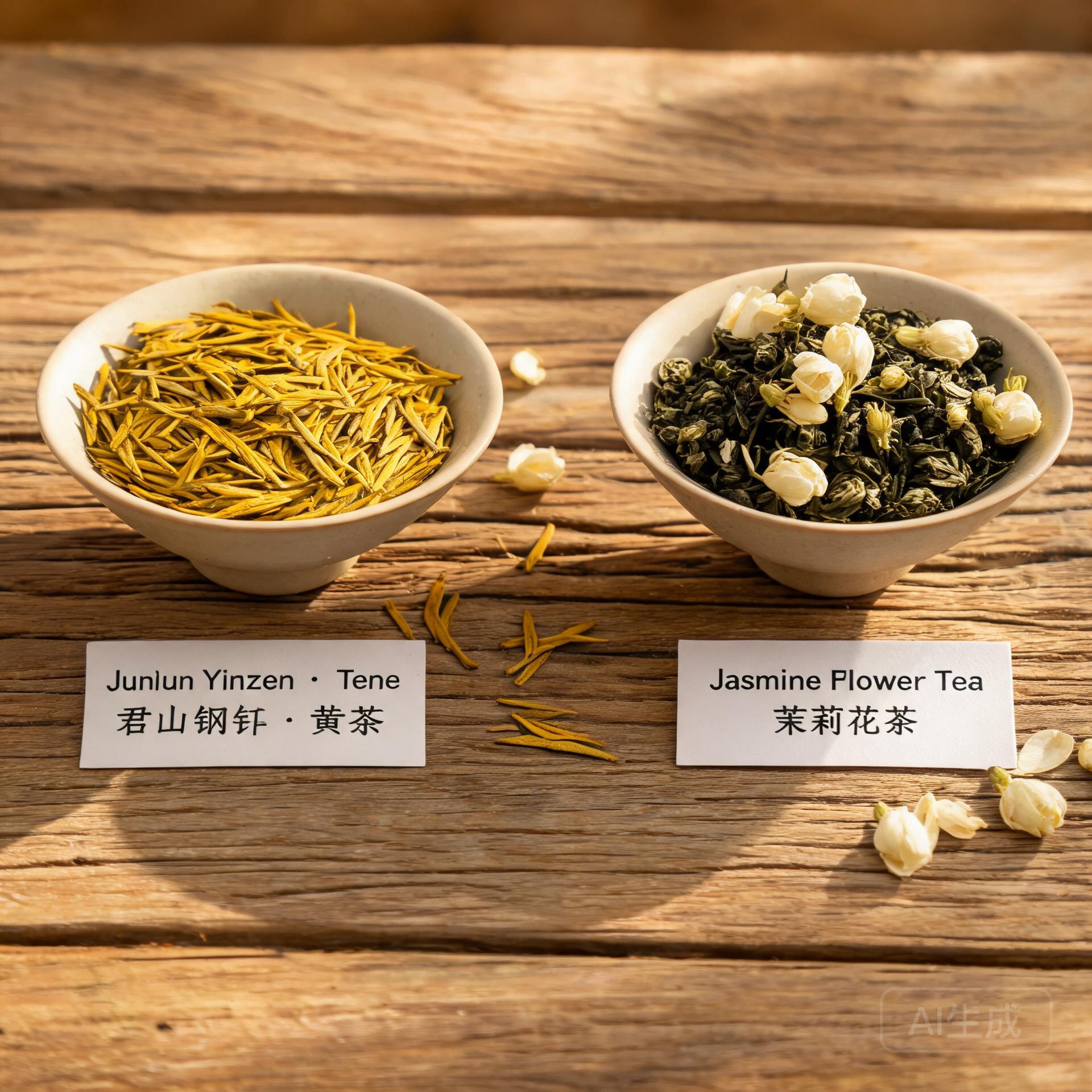
The setup depends on which half of the category you have, and this is the one thing to get right first. Scented tea goes in a sealed opaque tin. Compressed tea stays in its wrapper and goes in a box.
For jasmine and other scented teas, use the smallest tin that will hold the tea. Air in the container is air the aroma can escape into, and a half-empty tin ages faster than a full one.
For cakes and bricks, resist the urge to transfer them into something nicer. The paper wrapper is part of the system, and a sealed plastic box is actively worse than the wrapper plus a cardboard one.
If you have both types, store them in different places. Scented tea and compressed tea want different humidity, and more importantly the scent from one will contaminate the other.
Where to put it
Scented tea belongs in a cool, dry cupboard in a sealed tin. Treat it like a green tea without the fridge, because the aroma you are protecting is just as fragile.
Compressed tea belongs in a closed cabinet or box, somewhere with stable room temperature and no smells. A spare-room cupboard is ideal, and a garage is not, because of paint, fuel, and damp.
Neither belongs in the kitchen. Cooking smells are the most common way both types are ruined at home, and the effect is slow enough that people rarely connect the cause to the taste.
And neither belongs in the fridge. It is worth repeating because it is such a common mistake: a fridge is damp and full of smells, and both halves of this category are porous.
Mistakes to skip
The most common mistake is treating a compressed cake like a delicate flower and sealing it in plastic. That stops the development entirely, and in a warm room it traps moisture against the leaf.
The second is treating jasmine tea like an ageing project and leaving it in a breathable container. Scented tea does not improve with air. It loses the thing you bought it for.
The third is storing both halves together. A cake stored next to a tin of jasmine will pick up the floral note, and a compressed tea that smells of flowers is a confusing drink.
And do not break up a cake for convenience. Break it once, if you must, and store the pieces sealed. Repeatedly chipping off pieces exposes fresh surface every time.
Check in often
Check scented tea every two or three months by smelling it. It should smell strongly and cleanly of its flower. When that scent fades to nothing, the tea is spent, and more storage will not help.
Check compressed tea twice a year. Smell it, press it with your thumb, and look at the surface. Clean and earthy is right, firm is right.
One thing that is normal and should not alarm you: the pale specks inside a fu brick are intentional fermentation, not mould. Fuzzy coloured growth on the outside is the opposite, and that brick should go.
If a compressed tea smells sour rather than earthy, the humidity has been too high for too long. Move it somewhere drier and check it again in a month.
Keep the two halves in separate cupboards if you can. It sounds fussy, but it removes the possibility of getting them mixed up, and mixing them up is the most likely mistake once you own more than a couple of cakes and tins.
The whole system is two cupboards and a pen. That is genuinely all it takes to store both halves of this category well.
Label and rotate
Label everything, and label it with two things: what it is, and when you got it. With reprocessed tea the ‘what’ matters as much as the date, because the two halves need different handling.
Rotate the scented tea aggressively. Drink it within the year and buy fresh. There is no version of jasmine tea that rewards waiting.
Rotate the compressed tea the other way: leave it. The oldest brick is the one you want to keep, not the one you want to finish, and mixing the two systems up is easy if nothing is labelled.