Temperature
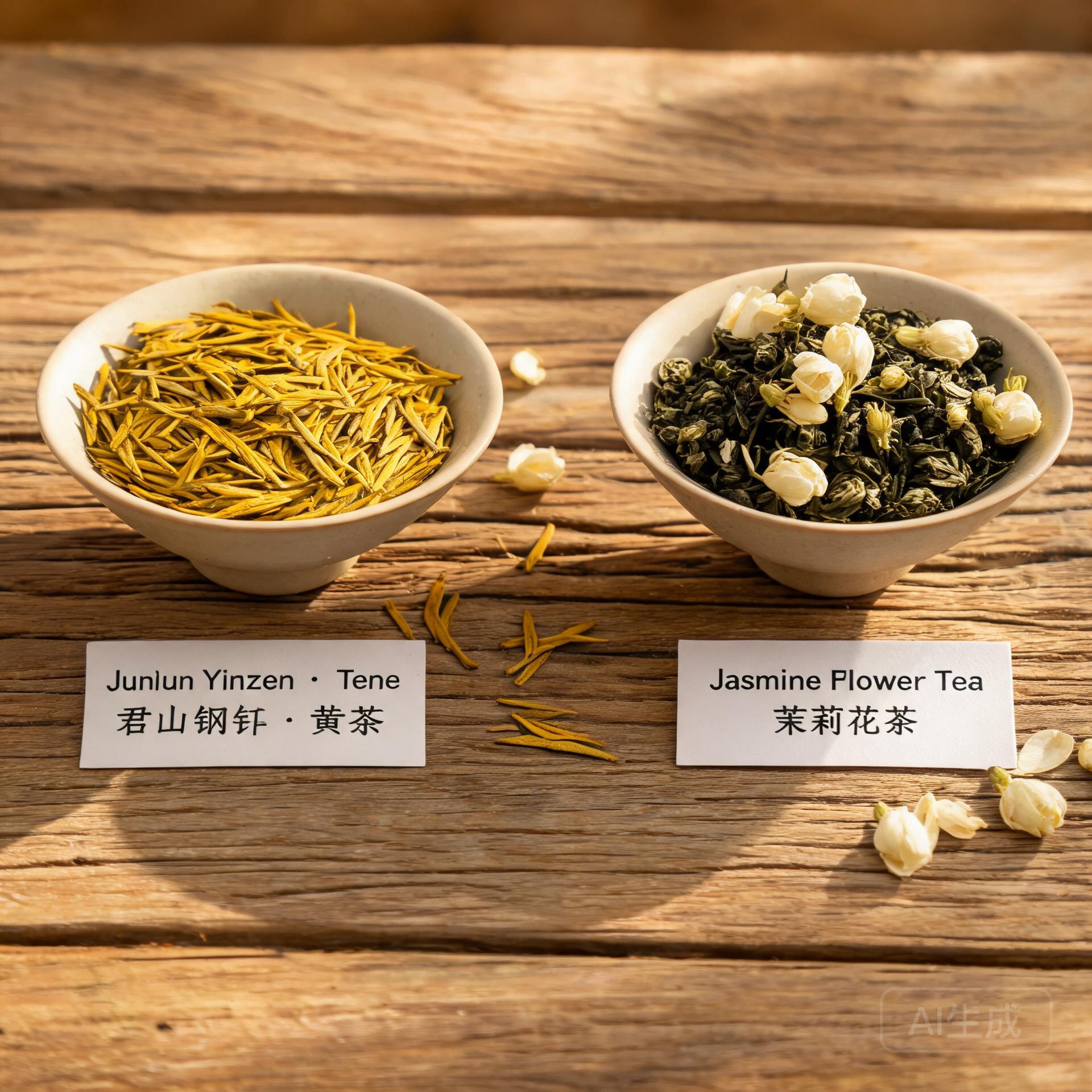
Reprocessed tea is not one thing, and the environment depends entirely on which half you have. Scented teas, above all jasmine, want cool and dry and sealed. Compressed teas want room temperature and some air movement.
That is an unusual split, and it comes from how the category is defined. Reprocessed means the tea was finished and then worked on again, either by scenting it with flowers or by pressing it into a shape. The two have nothing in common.
So the first step is to decide which you are storing, and then to follow the rules for that one. Storing a jasmine tea like a fu brick will cost you the scent. Storing a fu brick like a jasmine tea will stop it developing at all.
If you are not sure which you have, look at the leaf. Loose leaf with visible dried petals is scented. A solid cake, brick or bowl shape is compressed. The two are never mixed in one package, so the form tells you the answer immediately.
Humidity
For scented tea, keep humidity low, ideally below 50 percent, and keep the tin sealed. The aroma compounds from the flowers are volatile, and both moisture and air exchange will strip them out.
For compressed tea, the target is higher, somewhere around 60 to 70 percent. That is the band where the microbial activity that drives the change stays alive without mould taking over, and it is the same band used for dark tea.
Below about 50 percent, a brick will simply sit there. It will not spoil, but it will not develop either, and a brick kept in a dry flat for five years may taste very close to the day it was bought.
Light and air
Both halves want darkness. Light degrades aromatics in scented tea and bleaches the surface of a compressed cake, and neither effect is reversible.
On air, the two diverge again. Scented tea wants a genuinely airtight tin. Compressed tea wants paper and a box, or a breathable cabinet, but not a sealed plastic bag, which stops the process and, in a damp room, traps water against the leaf.
Both want separation from smells, and compressed tea especially. A brick stored in a kitchen cupboard will pick up cooking odours over years and keep them, because there is no way to wash a compressed cake.
The target environment
For scented tea the target is a sealed opaque tin, cool, dry, and finished within the year. There is no long-term plan for jasmine tea, and the environment is about slowing decline rather than enabling change.
For compressed tea the target is room temperature, moderate humidity, darkness, and a wrapper kept in place. The paper is not packaging to be discarded. It is part of the storage environment, and it buffers the cake against swings.
In both cases a hygrometer in the storage space is worth the small cost. It turns a guess into a number, and for compressed tea it is the only way to know whether your room is in the band at all.
Adjust through the year
Seasons shift the room, and both halves of this category respond. A hot summer speeds the loss of scent from jasmine tea and can push a cake into a faster, coarser change than you want.
Recheck twice a year. In summer, watch for heat in upstairs rooms and move the tea if it is consistently above 28 degrees. In winter, watch for heating driving the room below 40 percent, which stalls compressed tea for months at a time.
Neither extreme ruins anything on its own. What they do is make the outcome unpredictable, and for a category where the whole point is slow, controlled change, unpredictability is the actual enemy.
One specific summer risk is worth naming. A brick sealed in plastic in a hot room will sweat, and the water has nowhere to go. If you must seal compressed tea, seal it only after the room has been dry and stable for weeks, and check it.
And one winter risk. A brick sitting in a room heated to 22 degrees with the humidity down at 30 percent is not in danger, but it is also not ageing. If that describes your home for eight months of the year, plan on a longer timeline.