- Scented tea: the broad case
- Instant tea: a convenience case, not a health case
- Sweetened blends: the honest position
- Groups with specific reasons to choose one type
- The case for scented tea as a daily drink
- The case against sweetened blends
- How much, by type
- The group that benefits most
- Frequently asked questions
- Is jasmine tea good for you?
- How much jasmine tea a day?
- Is instant tea a good choice?
- Can I drink flavored tea every day?
- Does jasmine tea have caffeine?
- Which type is closest to plain tea?
Who should drink reprocessed tea depends entirely on which product, because the category spans a plain scented leaf and a sugar-heavy fruit blend. Scented tea suits most adults at two to four cups a day. Instant tea suits travellers and offices where leaf is impractical. Sweetened flavored tea suits almost nobody as a daily drink, because the sugar load is the dominant feature.
The useful way to read this page is as three separate recommendations wearing one category name. A reader who takes the average of them gets advice that fits no product.
Scented tea: the broad case
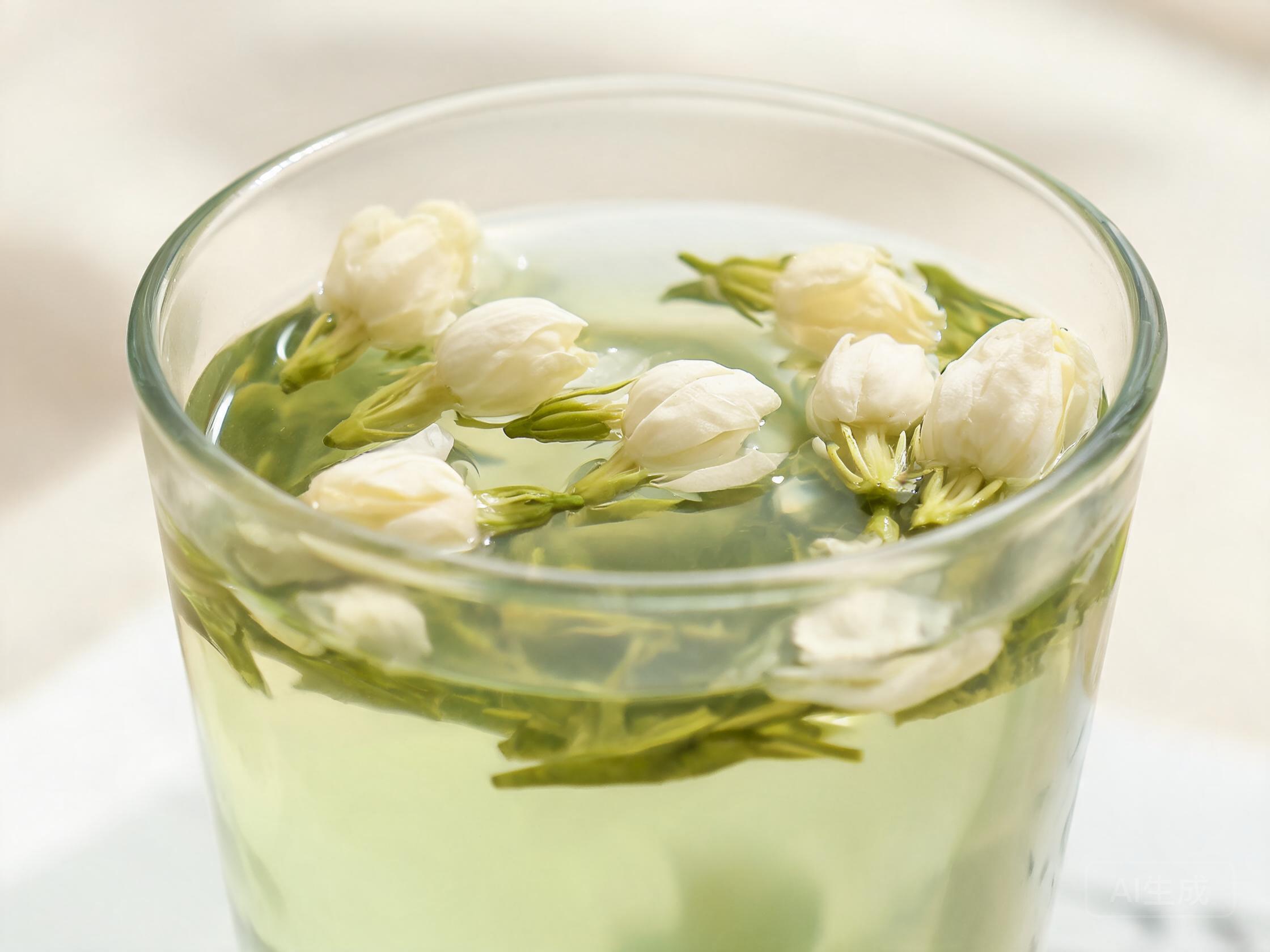
Scented jasmine tea is the easiest recommendation in the category. Its base is green tea, so it carries 90 to 140 mg of catechins per gram and 30 to 45 mg of caffeine per cup. Its aroma is pleasant, which matters for a daily habit, and it contains no sugar.
The traditional classification adds a specific use. Jasmine is warm and moves qi, which makes the tea a traditional choice for low mood, a tight chest and stagnation. That is a use pattern rather than a mechanism, and it happens to match the modern finding that the aroma affects mood.
Two to four cups a day is a reasonable range. The caffeine is the constraint, not the flower, and the cut-off before sleep is the same as for green tea.
| Type | Suits | Amount | Why |
|---|---|---|---|
| Scented jasmine | Most adults | 2 to 4 cups | Base chemistry intact, no sugar |
| Scented osmanthus oolong | Most adults | 2 to 4 cups | Oolong base, floral aroma |
| Instant tea, pure | Travellers, offices | 1 to 3 cups | Convenience, concentrated solids |
| Instant tea, sweetened | Occasional use | 1 cup | Count the sugar |
| Flavored fruit blend | As a dessert substitute | 1 cup | It is a sweetened drink |
| Compressed cake | Anyone who likes the base | as the base | No additives at all |
The compressed row is worth noting because it is the only type in the category with no addition whatsoever. A tuo cha or a brick is the base tea in a shape, and it should be judged exactly as the base would be.
Instant tea: a convenience case, not a health case
Instant tea exists because leaf tea is inconvenient in some settings. It dissolves, it needs no strainer, and it keeps. Those are real advantages for a hotel room, an office desk or a long flight.
The cost is taste and transparency. The aromatics are lost in concentration, so the cup is flatter. And the powder is often cut with maltodextrin, which means the tea content can be a fifth of the product.
A drinker choosing instant tea should read the label for the carrier and choose a pure extract where possible. One to three cups a day is a sensible range, and the caffeine is comparable to leaf tea at 30 to 60 mg per cup.
Sweetened blends: the honest position
A fruit blend with 60 to 90 grams of sugar per 100 grams is a confection with tea in it. As an occasional drink it is fine. As a daily hydration habit it is a source of free sugar that most guidelines advise limiting to under 25 to 50 grams a day.
There is a defensible use: as a replacement for a dessert or a soft drink. If someone swaps a 330 ml cola at 35 grams of sugar for a cup of fruit tea at 14 grams, that is an improvement, and it is an improvement in sugar rather than in tea.
The indefensible use is treating it as tea. A drinker who believes they are getting tea’s benefits while consuming 20 grams of sugar per cup has been misled by the category name, and that is the specific harm this page is meant to prevent.
- Scented tea is the broad recommendation, two to four cups.
- Instant tea is for convenience, one to three cups.
- Sweetened blends are occasional, not daily.
- Compressed tea is judged as its base tea.
- Check sugar before checking anything else.
- The caffeine in scented tea is the same as its base.
Groups with specific reasons to choose one type
Anyone who dislikes plain green tea often likes jasmine, because the aroma covers the grassiness. That is a legitimate reason to choose it and it makes the habit easier to keep.
Anyone avoiding caffeine entirely should avoid all of these, including the scented ones, because scenting does not remove caffeine. A chamomile or rooibos infusion is the correct choice for that person, not a flower-scented tea.
Anyone watching sugar should choose scented or compressed and read labels on everything else. That single rule covers the category.
Anyone who wants the tea’s chemistry specifically should choose scented or compressed, since those preserve the base. Flavored blends preserve very little.
The case for scented tea as a daily drink
The practical argument for jasmine tea is that people finish the cup. A tea that is pleasant is drunk, and a tea that is drunk delivers whatever it delivers. Most green tea advice fails at the point where the drinker does not enjoy the drink.
The aroma also does something the plain leaf does not, which is to make the cup feel like a treat without adding sugar. That is a genuine advantage for anyone trying to replace a sweetened drink, because the substitution has to satisfy something.
The chemistry is close enough to the base that nothing is lost. A jasmine green tea at 90 to 140 mg of catechins per gram is a real green tea, not a flavored beverage.
The case against sweetened blends
A sweetened fruit blend is not a tea habit, it is a sugar habit with a tea label. The tea content at 10 to 40 mg per gram is a quarter of a plain leaf, and the sugar at 60 to 90 grams per 100 grams is the dominant ingredient by mass.
The specific harm is that the label invites the drinker to count it as tea. Someone who believes they are drinking tea for health while consuming 20 grams of sugar per cup has been misled by a category name, and the misinformation is not incidental.
The defensible use is as a dessert substitute, which is a real role. A cup of fruit tea instead of a slice of cake is an improvement. A cup of fruit tea instead of water is not.
- Scented tea is a real tea and a reasonable daily drink.
- Its chemistry is close to the base tea’s.
- It replaces a sweetened drink without adding sugar.
- Sweetened blends are a sugar habit, not a tea habit.
- Use a sweetened blend as a dessert substitute, not as hydration.
- Compressed tea is judged entirely by its base.
How much, by type
Scented tea: two to four cups a day, bounded by caffeine rather than by the flower. A green base at 30 to 45 mg per cup means four cups is 180 mg, which is well inside the adult ceiling but not negligible for a sensitive drinker.
Instant tea: one to three cups, and count the sachets. The powder is easy to repeat without noticing, and the caffeine is comparable to leaf tea per cup.
Sweetened blends: one cup a day at most, and ideally as a dessert substitute rather than a habit. The sugar is the constraint, and a single cup can carry 20 to 25 grams in a pre-sweetened product.
The group that benefits most
The people who benefit most from this category are those who do not like plain tea. A jasmine green tea is a real green tea that someone will actually drink, and a drink that is drunk is worth more than a better drink that is not.
That is a modest claim and it is the strongest one the category supports. It is also the reason scented tea has a place in a shop that already sells plain leaf.
The people who benefit least are those treating any product in the category as a health intervention. There is no evidence base for the category, and the types differ too much for one to emerge.
One final point about the shelf as a whole. A shop that sells reprocessed tea is selling convenience, flavor and sugar alongside leaf, and the buyer’s job is to know which of those they are purchasing.
The category rewards that attention more than most, because the gap between its best and worst products is the widest in tea, and the label is the only thing that separates them.
Frequently asked questions
Is jasmine tea good for you?
It is green tea with flower aroma, so it carries the base tea’s chemistry and no sugar. That is a reasonable daily drink.
How much jasmine tea a day?
Two to four cups, at 30 to 45 mg of caffeine per cup.
Is instant tea a good choice?
For convenience, yes. Check the label for maltodextrin and added sugar.
Can I drink flavored tea every day?
Only if it is unsweetened. Sweetened blends can carry 20 g of sugar per cup.
Does jasmine tea have caffeine?
Yes, 30 to 45 mg per cup. Scenting does not remove it.
Which type is closest to plain tea?
Compressed tea, which contains nothing but the base leaf.