- Jasmine: warm, and why
- Chrysanthemum and the cooling flowers
- Instant tea: outside the framework
- What the framework says about blends
- Reading the claim at the right level
- How the tradition handles a scented tea
- Why chrysanthemum breaks the pattern
- The seasonal logic that follows
- What the framework does with sugar
- Frequently asked questions
- Is jasmine tea warm or cool?
- Is chrysanthemum tea the same as jasmine tea?
- What nature is instant tea?
- How are blended teas classified?
- Is flower tea always cooling?
- Why does the category not share one nature?
Chinese medicine gives reprocessed tea no single nature, because the category is defined by processing rather than by leaf. A jasmine tea is warm, because the flower is warm and the scenting carries that quality into the leaf. A chrysanthemum tea is cool, because the flower is cool. An instant tea has no traditional classification at all, because the tradition predates it by centuries. Assigning one nature to the group would be the clearest possible error.
This is the page where the framework’s own logic forbids a template. The rule is that processing determines nature, and the processing here is not one thing. A category built from unrelated processes must have unrelated natures, and the tradition says so by classifying each preparation separately.
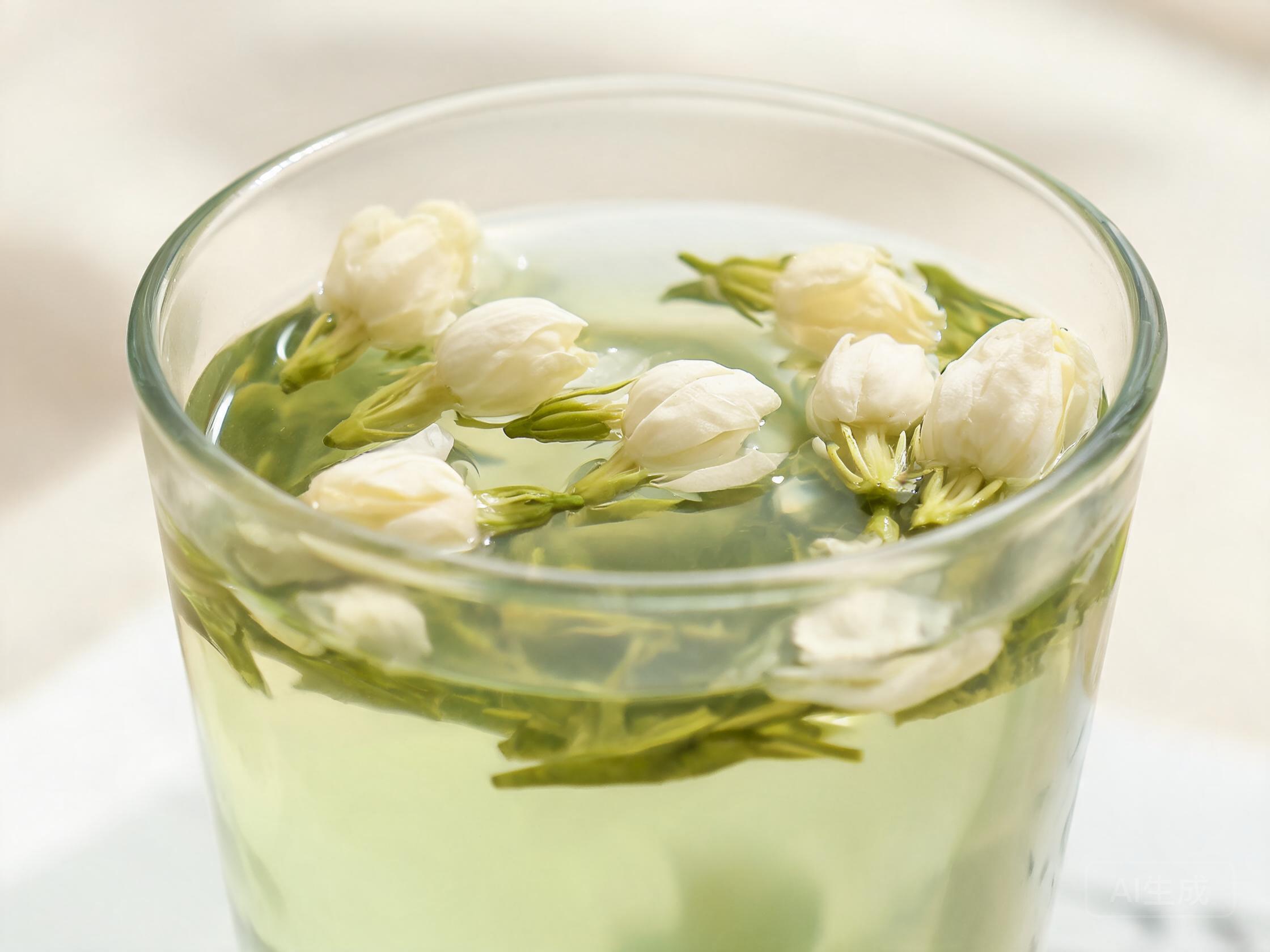
Jasmine: warm, and why
In the Chinese materia medica, jasmine flower is warm, pungent and sweet, and it moves qi. It is used for stagnation, for a low mood, for a tight chest, and its warming quality is the reason it is paired with tea rather than taken alone.
When jasmine is scented into green tea, the resulting tea is classed as warm, or at least neutral leaning warm, even though the base is a cold leaf. That is a genuine tension in the framework and the tradition resolves it by treating the flower as the dominant influence on the finished product’s character.
Sources disagree on the exact label, some saying warm and some saying neutral, and the disagreement is honest rather than sloppy. What they agree on is that jasmine tea is warmer than the green tea it was made from, which is the practically useful part.
| Preparation | Nature | Base | Reasoning |
|---|---|---|---|
| Jasmine tea, green base | Warm, or neutral leaning warm | Green | Flower is warm and dominates |
| Osmanthus oolong | Warm | Oolong | Osmanthus is warm, oolong neutral |
| Rose black tea | Warm | Red | Rose is warm, red is warm |
| Chrysanthemum tea | Cool | None, or green | Chrysanthemum is cool |
| Eight treasure tea | Varies | Usually green | Sugar, dried fruit, herbs |
| Instant tea | No traditional class | Any | Postdates the materia medica |
Chrysanthemum and the cooling flowers
Not every flower is warm, and this is where a single-nature answer collapses completely. Chrysanthemum is cool and is used to clear heat from the liver and the eyes, which is why it is the standard summer drink in southern China and the standard remedy for red, tired eyes.
A chrysanthemum tea is therefore the opposite of a jasmine tea in the framework’s terms, and both are sold as flower tea. A drinker who treats them as interchangeable has missed the only distinction the tradition cares about.
The same applies within a single shelf. A rose tea is warm and moving, a lotus leaf tea is cool and drying, a honeypot tea is cool. The flower is the active substance and the flower determines the nature.
Instant tea: outside the framework
Instant tea has no traditional classification because it did not exist when the classifications were made. It was developed in the twentieth century as an industrial product, and the materia medica has nothing to say about it.
That is not a gap to be filled by analogy. One could argue that the base tea’s nature survives extraction, and one could equally argue that the process changes it. Neither argument has a classical basis, and inventing one is worse than admitting the absence.
The honest position is that a modern drinker can apply the framework to the leaf and not to the powder. A jasmine instant tea is a product with a flower and a base and a manufacturing process, and the tradition can describe two of those three.
What the framework says about blends
Blended teas are the hardest case, and the tradition handles them the way a cook handles a recipe: by the dominant ingredient. An eight treasure tea is mostly sugar and dried fruit, so it is classified by those, which makes it warm and cloying rather than cooling despite the tea in it.
The practical rule is to identify what the drink mostly is. A jasmine tea is mostly tea with a flower influence. A fruit blend is mostly sugar with a tea influence. Those two are classified differently, and the difference is not subtle.
Reading the claim at the right level
The natures on this page are not comments on the drink’s temperature. A chilled jasmine tea is still warm in the framework’s sense, and a hot chrysanthemum tea is still cool. The words describe a direction of action in a system of correspondences, not a thermometer reading.
This is not clinical trial evidence. No study has tested whether jasmine tea moves qi or whether chrysanthemum clears liver heat, and the classifications were not derived from one. They are a coherent account built from long use.
What the page can do is prevent the specific error of assigning one nature to a category that has none. That error is common in English writing about tea, and it produces advice that is wrong for half the products it describes.
- There is no single nature for reprocessed tea.
- Jasmine is warm, chrysanthemum is cool.
- The flower, not the base, decides in a scented tea.
- Instant tea has no classical classification.
- Blends are classified by their dominant ingredient.
- Never apply one nature to a whole shelf.
How the tradition handles a scented tea
The framework’s usual method is to classify a prepared substance by its dominant action, and scenting creates a case where two substances are combined. The leaf has a nature and the flower has a nature, and the finished tea has to be assigned one.
The tradition resolves this by treating the flower as the intentional addition and therefore the defining influence. A tea is scented for a reason, and the reason is the flower’s action. Jasmine is scented to move qi, so the finished tea is a qi-moving tea with a tea base.
That is why the classification runs against the base. A jasmine green tea is warmer than the green tea it came from, and a rose black tea is warmer still. The base sets the floor and the flower moves it.
Why chrysanthemum breaks the pattern
Chrysanthemum is not a scented tea, it is an infusion of the flower with tea sometimes added or sometimes absent. That makes it a different construction and the framework classifies it by the flower alone.
The distinction is worth holding onto because it explains why two products on the same shelf can have opposite natures. A jasmine tea is tea with a warm flower in it. A chrysanthemum tea is a cool flower that may have tea in it. The construction differs, so the classification does.
A drinker who wants the cooling effect of chrysanthemum should drink it without a green tea base, or accept that the base pushes back. The tradition would say the same thing in its own vocabulary.
- Jasmine is warm and moves qi, so the tea is warm.
- Chrysanthemum is cool and clears liver heat.
- Rose is warm and moving, lotus leaf is cool and drying.
- The flower, not the base, decides in a scented tea.
- Chrysanthemum is an infusion, not a scented tea, so it is classified by the flower.
- Instant tea has no classical classification, and inventing one is not helpful.
The seasonal logic that follows
Because the natures differ, the seasonal advice differs too, and this is the practical payoff of refusing a single classification. Chrysanthemum belongs in summer, when its cooling quality matches the weather. Jasmine belongs in spring, when its qi-moving quality matches the season’s expansion.
Rose belongs in winter, when a warm moving tea suits a cold, constrained season. Lotus leaf belongs in late summer, when its drying quality suits humidity. Each of these is a different placement and none of them would emerge from a single category nature.
A drinker who rotates flower teas through the year is following the framework correctly without needing to know its vocabulary. The rotation is the classification in practice.
What the framework does with sugar
The tradition classifies sugar as sweet and cloying, which in its terms means it generates dampness and phlegm. A heavily sweetened blend is therefore classified as damp-producing regardless of its tea content, and the tea becomes a minor ingredient in a damp-producing preparation.
That is a coherent reading and it matches the modern observation that sugary drinks are associated with metabolic problems. The vocabulary differs and the direction is the same, which is the kind of agreement that makes the framework worth reading even for someone who does not accept its metaphysics.
The practical consequence is that the tradition would not recommend a sweetened blend for daily use, and would recommend an unsweetened scented tea instead. That is the same advice a nutritionist would give for different reasons.
Frequently asked questions
Is jasmine tea warm or cool?
Warm, or neutral leaning warm. The flower is warm and dominates the green tea base.
Is chrysanthemum tea the same as jasmine tea?
No, and the difference is the point. Chrysanthemum is cool, jasmine is warm.
What nature is instant tea?
None. It postdates the materia medica, so no classical classification exists.
How are blended teas classified?
By the dominant ingredient, which is often sugar or dried fruit rather than tea.
Is flower tea always cooling?
No. Rose and osmanthus are warm, chrysanthemum and lotus leaf are cool.
Why does the category not share one nature?
Because it is defined by processing, and the processes are unrelated.