- Type one: scented tea
- Type two: instant tea
- Type three: flavored and fruit tea
- Type four: compressed and medicinal blends
- What this means for a buyer
- What scenting costs the leaf
- What instant tea does to the solids
- What a buyer can tell from the leaf
- The compressed tea exception
- Frequently asked questions
- Does jasmine tea have fewer catechins than green tea?
- Is instant tea real tea?
- How much sugar is in flavored tea?
- Is scented tea the same as flavored tea?
- Does compressed tea contain additives?
- Which reprocessed tea has the most catechins per gram?
Reprocessed tea has no single composition, because it is not a tea class but a category of products made by treating tea. A scented jasmine tea is 90 percent green tea leaf plus absorbed flower volatiles. An instant tea powder is a dried extract with roughly eight times the concentration of the leaf it came from. A flavored fruit tea may contain more sugar than tea solids. Asking what reprocessed tea contains is like asking what a baked good contains: the answer depends entirely on which one.
The category exists on shop shelves rather than in the plant. Every product in it starts from one of the six true classes, and what happens next is the whole question. That is why this page is organized by type rather than by compound.
Type one: scented tea
Scenting is the oldest reprocessing method and the least chemically disruptive. Tea leaf is layered with fresh flowers, most often jasmine, and left while the flowers open and release volatiles. The leaf adsorbs the aroma, the spent flowers are removed, and the process repeats.
The tea base is usually green tea, sometimes white or oolong. Because the base is unchanged, the catechin content is close to the base tea’s: a jasmine green tea measures 90 to 140 mg per gram, slightly below the unscented leaf because of the heat cycles used to dry the leaf between scentings.
What the leaf gains is a set of volatile compounds: linalool, benzyl acetate, indole, methyl jasmonate and others. These are aroma molecules, not polyphenols. They are present at parts per million, and they do not add antioxidant capacity in any meaningful sense.
| Type | Catechin per gram | Caffeine per cup | Main non-tea addition |
|---|---|---|---|
| Scented jasmine, green base | 90 to 140 mg | 30 to 45 mg | Flower volatiles, ppm |
| Scented osmanthus, oolong base | 70 to 120 mg | 30 to 45 mg | Flower volatiles, ppm |
| Instant tea powder | 150 to 300 mg | 30 to 60 mg | Maltodextrin, carrier |
| Flavored fruit tea | 10 to 40 mg | 10 to 25 mg | Sugar, acid, flavoring |
| Compressed cake | same as base | 30 to 50 mg | none |
| Medicinal blend | varies with base | varies | Herbs, dried fruit, sugar |
Type two: instant tea
Instant tea is made by brewing tea industrially, concentrating the liquor and drying it to a powder. The soluble solids of tea are roughly 25 to 30 percent of the leaf by weight, so a kilogram of powder represents eight to ten kilograms of leaf.
That concentration is why the catechin figure per gram is high, at 150 to 300 mg. It is not a stronger tea in the cup, because a cup uses two grams rather than five. It is a more efficient extraction, and it usually tastes flatter, because the aromatics that make a fresh cup interesting are lost in concentration and drying.
Most instant tea is cut with maltodextrin, a carrier that keeps the powder free-flowing. A product that lists maltodextrin first is mostly carrier. The tea content can be as low as 20 percent in a cheap product and near 100 percent in a pure extract.
Type three: flavored and fruit tea
This is where the composition changes most and where the health conversation actually belongs. A flavored tea is tea plus flavoring, and often plus sugar, acid, dried fruit or pieces of fruit.
The tea content can be minimal. Some fruit blends sold as tea contain 10 to 40 mg of catechins per gram, a quarter of a plain green tea, and 60 to 90 grams of sugar per 100 grams of product. In those products the sugar is the active ingredient from a health standpoint, and the tea is a flavor note.
The distinction between flavored and scented matters and is often blurred in marketing. Scenting uses real flowers and no additives. Flavoring uses essential oils or synthetic compounds, and a product can legally be called jasmine tea while containing no flowers at all.
Type four: compressed and medicinal blends
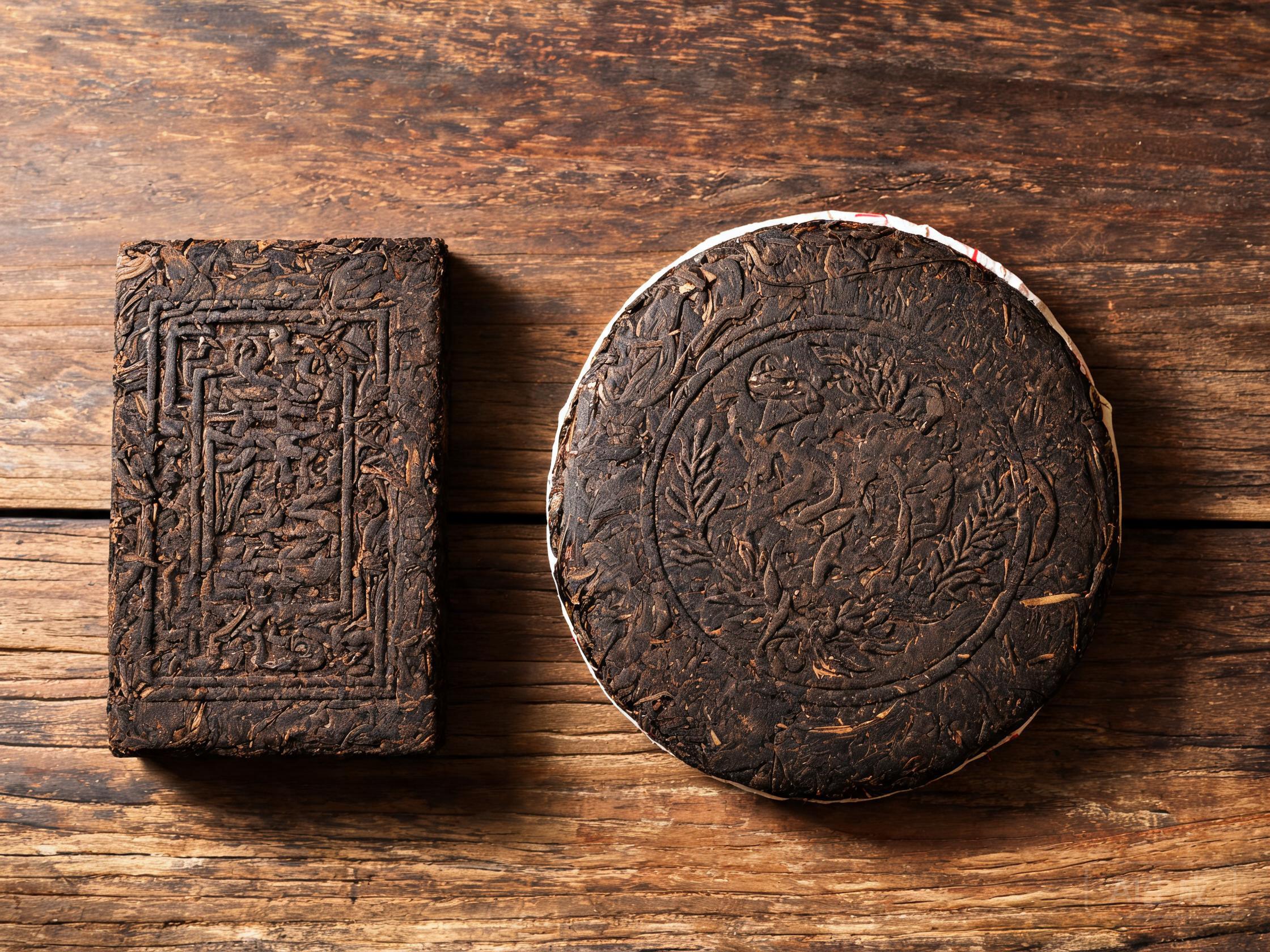
Compressed tea is tea pressed into cakes, bricks or birds nests with no additive, so its composition equals its base. A tuo cha made from raw pu-erh is raw pu-erh in a different shape.
Medicinal and blended teas are the most variable. An eight-treasure tea contains tea, dried fruit, rock sugar, chrysanthemum, goji and longan, and its composition depends on the proportions. Some are mostly sugar, some are mostly herb, and the tea may be a minor ingredient.
- Scented tea: base chemistry plus aroma, no sugar.
- Instant tea: concentrated solids, often with a carrier.
- Flavored tea: tea plus flavoring, frequently plus sugar.
- Compressed tea: the base, unchanged.
- Medicinal blend: whatever the recipe says, sugar included.
- The label’s first ingredient tells you more than the category name.
What this means for a buyer
The useful question is not what reprocessed tea contains but what is in the specific product. Three pieces of information answer most of it: the base tea, the position of sugar in the ingredient list, and whether the flavoring is floral or synthetic.
A buyer who wants tea chemistry should choose scented or compressed products, which preserve the base. A buyer who wants convenience should read the instant tea label for maltodextrin. A buyer who wants flavor should know that they are buying a sweetened drink and count it as one.
None of this makes the category worse than plain tea. It makes it a different kind of purchase, where the processing is visible in the composition and the label is the only reliable guide.
What scenting costs the leaf
Every scenting cycle ends with a drying step, because the leaf has absorbed moisture from the fresh flowers and must be brought back down before the next layer is added. That heat is the only part of the process that touches the tea’s chemistry.
The cost is modest and cumulative. Each dry is gentle, at 80 to 100 Celsius, and each removes a small fraction of the catechins. A tea scented seven times has been dried seven times, which is why the catechin figure falls to 90 to 140 mg per gram from the base tea’s 100 to 200.
The loss is real and it is smaller than the loss from a careless brew. A three-minute steep at boiling water costs more catechins than seven scenting cycles, which is a useful sense of proportion for anyone worried about processing.
What instant tea does to the solids
Instant tea starts as a strong brew, which is then concentrated under vacuum and spray-dried or freeze-dried. Vacuum concentration is used because it boils at a lower temperature, which preserves more of the heat-sensitive compounds than open evaporation would.
The result is a powder that is mostly soluble tea solids plus whatever carrier was added. The aromatics are largely gone, because the volatile compounds that make a fresh cup smell of tea are the first thing lost in any concentration step.
What survives is the catechin and caffeine load, which is why the powder measures 150 to 300 mg of catechins per gram. The chemistry is intact and the flavor is not, which is the trade the product makes.
- Scenting adds volatiles at parts per million, not polyphenols.
- Each scenting cycle includes a drying step that costs a little catechin.
- A seven-cycle jasmine tea measures 90 to 140 mg per gram.
- Instant tea concentrates solids, so it measures high per gram.
- Instant tea loses its aromatics in concentration and drying.
- Compressed tea has the composition of its base, unchanged.
What a buyer can tell from the leaf
A scented tea that has been properly processed looks different from a flavored one. The scented leaf is even in color and slightly dull, because the drying cycles have taken the shine off. A flavored leaf is often brighter and more uniform, because the oil sits on the surface.
The wet leaf tells more. A scented tea’s aroma comes off slowly across several infusions and changes as the leaf opens. A flavored tea gives its whole aroma in the first pour and then goes flat.
Neither test is definitive without experience, and both are free. A buyer who can smell the dry leaf and then the wet leaf after one infusion will learn the difference in a few purchases and will not need the price signal any more.
The compressed tea exception
Compressed tea is the one type in this category where nothing is added, so the composition question has the simplest answer: it is what it was before pressing. A tuo cha of raw pu-erh has the catechins of raw pu-erh, at 100 to 150 mg per gram.
The pressing does affect extraction. A compressed cake releases its compounds more slowly than loose leaf because water has to penetrate the mass, which is why the first infusion of a cake is often thin and the third is full.
That is a brewing fact rather than a compositional one, and it is worth knowing because a drinker who judges a cake by its first cup will underestimate it.
Frequently asked questions
Does jasmine tea have fewer catechins than green tea?
Slightly, 90 to 140 mg per gram against 100 to 200, because the drying cycles between scentings cost some.
Is instant tea real tea?
Yes, it is dried tea extract, though often cut with maltodextrin. It is not a substitute for leaf in taste.
How much sugar is in flavored tea?
Some blends reach 60 to 90 grams per 100 grams. Check the label, since the range is enormous.
Is scented tea the same as flavored tea?
No. Scenting uses real flowers, flavoring uses oils or synthetic compounds.
Does compressed tea contain additives?
No. It is the base tea pressed into shape.
Which reprocessed tea has the most catechins per gram?
Instant powder, at 150 to 300 mg, because it is a concentrate.