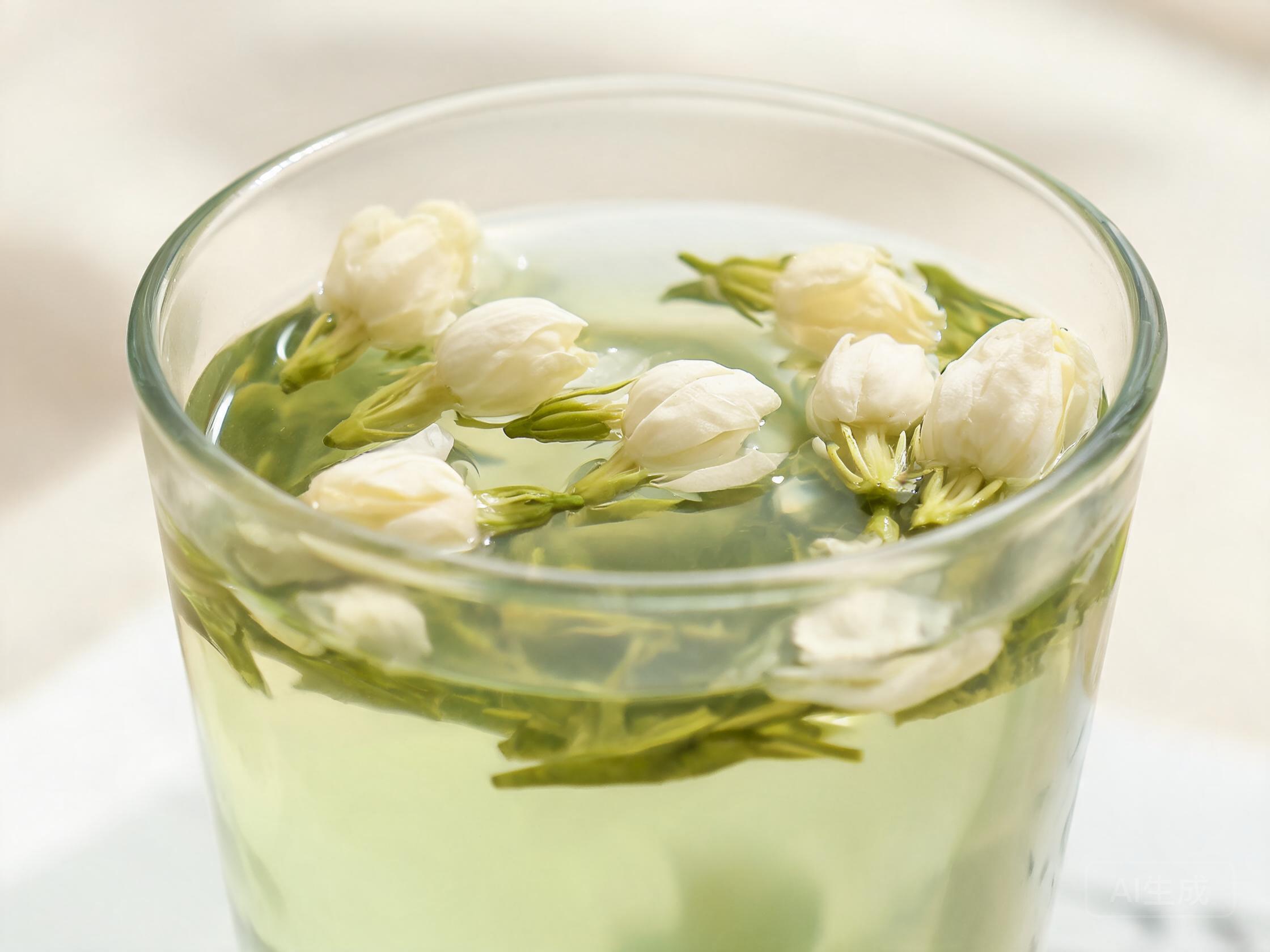
- Scented tea: the green tea clock
- Sweetened blends: after a meal
- Instant tea: no schedule
- Herbal blends: read the herb
- What timing cannot fix
- Why the sugar timing argument is stronger than it looks
- The instant tea frequency trap
- Two clocks, and how to hold both
- The evening options
- Frequently asked questions
- When should I drink jasmine tea?
- Can I drink jasmine tea at night?
- When should I drink sweetened fruit tea?
- Does instant tea have a best time?
- When should I drink herbal blends?
- Is reprocessed tea a morning drink?
The best time to drink reprocessed tea depends on the type, because the type determines the caffeine and the sugar. A scented jasmine tea follows the green tea clock: mid-morning to mid-afternoon, with a cut-off six hours before sleep. A sweetened blend belongs after a meal, where the sugar is part of a meal rather than a between-meal hit. Instant tea has no schedule at all, because it is a convenience product drunk when leaf tea is impractical.
That is three answers in one, and any single answer would be wrong for two of them.
Scented tea: the green tea clock
Scenting does not change the caffeine, so a jasmine tea behaves like the tea it was made from. For a green base that means 30 to 45 mg per cup, a half-life of five to six hours, and a cut-off around four in the afternoon.
The aroma adds a reason to drink it earlier rather than later. Jasmine is used traditionally to move qi and lift mood, which is a daytime use, and the modern finding that the aroma increases alertness points the same way. A jasmine tea at breakfast is doing what it is for.
The traditional caution about cold tea on an empty stomach applies to a green base. A jasmine green tea before food can irritate, and the fix is the same as for plain green tea: eat first or brew weaker.
Sweetened blends: after a meal
Sugar is the reason for the placement. A sweetened blend taken between meals produces a blood glucose spike on an empty stomach, which is the pattern most associated with appetite rebound and with dental exposure.
Taken with or after a meal, the same sugar is part of a mixed intake and produces a smaller and slower rise. That is a reason of physiology rather than tradition, and it is the one place in this category where the timing advice has real force.
The second reason is dental. Frequent small exposures to sugar and acid are worse than one larger exposure, because the saliva has less time to recover. Sipping a sweetened fruit tea through a morning is the worst pattern for teeth.
Instant tea: no schedule
Instant tea is drunk when it is convenient, and that is its entire justification. A hotel room, a desk, a train. The timing question does not apply because the product exists to solve an access problem rather than a health one.
The one caution is that convenience leads to frequency. A powder at a desk gets used four or five times a day without anyone counting, and at 30 to 60 mg per cup that is 150 to 300 mg of caffeine, which reaches the adult ceiling.
If an instant tea is sweetened, the frequency matters more. Four cups of a sweetened instant at 20 grams each is 80 grams of sugar, which exceeds the daily free sugar ceiling by a wide margin.
| Type | Best time | Avoid | Reason |
|---|---|---|---|
| Scented jasmine | Mid-morning to 3 pm | Late evening | Green tea caffeine |
| Scented oolong | 9 am to 4 pm | Late evening | Oolong caffeine |
| Flavored, sweetened | With or after a meal | Sipping all morning | Sugar and dental exposure |
| Instant, pure | Any time, count the cups | Late evening | Convenience plus caffeine |
| Compressed cake | As its base tea | As its base tea | No additives |
| Herbal blend | Depends on the herb | Varies | Herb-specific |
Herbal blends: read the herb
The timing of a medicinal blend depends on what is in it, and this is where a category-level answer completely fails. A chrysanthemum tea is a cooling summer drink and belongs in the afternoon. A rose tea is warm and moving and suits the morning. A senna-based slimming tea is a laxative and belongs at night, because it acts in six to twelve hours.
The last example is the one to be careful with. A slimming tea drunk in the morning is a laxative taken in the morning, and the effect arrives at an inconvenient time. That is not a subtlety, it is the product’s design.
- Scented tea follows its base tea’s clock.
- Sweetened blends belong with a meal, not between meals.
- Do not sip a sweetened blend all morning.
- Instant tea has no schedule but does accumulate.
- Herbal blends depend on the herb, some act at night.
- A slimming tea is a laxative on a timer.
What timing cannot fix
Timing cannot make a sweetened blend a low-sugar drink. A cup at the ideal hour still contains what it contains, and the placement only changes the shape of the glucose curve.
Nor can it make a scented tea caffeine-free. A jasmine tea at four in the afternoon has the same caffeine at nine in the evening, and moving it earlier is the only fix.
The useful summary is that the category has no single clock. Each type has its own, and the reader who knows the type knows the hour.
Why the sugar timing argument is stronger than it looks
The claim that sugar is better with a meal is not folklore. A mixed meal slows gastric emptying and blunts the glucose peak, and the difference between sugar on an empty stomach and sugar with food is measurable in a continuous glucose monitor within an hour.
The dental argument points the same way. A meal generates saliva and buffers acid, and a meal is a bounded event rather than a background habit. Both effects make the meal the better placement for anything sweet.
For an unsweetened scented tea, neither argument applies, and the placement is governed by caffeine alone. That is why the category needs two clocks rather than one.
The instant tea frequency trap
Instant tea is the only type in the category that is easier to overuse than leaf tea. A sachet or a spoonful is quick, there is no leaf to dispose of, and the powder sits on the desk where it is visible.
The result is that a drinker can reach five or six cups without noticing, which at 45 mg each is 270 mg of caffeine. That is two thirds of the adult ceiling and enough to disturb sleep if the last cup is late.
The fix is to count sachets rather than cups, and to put the tin away between uses. Both are trivial and both work, because the problem is availability rather than dose.
- Sugar belongs with a meal, for glucose and for teeth.
- Scented tea follows its base tea’s caffeine clock.
- Instant tea accumulates because it is easy to repeat.
- Count sachets, not cups, when using powder.
- Herbal blends depend on the herb, and senna acts at night.
- Do not sip a sweetened blend across a morning.
Two clocks, and how to hold both
The caffeine clock and the sugar clock run on different logic. Caffeine is about the hour of the last cup, because it clears exponentially and the residual at bedtime is what matters. Sugar is about the placement of the cup relative to food, because the shape of the glucose curve is what matters.
For an unsweetened scented tea only the first clock applies, and the answer is mid-morning to mid-afternoon. For a sweetened blend both apply, and the answer is with a meal and not late.
A drinker who holds both will end up with a simple pattern: scented tea in the morning and early afternoon, a sweetened blend if at all with lunch, and nothing caffeinated after four.
The evening options
Almost nothing in this category belongs in the evening. Scented tea has caffeine, sweetened blends have sugar, and instant tea has both if it is sweetened.
The exception is a caffeine-free herbal infusion, which is technically in the category if it is sold as a flower tea. A chamomile or a chrysanthemum in the evening is fine, and it is the one part of the shelf that suits the hour.
That is a useful distinction for a reader who wants an evening drink: the flower infusions without tea are the ones to choose, and the scented teas are not.
One more practical note concerns the tea base of a scented product. A jasmine tea built on white tea rather than green has a lower caffeine load, at 15 to 30 mg per cup, which extends the usable window by a couple of hours. A drinker who wants a late-afternoon jasmine should look for a white base.
The same principle applies across the category. The base decides the caffeine, the flower decides the aroma, and the label rarely names the base. Asking is the only way to know.
Frequently asked questions
When should I drink jasmine tea?
Mid-morning to mid-afternoon, like the green tea it usually is.
Can I drink jasmine tea at night?
Not advised. It has 30 to 45 mg of caffeine per cup, the same as green tea.
When should I drink sweetened fruit tea?
With or after a meal, and not sipped over hours.
Does instant tea have a best time?
No, it is a convenience product. Count the cups, since they accumulate.
When should I drink herbal blends?
Depends on the herb. Chrysanthemum in the afternoon, senna-based products at night.
Is reprocessed tea a morning drink?
Scented tea is. Sweetened blends belong with meals and instant tea has no schedule.