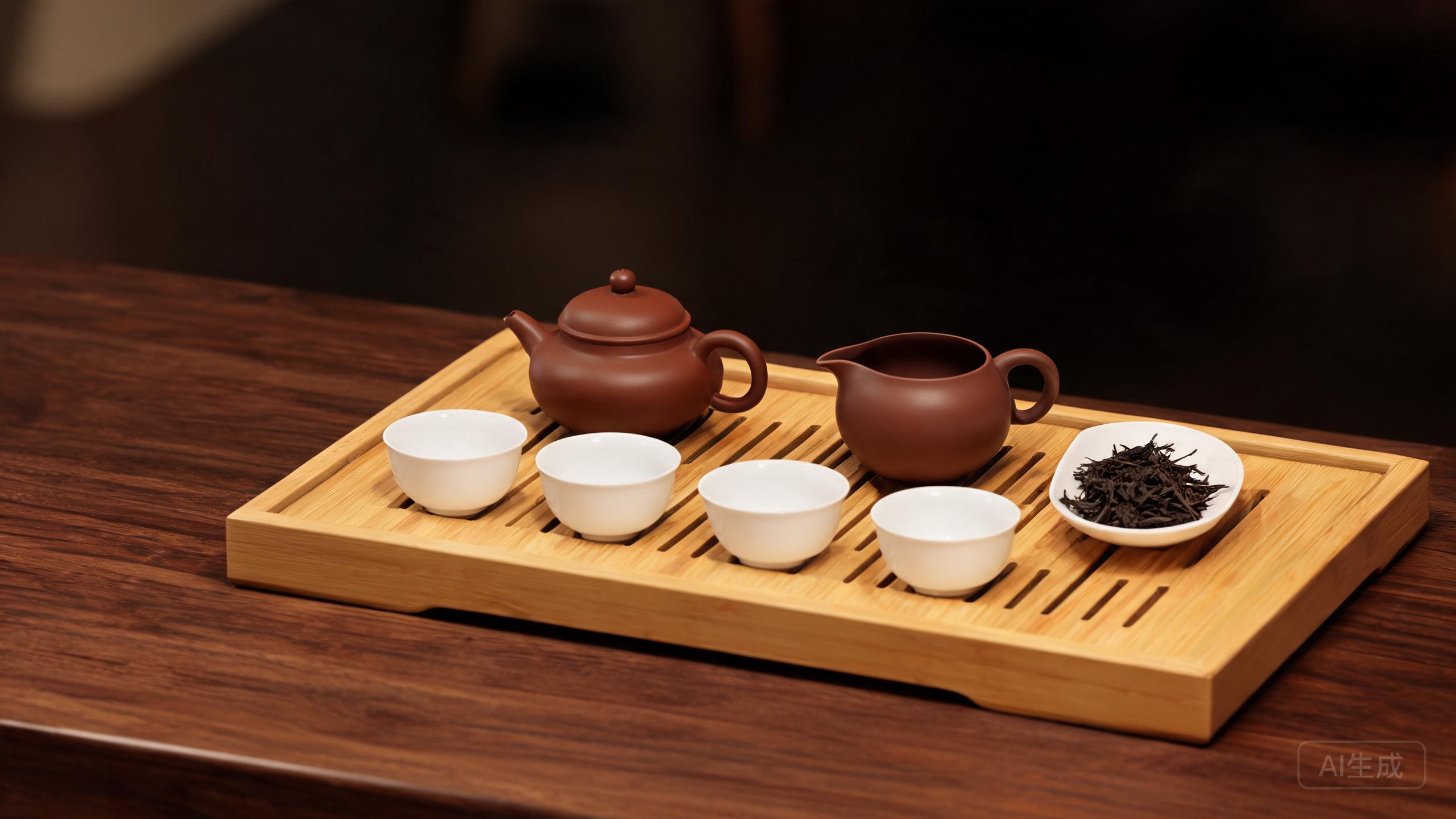
The ratio that matters
The ratio that matters for red tea, which most of the English speaking world calls black tea, is about one gram to 50 millilitres. That is 2.5 to 3 grams in a 150 millilitre cup.
Red tea is fully oxidized and usually rolled or cut, so it extracts fast and completely. A heavy ratio produces a strong cup very quickly, and there is less room for error than with a greener tea.
The English habit of one teaspoon per cup plus one for the pot lands somewhere near this ratio, which is why it works. The teaspoon in that old rule was a measured 5 millilitre spoon, not a heaped dessert spoon, and using the larger one is how a reasonable recipe turns into a stew.
Broken grades, the small leaf used in most tea bags, extract far faster than whole leaf. If you are brewing a CTC or a broken orange pekoe, use less leaf and less time than the same weight of a whole leaf red tea would need.
Too little leaf gives a thin cup with no malt or body. Red tea is more forgiving of a light dose than oolong is, but the result is still watery rather than delicate.
Too much leaf produces a cup that is strong in the wrong way: tannic, drying, and slightly sour, with the sweetness entirely buried. With red tea, more is genuinely not better after a point.
Time by the clock
Time by the clock for red tea is three to four minutes for a Western brew at 95 degrees. Gongfu style works too, at 20 to 30 seconds per steep, though it is less common for this category.
Red tea wants near-boiling water, 95 to 100 degrees. It is fully oxidized and has nothing delicate left to protect, and cooler water produces a flat, thin cup that never develops the malt character.
Unlike green tea, red tea tolerates a long steep without turning bitter in the same way. What it does instead is go tannic and drying, and that is a different failure with a different fix.
For multiple infusions, add 30 to 45 seconds each time. Two or three is realistic for whole leaf, and one is all you get from a broken grade.
The clock matters more here than with oolong, because a red tea left too long is genuinely unpleasant rather than merely different. Four minutes is the practical ceiling for most red teas.
The colour is the reliable signal. Red tea liquor should reach a clear amber-to-red. Once it goes dark brown and cloudy as it cools, it has been over-extracted, and milk will not hide it.
A simple starting recipe
A simple starting recipe: 3 grams of leaf, 250 millilitres of water at 95 degrees, steeped for three minutes. Lift the leaf out, do not leave it in the cup.
If it is too strong, cut the time to two and a half minutes before cutting the leaf. If it is too weak, add half a gram rather than extending past four minutes.
For milk, brew it stronger rather than longer: 4 grams in 250 millilitres for three minutes. The extra leaf gives the body that milk dilutes, and the shorter time keeps it from going tannic.
For a second infusion, add a minute. Whole leaf red teas give two decent steeps, and the second is often sweeter and less brisk than the first.
Two things to avoid. Do not brew red tea at 80 degrees because someone told you hot water ruins tea, and do not leave the leaf in the cup while you drink, which is what makes the last third of a mug undrinkable.
And do not assume all red teas want the same treatment. A delicate Darjeeling first flush wants 90 degrees and two and a half minutes, while an Assam or a Keemun will take a full boil and four minutes happily.
If you drink red tea with milk every day, this is the one ratio worth memorising: 4 grams in 250 millilitres, three minutes, water off the boil.
Hot water, enough leaf, and the leaf lifted out at the end. That is the whole method, and it covers nearly every red tea you will meet.