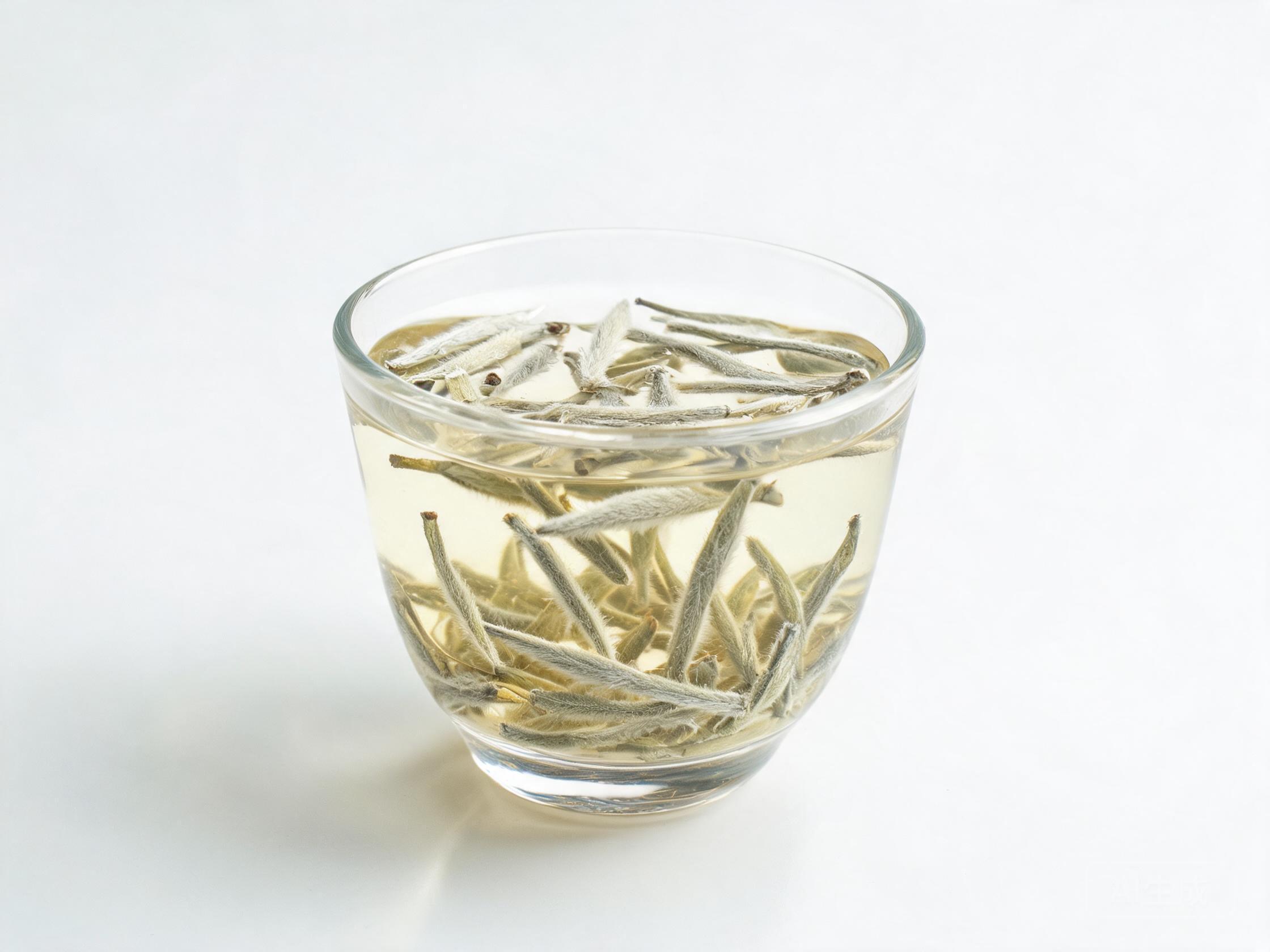
- What is assessed
- How a fresh tea is judged
- How an aged tea is judged
- The procedure
- The year question
- Why the method differs from other classes
- Frequently asked questions
- What does white tea review not score?
- What is down aroma?
- How does liquor colour indicate age?
- Why are fresh and aged judged differently?
- Is bitterness a fault?
- What does a cloudy aged liquor mean?
White tea review scores four things: the appearance of the dry leaf, the liquor, the aroma and the infused leaf. It does not score shape, because white tea is not rolled, and it weights down aroma and liquor colour more heavily than other classes do. Crucially, a fresh tea and an aged tea are judged against different targets, because ageing changes both.
The absence of rolling is the structural difference. Green, red and oolong reviews all begin with the shape of the leaf, and white tea has no shape to judge beyond whether the buds are intact.
The two variables that replace it are the down on the bud, which carries much of the aroma, and the colour of the liquor, which moves from pale apricot through gold to amber as the tea ages.
What is assessed
| Factor | Weight | What is looked for |
|---|---|---|
| Dry leaf | 20 per cent | Bud integrity, down coverage, evenness |
| Liquor | 20 per cent | Colour against age, brightness, clarity |
| Aroma | 30 per cent | Down aroma, freshness or age notes |
| Taste | 20 per cent | Sweetness, body, finish |
| Infused leaf | 10 per cent | Tenderness, evenness, colour |
Down aroma is the factor that has no equivalent in other classes. It is a specific smell, close to hay, melon or dried herb, that comes from the fine hairs on the bud and from the compounds associated with them, and it is the defining aroma of a good Silver Needle.
The down aroma fades with age and is replaced by dried fruit, then by medicinal and woody notes. A three-year-old Silver Needle does not smell of down, and judging it against a fresh standard would fail it for a change that is the point of keeping it.
Liquor colour is the second distinctive factor and it carries age information. A fresh Silver Needle brews pale apricot; a White Peony brews slightly deeper; a three-year-old is gold; a seven-year-old is amber. The progression is the most reliable age indicator available.
How a fresh tea is judged
A fresh white tea is judged on freshness, brightness and the integrity of the bud. The dry leaf should be plump, covered in down and unbroken; the liquor should be pale and bright; the aroma should be hay, melon or fresh herb.
Bitterness is a defect in a fresh tea. A well-made Silver Needle has almost no astringency, and a bitter one has been withered badly, dried too fast or made from leaf picked in the rain.
A green note is also a defect, and it is a common one. White tea that was dried too slowly or stored damp develops a grassy, slightly sour edge that a fresh tea should not have.
The infused leaf should be tender, even in colour and intact. Buds that have broken apart in the vessel indicate rough handling, and a patchy colour indicates uneven withering.
How an aged tea is judged
An aged white tea is judged against a different target entirely. The down aroma is gone and should be, replaced by dried fruit, honey, medicinal herbs or wood depending on the age and the grade.
The liquor should be amber to deep orange and clear. A cloudy aged liquor is a storage fault, and the commonest cause is moisture, which allows mould and produces a musty note that no amount of age improves.
Bitterness is more acceptable in an aged tea than a fresh one, because the compounds that soften with age have had time to do so and what remains is a structure. A harsh bitterness, however, is still a fault.
The infused leaf should be brown and even. A patchwork of green and brown in an aged tea indicates uneven storage or a blend of different ages, which is common and rarely disclosed.
- White tea review does not score shape, because it is not rolled.
- Down aroma is the defining aroma of a fresh tea.
- Liquor colour tracks age more reliably than any other sign.
- Fresh and aged teas are judged against different targets.
- A cloudy aged liquor is a storage fault.
The procedure
Weigh three grams into a standard tasting cup, or five if the sample is coarse Shoumei. White tea is bulky and a small sample of buds weighs very little, so the leaf is often measured by volume rather than by weight in practice.
Use water just off the boil and infuse for two to three minutes for a fresh tea, longer for an aged one. White tea is lightly processed and its cells are intact, so it needs more time than a green tea and less than a compressed pu-erh.
Pour off the liquor into a white cup and look at it against the background before smelling. The colour is the fastest age indicator and it is best judged before the aroma confuses the impression.
Smell the liquor, then the infused leaf, then taste. The infused leaf of an aged tea is worth smelling closely, because the storage quality shows there more clearly than in the liquor.
Examine the infused leaf last. Buds that are intact, even in colour and tender indicate careful picking; a mash of fragments indicates rough handling, and a patchwork indicates uneven withering.
| Step | Fresh tea | Aged tea |
|---|---|---|
| Leaf weight | 3 g | 5 g |
| Water | Just off boil | Full boil |
| Time | 2 to 3 minutes | 3 to 4 minutes |
| Colour check | Pale apricot | Amber to orange |
| Leaf look | Tender, even | Brown, even |
The year question
White tea review is the only one in the Chinese system where the year is part of the assessment rather than an external fact. A grader tasting a sample needs to know what it is meant to be before deciding whether it is good.
The practical consequence is that a score without a stated year is meaningless. A tea judged as a fresh Silver Needle might score poorly and be an excellent three-year-old, and the reverse is equally possible.
For a buyer the useful translation is to decide first which kind of tea you want, then judge against that target. A fresh white tea should be bright and floral; an aged one should be deep and smooth, and neither should be judged by the other’s standard.
The trade does not always make this easy, because aged teas are often sold with the same grade names as fresh ones. A tin saying Silver Needle may hold a fresh tea or a ten-year-old one, and only the liquor colour and the seller’s honesty will tell you which.
Why the method differs from other classes
The absence of rolling is the first reason. In every other class the leaf is shaped, and the shape tells the grader about the pick, the processing and the maker. White tea is withered flat, so there is nothing to read from the form.
The second is that white tea has almost no processing to assess. There is no oxidation curve and no roast, so the grader is judging the raw material and the drying rather than a craft. That makes the review simpler and less informative at the same time.
The third is that white tea changes in the tin in a way the other classes do not. A green tea declines, a red tea declines, an oolong depends on the bake, and a white tea transforms. A review method has to accommodate a product that is meant to be different next year.
The fourth is that the category’s premium grades are defined by appearance. Silver Needle is buds only, and the visual check is both the fastest test and the most decisive one, which is why the dry leaf carries a fifth of the score.
One practical note for a home taster: white tea is bulky and easy to over-leaf. Three grams of Silver Needle is a generous pinch and three grams of Shoumei is a small one, and a scale is worth using until the eye is trained, because the difference between a good and a stewed cup is often the leaf ratio.
The second practical note is that white tea rewards patience. A fresh Silver Needle at two minutes is delicate and at four becomes bitter; an aged Shoumei at two is thin and at four is sweet. The same tea can be good or poor depending entirely on the timing.
The single most useful habit a drinker can build is to taste a fresh and an aged version of the same grade side by side. The difference is the whole argument of the category in two cups, and it takes one session to learn.
Frequently asked questions
What does white tea review not score?
Shape, because the tea is not rolled.
What is down aroma?
The hay and melon smell from the hairs on the bud, defining a fresh Silver Needle.
How does liquor colour indicate age?
Pale apricot when fresh, gold at three years, amber at seven.
Why are fresh and aged judged differently?
Ageing removes down aroma and adds dried fruit and wood.
Is bitterness a fault?
In a fresh tea yes; some structure is acceptable when aged.
What does a cloudy aged liquor mean?
A storage fault, usually moisture.