- Why cool rather than cold
- Lung and spleen, and what that means
- Aging as a change of nature
- What the framework cautions
- Reading the claim at the right level
- Why the lung attribution matters
- Storage as part of the medicine
- Frequently asked questions
- Is white tea cold or cool in Chinese medicine?
- Does aging change white tea's nature?
- Which meridians does white tea enter?
- Is silver needle used for coughs?
- Can I drink new white tea with a cold constitution?
- Why does aged white tea cost so much?
Chinese medicine classes new white tea as cool in nature, sweet in flavor, entering the lung and spleen meridians. It is a milder cold than green tea, because the leaf is not kill-green and the minimal processing leaves it less sharply cooling. Aging shifts it toward neutral, which is why the tradition treats fresh and aged white tea as two different medicines rather than one tea at two prices.
The distinction is the most important thing on this page. A three-year-old white tea and a seven-year-old one are not the same substance in this framework, and the tradition says so explicitly rather than treating age as a quality grade alone.
Why cool rather than cold
The system places green tea at cold and white tea at cool, a step milder. The reasoning follows the processing rule: the more a leaf is heated and worked, the more its original cold is either preserved or transformed. Green tea is kill-green with dry heat, which locks the cold in. White tea is only withered, which lets a small amount of oxidation occur and takes the edge off without moving the leaf to warm.
The difference is small enough that a drinker may not notice, and large enough that the tradition prescribes them differently. Green tea is the stronger cooling agent and is used against clearer heat. White tea is the gentler one and is used where the cold is mild or where the stomach is delicate.
Lung and spleen, and what that means
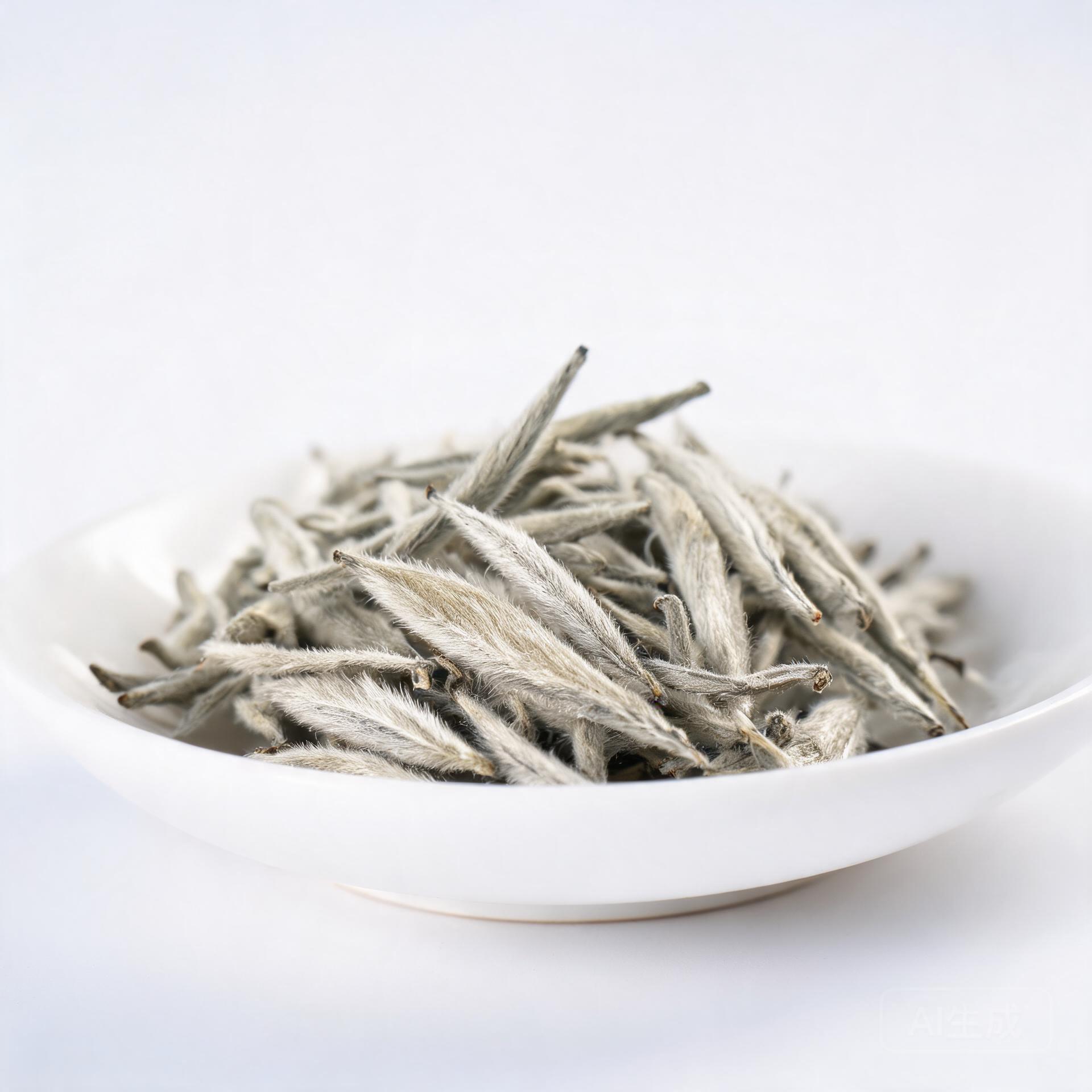
The lung attribution is where white tea differs most from green. White tea is the tea of the lung meridian in Chinese practice, used for a dry cough, a scratchy throat and the dry heat of early autumn. Silver needle in particular is given for these, on the grounds that the bud is the part of the plant that opens first and carries a light, ascending quality.
The spleen attribution is shared with most teas and reflects the digestive use. White tea is understood to clear mild heat from the stomach without injuring it, which is why it is chosen over green tea for someone with a sensitive stomach who nonetheless has heat signs.
The combination of lung and spleen is unusual. Most teas enter the stomach and one other organ. White tea’s pair points at the upper and middle burner together, which matches its traditional use for the dry cough that comes with a weak digestion, a common autumn presentation.
Aging as a change of nature
The tradition holds that age moves a tea toward neutral and eventually toward warm. This is stated for dark tea and pu-erh, both of which are genuinely warm after microbial fermentation. For white tea the claim is more modest: it becomes neutral rather than warm, because the change is slow non-enzymatic oxidation rather than microbial transformation.
The chemical evidence supports the direction. Catechins, which the tradition associates with cooling, fall by twenty to forty percent over seven years. Flavonoid glycosides and gallic acid rise, and the taste moves from grassy to medicinal. Whatever the cooling quality is taken to be, its chemical correlate is declining.
What the tradition does not say is how long this takes to matter. Sources differ between three years and seven, and the honest reading is that the change is gradual and the boundary is a convention for pricing rather than a measured threshold.
| Tea | Nature | Meridian | Use in the tradition |
|---|---|---|---|
| Green | Cold | Heart, lung, stomach | Clear heat, stronger cooling |
| New white | Cool | Lung, spleen | Dry cough, mild heat, delicate stomach |
| Aged white | Neutral | Lung, spleen | Daily drink, mild support |
| Yellow | Cool | Spleen, stomach | Mild heat with weak digestion |
| Oolong | Neutral | Spleen, stomach | Food stagnation, year round |
| Red | Warm | Heart, spleen, stomach | Cold constitution, cold weather |
What the framework cautions
The caution for new white tea is the same as for green, in milder form: a cold constitution, cold limbs, loose stools and a preference for warm drinks are signs that a cool tea may not suit. A weak spleen in particular is said to be injured by cold, and white tea is cold-leaning even if mild.
The caution for aged white tea is the opposite one. Once it turns neutral it is broadly suitable, which is why aged white tea is the form recommended for older drinkers and for daily use. The tradition’s preference for aged tea is not only about taste.
A third caution is specific to storage. Aged white tea is only good if it was stored dry, dark and away from odors. The tradition assumes careful storage, and a badly stored cake is not an aged medicine but a spoiled one. This is a real risk in humid climates and the most common way the aged tea market goes wrong.
- New white tea suits heat patterns with a delicate stomach.
- Avoid new white tea if you run cold and have loose stools.
- Aged white tea suits most constitutions and most seasons.
- Silver needle is the lung tea, used for dry cough.
- Aged tea must be stored dry, or it is spoiled rather than aged.
- The lung attribution is stronger than in green tea.
Reading the claim at the right level
The cool classification is not a comment on the drink’s temperature. Iced white tea is still cool in the framework’s sense, and a hot cup is still cool. The word describes a direction of action in a system of correspondences, not a thermometer reading and not a measured physiological effect.
This is not clinical trial evidence. No trial has tested whether white tea clears heat from the lung or whether aging changes its effect on a dry cough. The framework is a coherent account built from long observation, and it is not a substitute for medical evidence about a cough that will not settle.
Both statements can be held at once. A drinker can use the vocabulary to decide what to drink in autumn without believing it has been validated, and a writer can describe it accurately without either dismissing the tradition or overclaiming for it.
Why the lung attribution matters
Of all the tea classes, white tea has the strongest claim to the lung meridian, and this is the detail that separates its traditional profile from green tea’s. In the system, the lung governs the skin, the nose and the descending of qi, and dryness in the lung shows as a dry cough, a scratchy throat and dry skin.
White tea is recommended for exactly that presentation, especially in early autumn when the air turns dry. The bud-only silver needle is the form most often named, on the reasoning that the bud is the lightest and most ascending part of the plant and acts on the upper body.
A modern reader can translate this without accepting it. A warm, mildly astringent drink does soothe a dry throat, and steam helps. The framework’s contribution is a specific indication and a specific timing, which is more than a vague recommendation to drink tea.
Storage as part of the medicine
The tradition treats storage as part of the preparation rather than as an afterthought. An aged white tea that was stored badly is not a lesser version of a good one, it is a different and worse substance, and the classical view of aging assumes careful conditions throughout.
That assumption is worth stating because the aged tea market often does not meet it. A cake stored in a humid room absorbs moisture and can grow mold, and the result is sold to someone who believes they are buying a seven-year medicine. The traditional framework would call that spoiled, not aged.
There is a detail in the classical literature that is worth knowing because it explains why white tea is treated as a separate item rather than a grade of green. The old texts describe teas by the part of the plant used and by the timing of the pick, and a bud-only tea was understood to act differently from a leaf tea even when both came from the same bush.
That distinction survives in modern practice. Silver needle and shou mei are both white tea and are used differently, which is a level of specificity the category label hides. A reader who wants to follow the tradition should choose the grade, not just the color.
The framework’s weakest point is the one it shares with every traditional system: it cannot adjudicate between two practitioners who disagree. One will say three years is enough to reach neutral, another will say seven. Both are reasoning correctly from the same premises, which is what makes the disagreement unresolvable rather than a matter of expertise.
- Cool rather than cold, a step milder than green tea.
- Lung and spleen, the strongest lung attribution of the six.
- Silver needle is the bud tea, used for dry cough.
- Aging moves it to neutral, usually within three to seven years.
- Fresh white suits heat, aged white suits cold.
- Storage is part of the preparation, not an afterthought.
Frequently asked questions
Is white tea cold or cool in Chinese medicine?
Cool. It sits a step milder than green tea’s cold because the leaf is only withered, not kill-green.
Does aging change white tea’s nature?
Yes. The tradition says it moves from cool toward neutral, typically somewhere between three and seven years.
Which meridians does white tea enter?
Lung and spleen. The lung attribution is stronger for white tea than for green tea.
Is silver needle used for coughs?
In traditional practice, yes, for dry cough and scratchy throat in early autumn.
Can I drink new white tea with a cold constitution?
It is not the best choice. Choose aged white tea, which is neutral.
Why does aged white tea cost so much?
Partly the storage time and loss, partly the traditional view that age improves it. Both are real, and neither is a health claim.