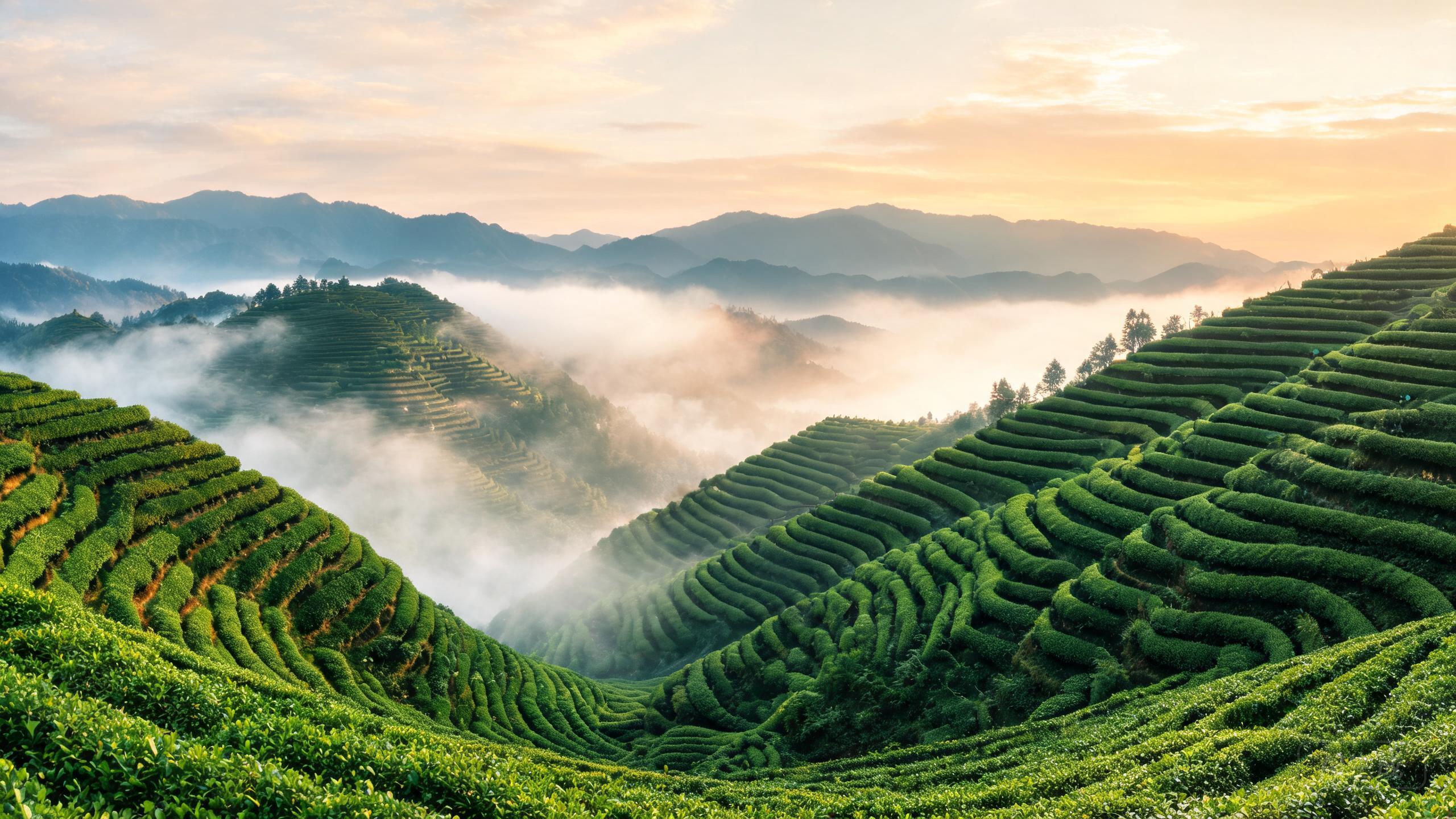
What Zhejiang is known for
Zhejiang is a green tea province, and almost everything famous here is green.
The province sits south of Shanghai, and the growing areas are low hills with a lot of rain.
That climate suits early picking, and early picking is what the province is known for.
The most famous tea is Longjing(龙井), known in English as Dragon Well.
It comes from around Hangzhou and West Lake, and it is the benchmark green tea.
The province also makes Anji white tea, which is a green tea despite the name.
Gunpowder tea is rolled into pellets here, and most of it was made for export.
A few smaller names survive locally, and they are worth trying when they appear.
The style across the province is gentle, and the leaf is usually flat or rolled small.
Astringency is kept low, and sweetness is the aim rather than strength.
Rainfall in the tea hills runs to about 1,400 mm a year, and most of it falls in spring.
That makes Zhejiang the usual recommendation for someone new to green tea.
It also means the teas are delicate, and they do not keep as well as darker ones.
Anyone buying here is buying freshness as much as origin.
Longjing and the flat green style
Longjing is pan fired, and the firing is what gives it the flat leaf shape.
The maker presses the leaf against the hot pan, and it dries flat and smooth.
A hand fired batch is worked through 3 or 4 stages, with the pan hottest at the start.
That step is done by hand in the traditional version, and it takes practice to judge.
The finished leaf is flat, yellow green and slightly shiny.
The aroma is of roast chestnut, and the taste is sweet with a clean finish.
The liquor is a pale yellow green, and it should be clear rather than cloudy.
Pre Qingming(明前)means picked before the Qingming festival, and it commands the highest price.
That early leaf is more delicate and sweeter, and it is also much more expensive.
Later pickings are stronger and rougher, and they are better value for daily drinking.
The West Lake area is the traditional origin, and other parts of the province copy the style.
A tea sold as Longjing from outside Zhejiang is not Longjing at all.
Look for a named area within the province, and buy from a seller who will give one.
The flat shape and the chestnut aroma are the two things to check in the cup.
The other teas of the province
Anji Baicha(安吉白茶)is the second name worth knowing.
It is made from a cultivar that produces pale leaf, and it is processed as a green tea.
The name says white, and the category is green, which confuses almost everyone.
It has a high amino acid level, and the taste is unusually sweet and soft.
The leaf is picked early and processed gently, and it does not keep well.
Gunpowder(珠茶)is the third, and it is rolled into small tight pellets.
It was made for export from the start, and it is still mostly sold abroad.
Grades are given as numbers, and marks such as 3505 and 9371 describe pellet size and leaf quality.
The pellets unfurl in the cup, and the tea is strong enough to take milk.
It is the least delicate tea in the province, and it suits a mug.
Smaller local names include Huiming and a few others, and they appear rarely.
They are usually good value when they do, since they lack the famous name.
The province as a whole is consistent, and the differences are of degree.
Everything here is at its best within a few months of picking.
Buying and brewing Zhejiang tea
Buying starts with the picking date, since freshness decides everything here.
A Longjing from this spring is worth more than a famous name from last year.
Check the leaf shape, and a flat even leaf means it was pan fired properly.
A broken leaf means a lower grade, and it will brew bitter faster.
The aroma should be clean and nutty, and it should not smell of grass or of nothing.
Store it sealed and cold, since the leaf loses its sweetness quickly at room temperature.
A fridge used only for tea is the usual solution, and it works well.
Brew 3 g in 150 ml at 80 °C, and give it about 60 seconds.
Hotter water flattens the aroma, and it pulls bitterness out of the leaf.
A glass is the traditional vessel here, since the flat leaf is pleasant to watch.
The leaf gives 3 or 4 steeps, and the second is often the best.
Anyone who finds it too light should add leaf rather than add time.
That adjustment is the whole trick with this province.