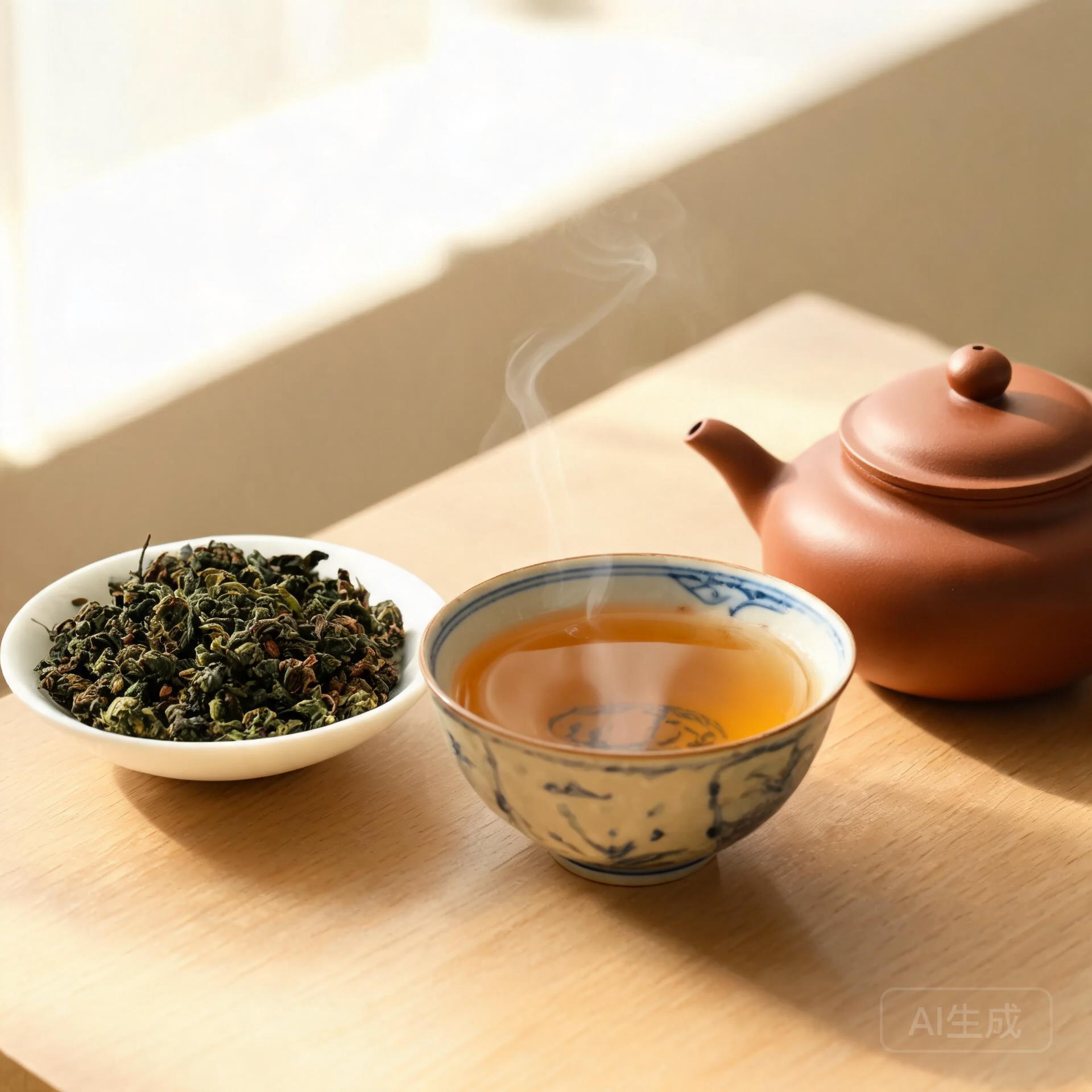
The effect
Elevation changes oolong more visibly than it changes most categories, and Taiwan is where you can see it.
A garden at 300 m and one at 1,600 m in the same district turn out teas that barely resemble each other.
The high one gives a thicker, sweeter liquor with less edge, and the low one trades body for aroma.
Drinkers describe the high grown cup as soft, and it is the softness rather than the perfume that gets noticed.
The leaf itself comes out thicker and darker, and it holds up for more infusions before it gives out.
Wuyi sits at a moderate height, and most of what drinkers call its character really comes from the roasting.
Anxi climbs from the valley floor to about 1,000 m, and the highest gardens there are picked last.
Fenghuang’s old bushes sit in the middle band, and the named trees are mostly in its upper half.
Taiwan pushes higher than anywhere else in the category, with some gardens in the north above 2,000 m.
At that height the growth is slow enough that two crops a year collapses into one.
The effect is real and it shows up in the cup, which is more than most origin claims manage.
It is also the most inflated number printed on a packet of tea.
Why it happens
Temperature is the main mechanism, and it works through the speed at which the bush grows.
Cool air slows everything down, and a leaf that takes longer to reach picking size is a denser leaf.
Slow growth gives the plant time to build amino acids, and those are where the sweetness comes from.
It also holds back the catechins that read on the palate as bitterness and astringency.
Day night swing is the second mechanism, and it is wider on a mountain than it is in a valley.
A wide swing slows respiration after dark, so the plant keeps what it made during the day.
Light is the third mechanism, since high gardens spend much of the morning inside cloud.
Diffuse light is associated with more aromatic compounds in the finished leaf, and pickers can taste the difference.
Water is the fourth, because steep ground drains fast and the roots are never standing wet.
Soil on old tea mountains is thin and rocky, and it gives the bush less than it wants.
That sounds like a disadvantage and is not, since a plant that is not racing produces a better leaf.
Cool air, a wide swing, soft light and lean ground all push the same way.
Limits of the rule
Elevation stops helping at some point, and in tea that point arrives sooner than sellers admit.
Well above 2,000 m the bush begins to struggle, and the leaf turns thin rather than dense.
Frost becomes a genuine risk near the top, and a lost crop is a normal outcome in a cold year.
Cultivar sets the ceiling, and a poor bush planted high will lose to a good one planted lower.
Processing can delete the advantage completely, because a heavy roast hides everything altitude did.
A high grown Wuyi tea roasted dark tastes of the roast, and the elevation contributed nothing you can find.
Picking standard matters as much, and a coarse pick from a high garden is still a coarse pick.
Altitude claims are unverifiable in practice, and there is no document a buyer can ask to see.
Any number can be printed on a packet, and the number sells the tea whether or not it is true.
Taiwanese high mountain tea is among the most substituted products in the entire trade.
Far more of it is sold under those names than the high gardens could ever produce.
Read a printed altitude as a statement about price rather than as a fact about the tea.
Practical takeaway
Use elevation to sort the shelf, and never as a reason to pay a large premium on its own.
Compare a high grown tea against a lower one from the same seller and the same district.
The comparison only tells you anything if both were processed in the same style.
Use 5 grams in a 100 ml vessel at about 95 °C and steep the first infusion for 30 seconds.
Look for thickness on the palate and sweetness that arrives late, since those are the high grown markers.
A tea that tastes thin and merely perfumed usually came from lower ground, whatever the packet claims.
Count the infusions, because a dense leaf keeps giving where a soft one has already stopped.
Most of the separation appears after the 3rd infusion, once the aroma has gone and only the body is left.
For Wuyi and Anxi, forget altitude and learn the roast level and the cultivar instead.
For Taiwanese tea, pay for height only from a seller who names the garden and the harvest date.
For the rest of the category, altitude is the least useful number on the packet.
Buy the cup, and let the number be something you check afterwards.