Best moments
Dark tea suits occasions built around food rather than around the tea.
After a rich meal is the classic moment, and it is the one most people know it for.
Winter evenings are the second, particularly with a simmered preparation.
Long sessions suit it, since one cake will run for hours.
An 8 g dose in a 120 ml pot will give 10 steeps or more.
That is an afternoon rather than a break.
It is the right tea for a table where nobody is in a hurry.
It also suits contemplative occasions, where a cup changing across steeps is the point.
Aged tea has a story attached, and it is worth telling while pouring.
Guests who enjoy whisky or red wine tend to take to it immediately.
It is a poor morning tea for most people, since it has weight rather than lift.
Think of it as an evening drink that happens to be tea.
It suits a table where the food has already arrived, since it asks nothing of the first course.
An evening that runs long is the natural home for it.
Less ideal moments
Dark tea’s off-times are mostly occasions where the tea is expected to be delicate.
A light lunch is the first, where it will simply overwhelm the plate.
A formal afternoon tea is the second, and it is the wrong register entirely.
Hot weather is the third, since a simmered dark tea in July is not appealing.
A large group works against it in a specific way, because the tea outdoes the conversation.
Serving 10 people a heavy aged tea makes the occasion about the tea whether you wanted that or not.
A tasting should end with it rather than start with it.
Anything poured after it tastes thin, which is the standard reason for the ordering.
An occasion with dessert as the main event suits it badly.
Earthiness and sugar do not agree.
Occasions where people want to drink quickly are the worst fit.
This tea sets the pace, and it sets it slowly.
Occasions with a schedule attached are the wrong ones, because the tea refuses to keep to one.
A quick cup before leaving is the least useful way to drink it.
Setting it up
Setting up a dark tea means deciding between steeping and simmering.
Steeping in a 120 ml pot with 8 g of leaf is the standard approach.
Use boiling water throughout, with short steeps of 15 to 20 seconds.
Simmering is the other method, and it is the winter one.
Break off a piece, rinse it once, then simmer for 3 minutes at a low boil.
That produces a thick, dark cup that is closer to a broth than to a tea.
It is also how the tea is prepared across much of the northwest.
Use small cups either way, since the tea is strong and the steeps are many.
Preheat everything, and keep a thermos of boiling water beside the pot.
Rinse the leaf once before the first real steep, which wakes an aged tea up.
Decant into a jug so nothing over steeps while people are talking.
That single habit saves more sessions than any other.
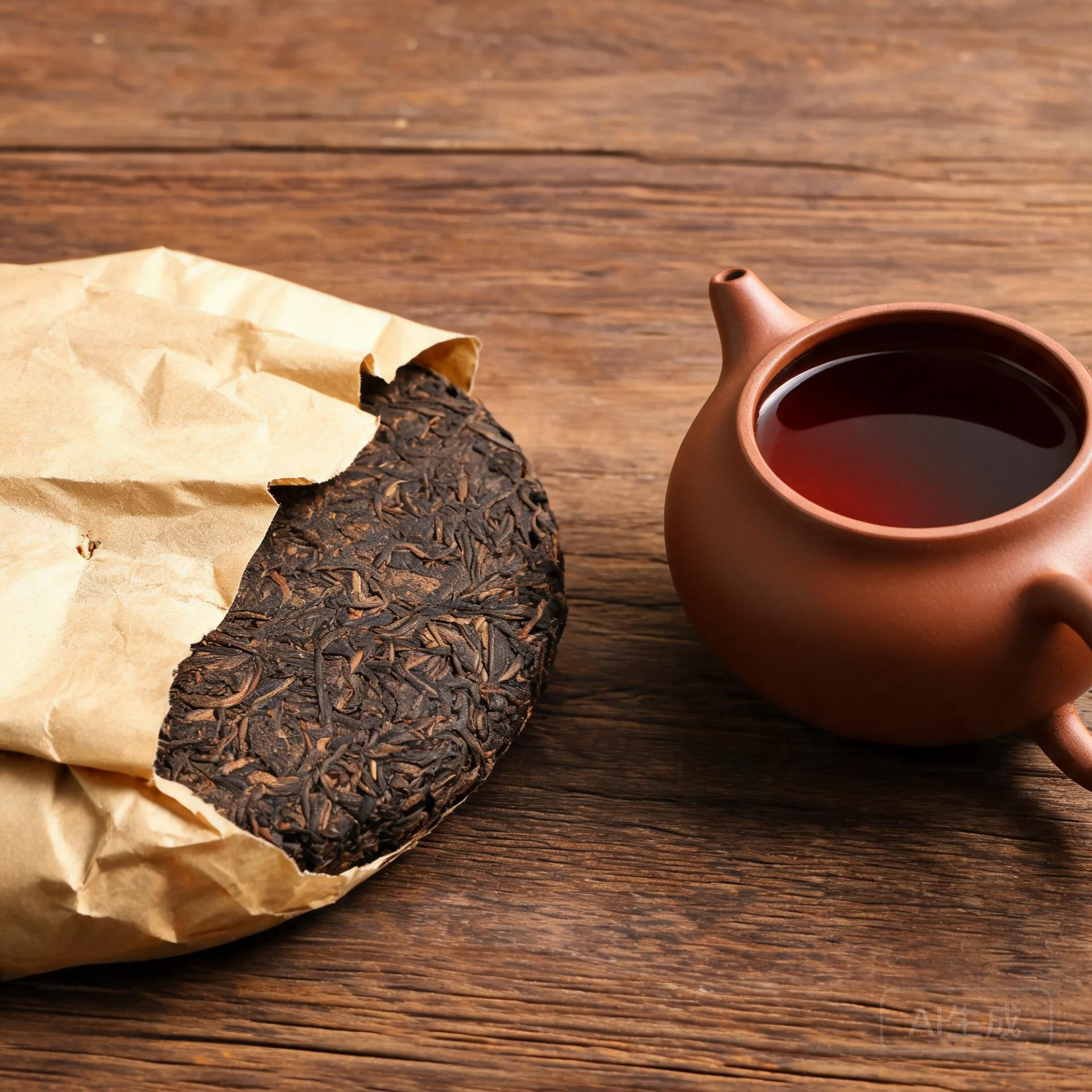
Break the cake with a pick rather than a knife, which keeps the compressed leaf in layers.
Keep the rinse short, and pour it away rather than serving it to anyone.
Food around it
Food around a dark tea should be heavy, and the occasion should be built that way.
After a fatty meal is the classic arrangement, and it is what the tea is for.
Roasted lamb, pork belly and braised beef all belong on that table.
Hard cheese and cured sausage work, which almost no other tea allows.
Nuts and dried fruit are the lighter option, and they are the safe one.
Fresh fruit mostly fails, since acid and earth do not combine well.
In the northwest the tea is served during the meal rather than after it.
That is the correct order, and it is worth copying.
Keep the food coming as long as the tea lasts, which is usually longer.
A cake of dark tea will outlast most plates by an hour.
The specific pairings are in the food notes for the category.
The plate should be as unhurried as the cup.
Anything braised or slow cooked belongs on that table, and so does bread.
Save the fruit course for later, since it will not survive beside the cup.