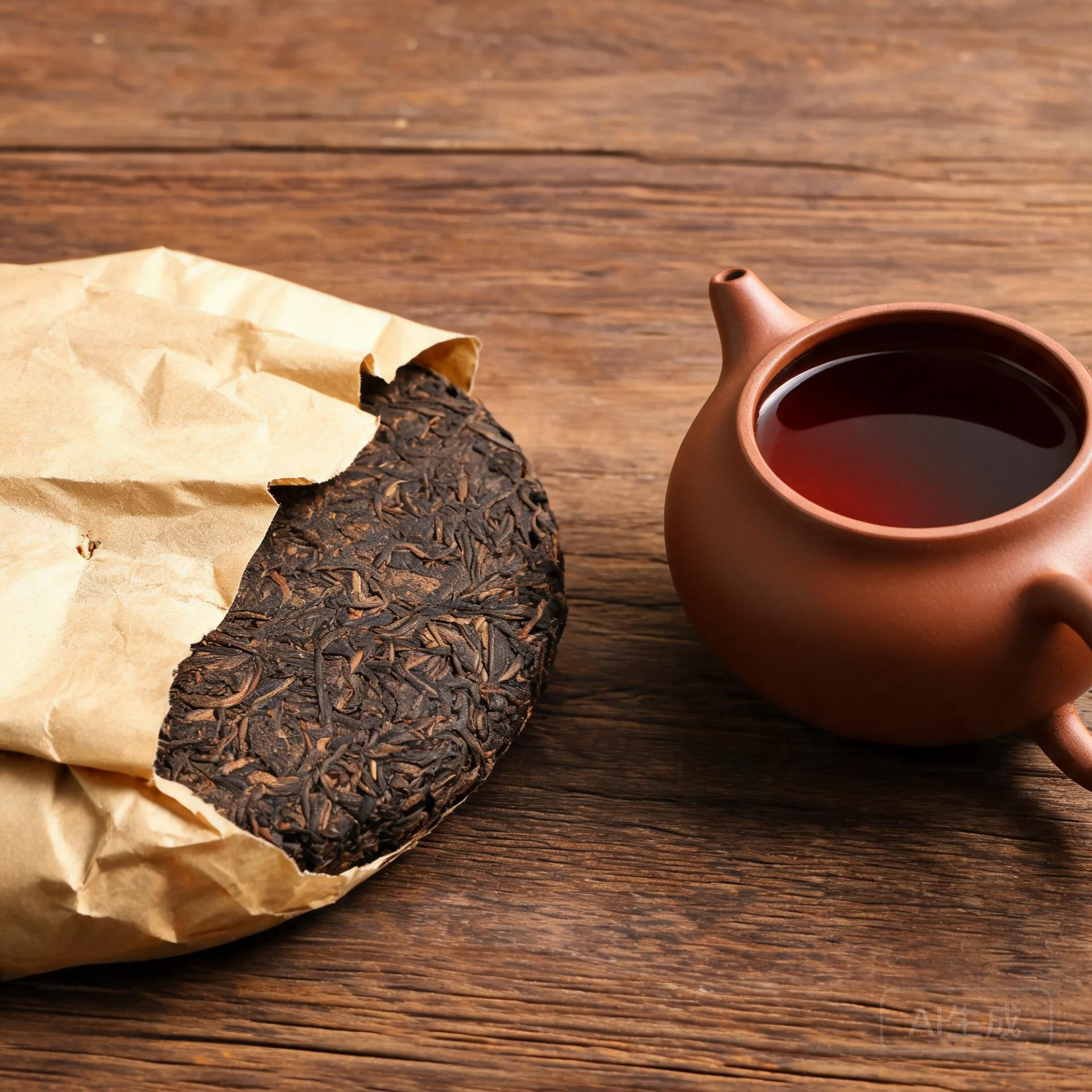
- Why the traditional pairing is with food
- Who it suits best
- How much, and how strong
- When another category is better
- Frequently asked questions
- How many cups of dark tea a day?
- Is dark tea good after a meal?
- Can I drink dark tea at night?
- Is dark tea stronger than coffee?
- Can I drink dark tea if I have a cold constitution?
- Does dark tea need special brewing?
Dark tea suits people who run cold, who eat heavy or fatty meals, and who want a tea that can be brewed strong without becoming harsh. Two to four cups a day is a reasonable range at 25 to 45 mg of caffeine per cup, and the traditional use after a meal is the pattern most worth adopting. It is a poor choice for an empty stomach.
The category’s practical advantage is that it is the most forgiving tea to brew. The leaf is coarse, the compounds are large and slow, and boiling water for a long time makes it better rather than worse. That is the opposite of a delicate green tea.
Why the traditional pairing is with food
Dark tea is drunk with fatty food across a huge range of cultures: butter tea in Tibet, milk tea in Mongolia, oily meals in Hunan, dim sum in Guangdong. The tradition explains it as a descending bitter cutting through richness, and the modern explanation is not far off.
The large theabrownin polymers can bind bile acids in the gut, and bile acids are what the body makes to digest fat. That is a plausible mechanism for a tea that feels right after a heavy meal, and it is the same mechanism proposed for the lipid effects.
The practical consequence is that dark tea is best placed after a meal rather than before one. A strong cup on an empty stomach is the classic cause of the hollow feeling that the tradition warns about, and the warning is stronger here than for any other category because the tea is brewed at strength.
Who it suits best
| Group | Amount | Reason |
|---|---|---|
| Cold constitution | 2 to 4 cups | Warmest class in the tradition |
| People eating heavy meals | 1 cup after food | Bitter descending, binds bile acids |
| Anyone who dislikes delicate tea | 2 to 4 cups | Tolerates boiling water and long steeps |
| Older drinkers in cold climates | 2 to 3 cups | Traditional use for deep cold |
| People replacing sweet drinks | 2 to 4 cups | Zero calorie, strong flavor |
| Anyone with a sensitive stomach | 1 to 2 cups, after food | Not on an empty stomach |
The cold constitution case is the strongest traditional indication. Someone with cold hands and feet, a preference for warm drinks, loose stools and low energy is exactly the pattern the framework associates with this category, and it is the one recommendation the tradition makes most consistently across regions.
The replacement case is the one with measurable support. Dark tea has a strong enough flavor to satisfy someone used to sweetened drinks, which makes the swap easier than swapping to a delicate white tea. That is a practical advantage rather than a chemical one.
How much, and how strong
Three to five grams per 200 ml is a reasonable starting point, and dark tea tolerates more leaf than most categories because its compounds extract slowly and its bitterness is balanced by sweetness.
The caffeine estimate depends on the dose more than the category. A five gram cup delivers 35 to 45 mg; a ten gram cup, which is common when a brick is broken roughly, delivers 70 to 90 mg. Someone counting caffeine should weigh the leaf rather than count cups.
Simmering changes the arithmetic again. A litre of water with five grams of leaf simmered for ten minutes extracts most of the caffeine in the leaf, so a single large mug from that pot carries a substantial fraction of the total.
- Two to four cups a day is a reasonable range.
- Drink it after food, not before.
- Use boiling water, and rinse the leaf once.
- Weigh the leaf if you are counting caffeine.
- Simmering extracts more than steeping, so adjust the dose.
- Store it dry, and discard a musty brick.
When another category is better
Anyone with a heat pattern should follow the tradition and choose green, white or yellow tea. Dark tea is warm and its warming quality is the strongest of the six classes.
Anyone who finds strong tea irritating should note that dark tea is usually brewed strong, and a milder category would be easier. A weak dark tea is possible and less satisfying, which is the compromise.
Anyone looking for a specific health effect should be careful, because the dark tea literature is small and the claims outstretch it. The lipid findings are suggestive and not established.
The honest summary is that dark tea is a good daily tea for people who like strong flavors and heavy meals, and a poor one for people who need something gentle. Both statements come from its chemistry rather than from marketing.
The group that benefits most from the category is people who eat rich food regularly. Dark tea has the body and bitterness to cut through fat, and the tradition of drinking it with fatty meals spans Tibet, Mongolia, Hunan and Guangdong. That is a use pattern with centuries of testing behind it, even if the mechanism was only proposed recently.
The group that benefits least is people who want a delicate cup. Dark tea is not subtle, and a drinker looking for floral aromatics will find it coarse. The category rewards people who want strength.
A third group worth naming is anyone who has tried green tea and found it too light. Dark tea delivers a strong flavor with moderate caffeine, which is a combination that suits people who drink coffee for the taste as much as the effect.
What none of these groups should expect is a health transformation. The tea is warm, strong and traditional, and those are reasons to drink it. They are not reasons to expect it to change a blood test.
- Two to four cups a day, at 25 to 45 mg of caffeine.
- Drink it after food, never as the first drink of the day.
- Use boiling water and rinse the leaf.
- Weigh the leaf if you are counting caffeine.
- Simmering extracts more than steeping.
- Store it dry and discard a musty brick.
The list is the whole practice. Dark tea is not a tea that rewards elaborate rules, and the two that matter, drink it after food and store it dry, are the two that people skip.
The category’s strongest practical argument is that it makes a good replacement for something worse. Dark tea has enough body to satisfy someone used to sweetened drinks or coffee, which makes the swap easier than recommending a delicate white tea would be.
The weakest argument is any specific health claim. The lipid findings are small and the trials are weak, and a drinker who expects a blood test to change is likely to be disappointed.
Between those two, the honest recommendation is a good daily tea for people who like strong flavors, and not a supplement. That is a modest claim and it is the one the evidence supports.
The comparison with red tea is worth making because the two are often confused by drinkers moving away from green tea. Red tea is warm and sweet and brewed light. Dark tea is warm and bitter and brewed strong. They suit different meals and different temperaments.
A drinker who wants a gentle warm tea should choose red. A drinker who wants a strong one, or who eats heavily, should choose dark. Both are correct choices for different people, and neither is a better version of the other.
The caffeine is similar between them, so the choice is about taste and brewing rather than about stimulation. That is a useful simplification for anyone deciding between the two on a shelf.
The category’s range is wider than it looks from outside. Anhua tianjian is loose, clean and relatively light. Guangdong qianliang is coarse and strong. Liubao is sweeter. A drinker who disliked one dark tea has not necessarily disliked the category.
That is a practical reason to try a second product before concluding. The range within dark tea is comparable to the range between dark tea and oolong, and the label on the shelf does not always say which you are buying.
One last point about how the category fits a day. Dark tea is a good second tea rather than a first: a lighter cup in the morning and a dark tea after lunch covers both the lift and the meal, and neither displaces the other.
That arrangement also solves the empty-stomach problem without any rule. A drinker who has already had a green tea and a meal is exactly in the position where a strong dark tea is at its best.
Frequently asked questions
How many cups of dark tea a day?
Two to four for most adults, at 25 to 45 mg of caffeine per cup.
Is dark tea good after a meal?
Yes, that is its traditional use. It is a poor choice on an empty stomach.
Can I drink dark tea at night?
Not much. It has 25 to 45 mg per cup, so a cup at eight leaves a noticeable residual.
Is dark tea stronger than coffee?
No. It has less caffeine per cup, though it is often brewed stronger than other teas.
Can I drink dark tea if I have a cold constitution?
That is the traditional indication for it.
Does dark tea need special brewing?
Boiling water and a rinse. It tolerates long steeps better than any other category.