- The process, in order
- What the pile actually does
- The three types
- What yellow tea is not
- Why the category is tiny
- Why the pile changes the taste
- What can go wrong
- How to recognise it on a shelf
- Frequently asked questions
- What makes yellow tea different from green tea?
- Is menhuang a fermentation?
- How long is the pile?
- What happens to the catechins?
- What are the three types?
- Why is yellow tea so rare?
Yellow tea is green tea that has been through one extra step called menhuang, a warm moist pile that the leaf rests in after kill-green, before drying. That step changes the leaf non-enzymatically: chlorophyll breaks down, the color turns yellow, esterified catechins fall, free amino acids rise, and bitterness drops. Everything else about the two classes is the same process. Yellow tea exists because of one pile.
That is the definition and it is worth stating precisely, because most English writing makes yellow tea sound like a separate tradition with its own methods. It is not. It is green tea plus a delay in a warm damp environment, and the delay is the whole tea.
The process, in order
Picking, kill-green, rolling, menhuang, drying. The first two and the last are the green tea process. Menhuang is inserted between rolling and drying, or sometimes right after kill-green before rolling.
The leaf goes into the pile still warm from the kill-green and still damp. It is gathered into a heap, covered with cloth or paper to hold the heat and moisture in, and left for 24 to 72 hours at 60 to 70 Celsius, turned periodically so the outside and inside of the pile exchange.
A producer watches three things: the temperature, the moisture and the smell. The pile should stay warm but not hot, damp but not wet, and the aroma should move from a sharp green smell toward a sweet one. When it does, the pile is broken and the leaf is dried.
What the pile actually does
Two reactions run at once. Residual enzymes that survived the kill-green continue a slow oxidation, which is why the leaf color moves. And heat plus moisture drive non-enzymatic reactions: the breakdown of large esterified catechins into simpler ones, the release of amino acids from proteins, and the formation of Maillard compounds.
The measurable result is fifteen to thirty percent fewer total catechins than the same leaf processed as green tea, a larger fall in the esterified fraction, and a rise in free amino acids.
The sensory result is a leaf that is sweeter, softer and less bitter, with a yellow-green color and a smell of cooked chestnut rather than cut grass. A drinker who tastes a yellow tea beside the green tea made from the same pick can identify the difference blind.
| Measure | Green tea | Yellow tea |
|---|---|---|
| Total catechins | 100 to 200 mg per g | 90 to 140 mg per g |
| EGCG | 40 to 80 mg per g | 25 to 55 mg per g |
| Free amino acids | 20 to 35 mg per g | 30 to 50 mg per g |
| Leaf color | Bright green | Dull yellow-green |
| Bitterness | Higher | Lower |
| Caffeine | 25 to 35 mg per g | 25 to 35 mg per g |
The three types
Yellow tea is divided by picking standard into three groups, and the groups matter more than the grade names. Yellow bud tea is picked as a single bud. Yellow small leaf tea is a bud with one or two leaves. Yellow large leaf tea is a bud with four or five leaves, coarse and cheap.
The bud teas are the famous ones and the least productive. The large leaf teas are the volume product and are barely exported. The small leaf teas sit in between and are what most Chinese households buy.
The type also changes the menhuang. A bud tea is piled for a shorter time at a lower temperature because the bud is delicate and bruises easily. A large leaf tea is piled longer and hotter because the coarse leaf needs more work to transform.
What yellow tea is not
- Not a fermented tea, since no microbes are involved.
- Not a lightly oxidized oolong, since the leaf is never rolled for oxidation.
- Not green tea with a yellow leaf, since the chemistry changes.
- Not a single style, since the three types differ in picking and process.
- Not a health tea with special properties, since there is almost no research.
- Not widely available, since it is under one percent of Chinese production.
The first point is the one most often got wrong. Menhuang is sometimes described as a light fermentation, which is a translation error. The process is non-enzymatic and microbial counts are not what drives it. Calling it fermentation invites a comparison with pu-erh that does not hold.
Why the category is tiny
Yellow tea is under one percent of Chinese tea output. The reason is the pile. It adds days to a process that green tea finishes in hours, it requires judgement that machines cannot supply, and it can spoil a batch if the temperature or moisture goes wrong.
There is also no way to sell the extra time at a premium large enough to justify it at scale. A producer who makes green tea sells it immediately; one who makes yellow tea waits three days and risks the batch for a price the market will not always pay.
The result is a category kept alive by a small number of producers, mostly for the domestic market, with the famous grades made in hundreds of kilograms rather than tons.
Why the pile changes the taste
Bitterness in tea comes mostly from the esterified catechins, of which EGCG is the largest. Those are the compounds that bind salivary proteins and produce the drying sensation on the tongue.
Menhuang breaks a proportion of them down. The esterified fraction falls faster than the total, which is why a yellow tea tastes markedly less bitter than a green tea at the same strength even though the total catechin figure has only dropped by a fifth or a third.
The sweetness rises for a second reason. Heat and moisture release amino acids from bound proteins, and free amino acids taste sweet and savoury. A yellow tea has noticeably more of them than the green tea from the same pick.
So the pile does two things at once, subtracting bitterness and adding sweetness, and the two together produce the softness the category is known for. Neither effect requires microbes.
What can go wrong
A pile that is too hot cooks the leaf and produces a flat, stewed taste. One that is too cool does not transform it and the result is a green tea with a yellow leaf and none of the sweetness.
A pile that is too wet develops off-flavors and can spoil. One that dries out stops reacting and has to be re-moistened, which never gives as even a result as a pile that was right from the start.
This is why the process is judged by hand and nose rather than by instrument, and why the category never scaled. A green tea can be made by a machine to a specification; a yellow tea cannot.
How to recognise it on a shelf
The dry leaf of a yellow tea is dull rather than bright, and the colour sits between green and brown. A leaf that is vivid green is a green tea with a yellow name; one that is brown has been over-piled or badly stored.
The aroma of the dry leaf is the second signal. A yellow tea smells of cooked chestnut or roasted grain rather than of cut grass, and that difference is the most reliable indicator a buyer has before brewing.
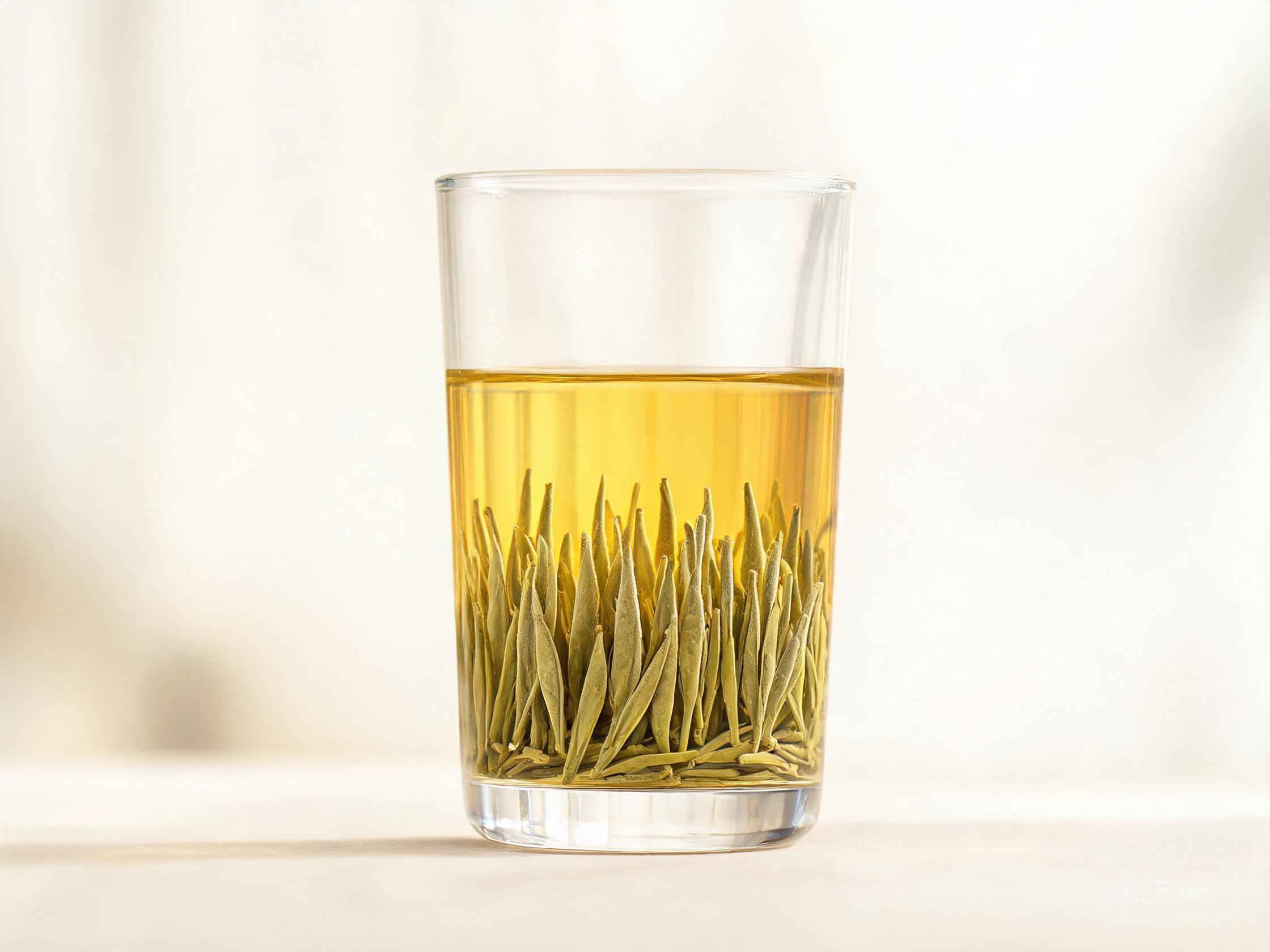
The liquor is pale yellow to amber and clear. A green-yellow cup suggests a green tea; a brown or cloudy one suggests a fault in the pile or in storage.
None of these checks require experience to apply, and together they catch most of the mislabelling in the market, which is substantial because the category is small and poorly policed.
- Dull yellow-green leaf, never vivid green.
- Chestnut or roasted grain aroma, not cut grass.
- Pale yellow to amber liquor, clear.
- A green-yellow cup suggests a green tea.
- A brown or cloudy cup suggests a fault.
- The category is small and labels are poorly policed.
One practical consequence of the process is shelf life. Yellow tea has been through a warm moist step and ends with a higher moisture content than a well-fired green tea, so it goes flat faster. A sealed tin keeps for a year and a bag left open in a humid kitchen loses its sweetness within months.
That is the opposite of what drinkers expect from a tea that looks like a green tea, and it is worth knowing before buying a large quantity. Yellow tea is a tea to drink, not to store.
Frequently asked questions
What makes yellow tea different from green tea?
One step, menhuang, a warm moist pile after kill-green. Everything else is the same.
Is menhuang a fermentation?
No. It is a non-enzymatic reaction driven by heat and moisture, with no microbes involved.
How long is the pile?
24 to 72 hours at 60 to 70 Celsius, turned periodically.
What happens to the catechins?
They fall by fifteen to thirty percent, and the esterified fraction falls further.
What are the three types?
Yellow bud, yellow small leaf and yellow large leaf, divided by picking standard.
Why is yellow tea so rare?
The pile adds days, needs judgement, can spoil a batch, and cannot be sold at a premium that justifies it.