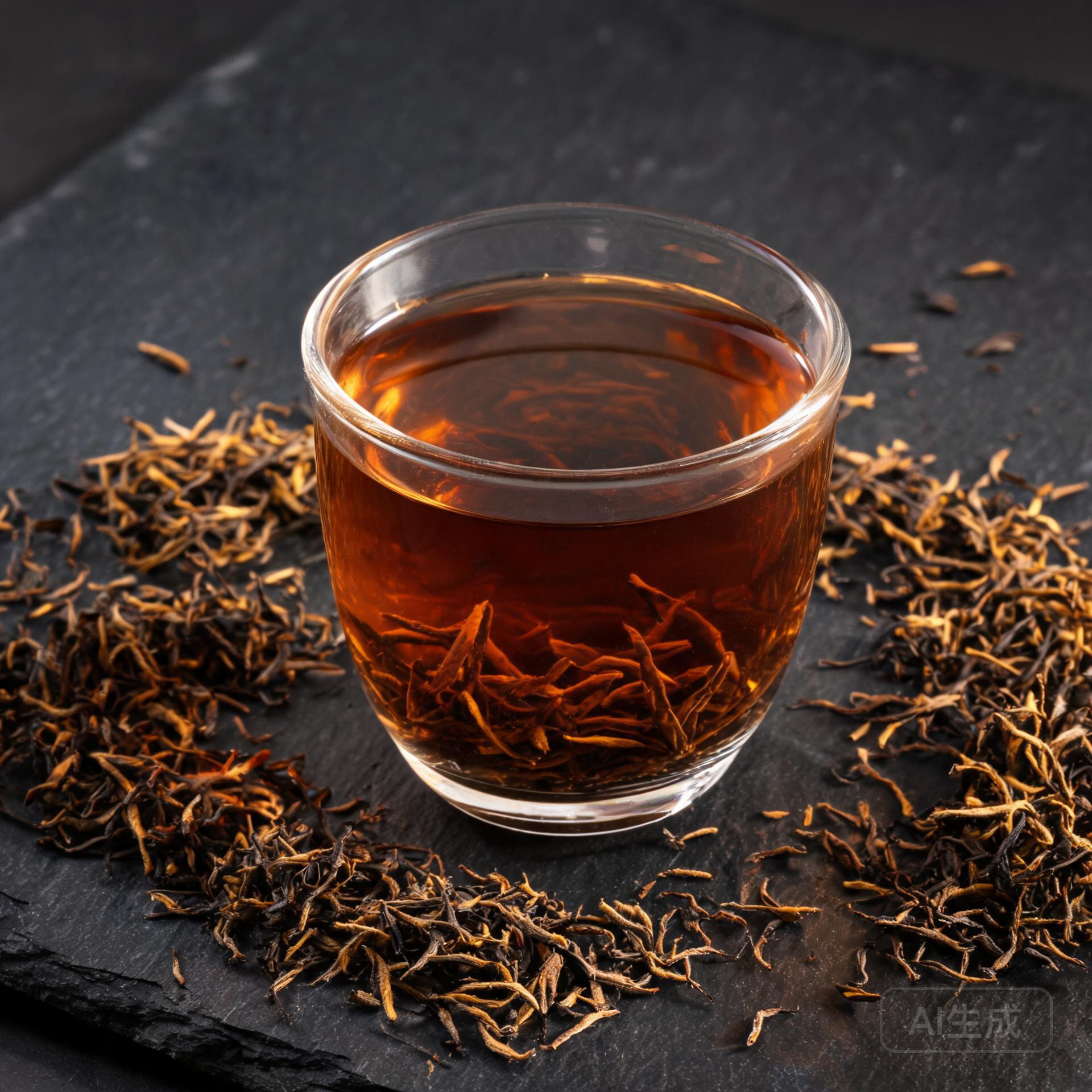
- Why red tea needs a firmer cut-off
- The breakfast question
- Morning versus afternoon
- Drinking it with and after meals
- A schedule that works
- Cold weather and seasonal timing
- How the season shifts the right hour
- Shift work and the fixed hour problem
- Frequently asked questions
- When is the best time to drink red tea?
- Can I drink red tea before bed?
- Is red tea with breakfast a problem?
- Should I drink it before or after meals?
- How late is too late?
- Does milk change the timing?
Red tea is best drunk mid-morning and early afternoon, after food rather than with it. Its higher caffeine load, 40 to 70 mg a cup, sets a firmer cut-off than green tea: the last cup should be six hours before bed, which means before 3 or 4 pm for most people. The traditional advice to drink it after meals is right, but not with them if iron matters.
Why red tea needs a firmer cut-off
The standard advice for tea timing comes from green tea, where a 28 mg cup leaves only about 7 mg after twelve hours. Red tea is a different calculation. At 60 mg a cup, the same decay curve leaves roughly 30 mg at six hours and 15 mg at twelve.
That changes the practical rule. A green tea at 5 pm is usually harmless; a strong Assam at 5 pm leaves about 30 mg at 11 pm, which is enough to delay sleep onset in a sensitive person. The general guidance of six to eight hours before bed matters more, not less, with a higher-dose drink.
The half-life itself varies more than most people realize, from about two to twelve hours. Slow metabolisers, people on oral contraceptives, pregnant women and anyone with liver impairment should treat the cut-off as earlier still. For a slow metaboliser, a 2 pm cup may still be measurable at midnight.
| Time | Caffeine at 11 pm from one cup | Iron effect | Verdict |
|---|---|---|---|
| 8 am | Under 10 mg | None | Best |
| 11 am | About 12 mg | None | Best |
| With lunch | Under 15 mg | 50 to 60 percent less iron | Move it an hour later |
| 2 pm | About 25 mg | None | Acceptable |
| 5 pm | About 35 mg | None | Risky for sensitive sleepers |
| 9 pm | About 50 mg | None | Avoid |
The breakfast question
Red tea with breakfast is a national habit in Britain and Ireland, and it is the one timing choice with a real nutritional cost. Tannins bind the non-heme iron in cereal, bread and plant foods, and the reduction is substantial, commonly cited at 50 to 60 percent for red tea at mealtime.
For most people that is unimportant, because they have iron to spare and the meal contains heme iron from animal sources that is less affected. It matters for women of childbearing age, vegetarians, vegans, frequent blood donors and anyone with diagnosed deficiency.
The practical compromise is straightforward: eat first, then drink the tea half an hour to an hour later. That preserves the ritual and recovers most of the iron. For breakfast specifically, adding a vitamin C source such as citrus or a glass of orange juice to the meal offsets some of the inhibition, because ascorbic acid enhances non-heme iron absorption.
Morning versus afternoon
The morning cup is the one most drinkers want, and it is well suited to the purpose. A 60 mg dose is about two thirds of a coffee, enough to lift alertness without the sharper edge, and the theanine that survives oxidation takes the edge off the caffeine.
The early afternoon slot is the second natural window, particularly in cold weather. A cup between 2 and 3 pm still clears enough caffeine by bedtime for most people, and it provides a warmer alternative to a second coffee.
What red tea does not suit is the late evening. The traditional Chinese caution against evening tea applies with extra force here, and the modern reason is simply the dose. If you want a warm drink at night, a decaffeinated red tea or a herbal infusion is the better choice.
Drinking it with and after meals
- After a heavy meal: good. The tradition says it aids digestion and the astringency cuts grease.
- With an iron-rich meal: avoid. Move the tea an hour later.
- With an iron supplement: avoid entirely for two hours.
- On an empty stomach: avoid. Strong red tea can cause nausea.
- Before exercise: acceptable, 30 to 60 minutes ahead.
- With milk: fine for taste, less good if you want the polyphenols.
The after-meal habit is the one place where the traditional and modern advice line up most neatly. A cup after eating avoids the empty-stomach irritation, does not interfere with iron from that meal because the absorption window has passed, and provides the astringent finish that makes rich food feel lighter.
The exception is a meal built around plant iron: lentils, beans, spinach, fortified cereal. That is exactly when the tea should wait.
A schedule that works
Two cups is a reasonable default for someone who wants the taste without thinking about caffeine: one at mid-morning after breakfast, one at 2 or 3 pm. That is 80 to 140 mg of caffeine, well within any adult limit, and both cups are far enough from bedtime.
Three to four cups is the range most associated with the cardiovascular findings in cohort data, so a third cup in the late morning is defensible if you like the tea. Beyond four, the additional benefit is not established and the caffeine load starts to matter.
Anyone who sleeps badly should start by moving the last cup earlier rather than cutting the number. Moving a cup from 5 pm to 1 pm removes more caffeine from bedtime than dropping it entirely and keeping a 4 pm one.
Cold weather and seasonal timing
There is a seasonal argument that the tradition makes and that experience supports. Red tea is warming, so it suits winter; green tea is cooling, so it suits summer. The Chinese convention of drinking green in summer and red in winter follows directly from the nature classification.
The modern version of the same observation is simpler. In cold weather people want hot drinks, they drink them more slowly, and they drink more of them. Red tea is well suited to that pattern because its flavor holds up as the cup cools, where a delicate green tea goes flat within minutes.
| Season | Traditional choice | Practical reason |
|---|---|---|
| Summer | Green tea | Cooling, light, best drunk fresh and cool |
| Autumn | Oolong | Neutral, bridges the two extremes |
| Winter | Red tea | Warming, holds flavor as it cools |
| Spring | Green or light oolong | Fresh leaf arrives, aroma at its peak |
How the season shifts the right hour
In a cold climate the case for a morning cup is stronger than in a hot one. The drink is warming by classification and hot by temperature, and the first two hours after waking are when most people feel the cold most acutely. A cup at seven in January does work that the same cup at seven in July does not, because the body is asking for different things.
Summer reverses the advice in a mild way. A hot drink still cools you if you sweat, since the evaporation does more than the heat of the liquid adds, but the effect depends on low humidity. In a humid summer the same cup just makes you warmer. This is why iced red tea exists in the south of China and hot red tea in the north, from the same leaf.
Season also changes the caffeine calculation, though less than people assume. Tolerance drifts down in winter for many people because they sleep longer and drink less coffee, so the same 60 mg cup feels stronger in December than in June. If a cup that never bothered you in summer keeps you awake in winter, the tea has not changed. Your baseline has.
Shift work and the fixed hour problem
All the advice about morning cups assumes a normal sleep schedule. For anyone on nights, the useful rule is not a clock time but an interval: the first cup within an hour of waking, whatever hour that is, and the last cup at least six hours before the sleep you are trying to protect. The half life of caffeine is five to six hours, so a cup at the end of a night shift still has a quarter of its dose in your blood when you lie down.
The mistake night workers make is treating the cup as a tool for staying awake through the last hours, which pushes it right up against sleep. Moving it earlier, to the middle of the shift, gives the same alertness when it is needed and leaves more room before bed. The total dose does not have to change.
- First cup within an hour of waking, whatever the clock says.
- Last cup six hours before the sleep you want to protect.
- In winter, expect the same cup to feel stronger.
- In humid summer heat, iced is fine, the polyphenols survive chilling.
- With meals is the wrong time if you are iron deficient.
- An empty stomach in the morning is the fastest route to jitter.
None of this is precise enough to be a prescription. It is a set of defaults that most people can adjust by a week of paying attention to how they sleep and how they feel at four in the afternoon. The cup is flexible. The six hour buffer before sleep is the part worth keeping fixed.
Frequently asked questions
When is the best time to drink red tea?
Mid-morning and early afternoon, after food. Two cups at 10 am and 2 pm covers the useful window without troubling sleep.
Can I drink red tea before bed?
Not a strong one. At 60 mg a cup, about 30 mg remains after six hours and 15 mg after twelve, which is enough to disturb sensitive sleepers.
Is red tea with breakfast a problem?
It reduces iron absorption by 50 to 60 percent at that meal. Wait half an hour to an hour if iron matters to you.
Should I drink it before or after meals?
After, generally. It avoids empty-stomach irritation and the iron window has passed. Avoid it with plant-iron meals specifically.
How late is too late?
Six hours before bed as a rule. Before 3 or 4 pm for most people, earlier if you are a slow metaboliser.
Does milk change the timing?
No, but it binds theaflavins and reduces polyphenol absorption. It does not affect caffeine.