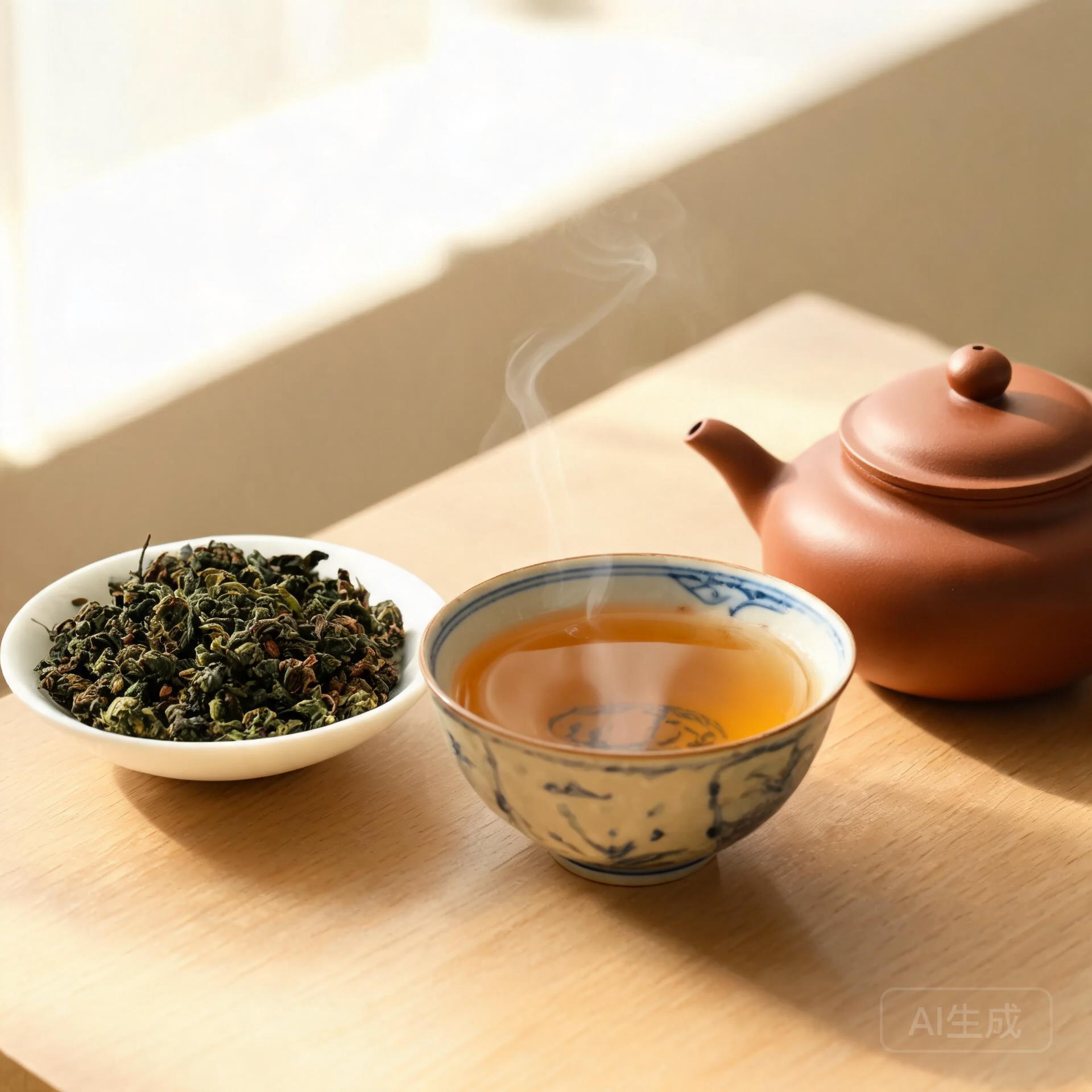
Its season
Autumn is oolong’s season, and it is the one category where two harvests matter.
Spring oolong is picked in April and May and tends towards aroma and freshness.
Autumn oolong, cut in September and October, is the one most growers prefer.
Cooler nights and drier air give autumn leaf a thicker, more aromatic cup.
Anxi and Wuyi both run two pickings, and the autumn one carries the higher prices.
Dancong(单丛)from Phoenix Mountain is also judged mainly on its autumn leaf.
Winter oolong exists in Taiwan, picked in November, and it is prized for the same reason.
Roasted oolongs then carry the cold months, since the roast adds the body winter wants.
A heavy Wuyi roast is a January to March tea in practice, whatever month it was picked in.
So the category has an autumn answer and a winter answer, and they are different teas.
Spring oolong is the lightest of the three and behaves most like a green tea.
Knowing which picking you have tells you more than the month you are drinking it in.
That is the practical difference between an autumn oolong and a spring one.
Why the season fits
Body and temperature are the link, and oolong covers more of that range than anything else.
That is the real reason it suits autumn, when neither extreme applies.
A medium roast at 90 °C is warm enough for October and light enough for May.
Aroma is the second link, and autumn oolong has the most of it.
Growers say the autumn leaf holds its scent better through processing.
Whether that is climate or craft is not settled, and the cup is the only test.
Roast adds a separate seasonal logic, because it is a flavour of cold weather.
Charcoal roasted Wuyi tea smells of caramel and wood, which reads as winter.
It is also one of the few teas that stays interesting at 50 °C in a cold room.
Spring oolong, unroasted, does the opposite and disappears in cold weather.
One word covers three different seasonal drinks, which is why generic advice fails.
Read the roast and the picking date before you read the calendar.
It is also why the same tea can be sold at very different prices.
Off-season
Oolong in the wrong season is rarely a problem, because the category is wide.
If a spring oolong feels thin in December, move to a roasted one.
If a heavy roast feels like too much in June, move back to a green style.
Within one tea, adjust the dose before you adjust anything else.
A 7 g dose in a 110 ml gaiwan is enough to make almost any oolong work.
Raise the water to 95 °C in winter and drop it to 85 in summer.
That 10 degree range does more than the calendar does.
Steep time matters less, since most oolongs are brewed in short repeated infusions anyway.
Cold brew works with green style oolongs and not with roasted ones.
Roast needs heat to come out, and cold water will not extract it.
Serve roasted oolong hot and in small cups through the cold months.
There is no month in which some oolong is wrong, only months where a specific one is.
A smaller vessel helps in winter, because the heat stays in the pot.
Year-round note
This is the category that most nearly covers the whole year on its own.
A green style oolong covers April to September.
A medium roast covers most of autumn and spring, which is why it is the default.
A heavy charcoal roast covers December through February.
An aged oolong, rested 5 years or more and re roasted, covers the same cold window differently.
Taiwan high mountain oolongs sit at the light end and are summer teas.
Milk oolongs are light and sweet, and they work year round for the same reason.
Keep 3 of these in the cupboard and the calendar stops being a constraint.
Storage is easier than for green, since roast and oxidation both stabilise the leaf.
Sealed and dry, a roasted oolong will hold for 2 years without much loss.
A green style oolong should still be drunk within 12 months.
Rotate by roast rather than by month, and the season looks after itself.
Rotate the stock by opening a new one every spring.