- The roasting caution
- The strength caution
- Caffeine and sleep
- Who should limit it, specifically
- Children and pregnancy
- The roast question in more detail
- Two groups often left out
- Frequently asked questions
- Does oolong have side effects?
- Is oolong bad for the stomach?
- Does the green tea extract warning apply to oolong?
- Can oolong keep me awake?
- Is roasted oolong more irritating?
- Should I avoid oolong if I take warfarin?
Oolong has a short list of cautions and they are different from green tea’s. The main ones are heavy roasting, which can cause dryness and throat irritation; strength, which irritates an empty stomach; and caffeine at 25 to 45 mg per infusion. The green tea extract liver warning does not apply, because oolong is drunk as a brew and not taken as a concentrated capsule.
This distinction is the most useful thing on the page. A reader who has seen the EGCG hepatotoxicity warnings and assumes they apply to all tea will avoid oolong unnecessarily, and a reader who assumes no tea has cautions will overdo a strong roasted oolong on an empty stomach.
The roasting caution
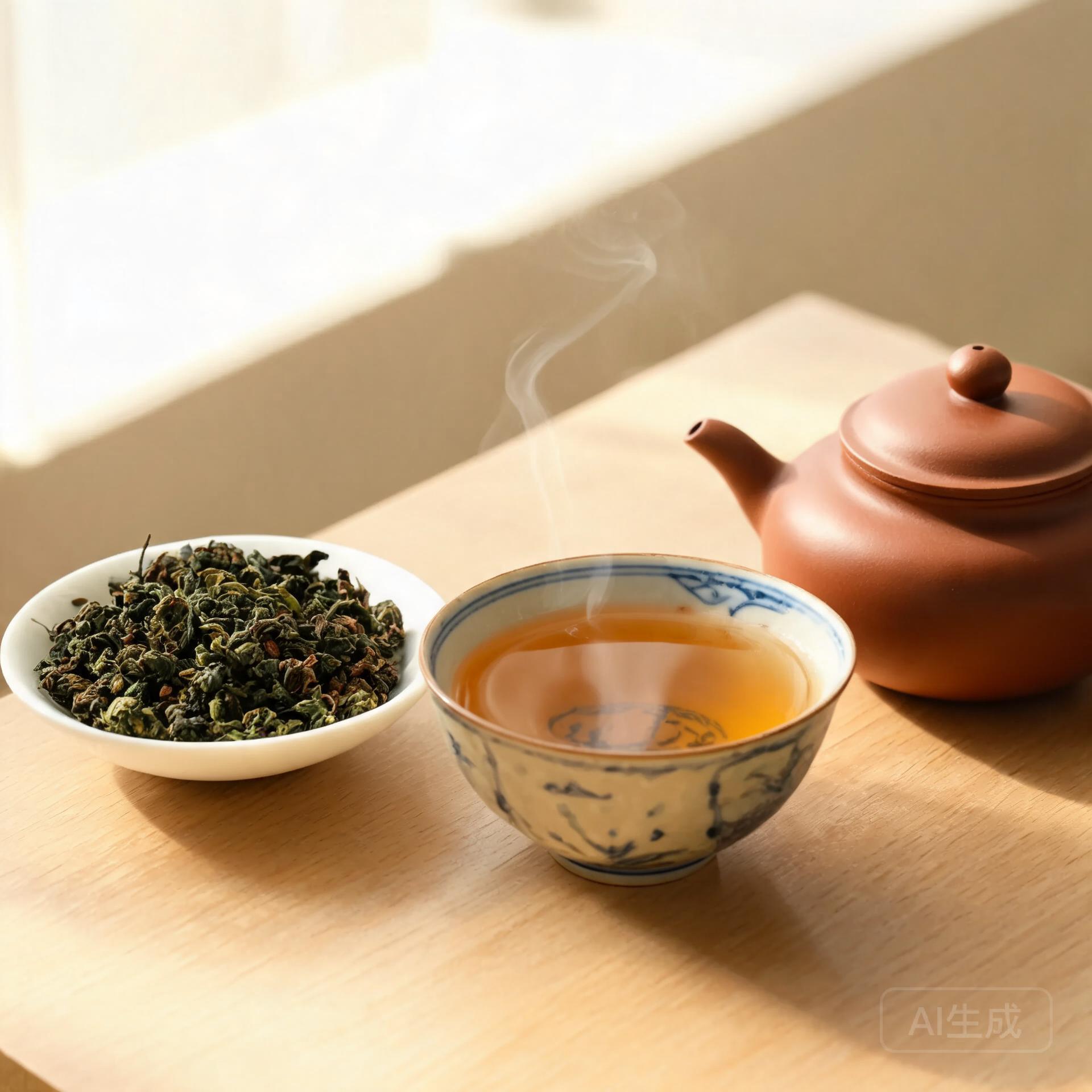
A charcoal-roasted oolong is baked at 120 to 140 degrees Celsius, often over months with repeated turns. The heat drives Maillard reactions that produce pyrazines and other aromatics, and it also drives off moisture, leaving a drier leaf.
The traditional description is that a heavy roast is drying and can injure fluids. The modern description is that roasted teas are more astringent and more likely to irritate a sensitive stomach or throat. The two descriptions point at the same experience, and both suggest the same response: drink it weaker, or choose a lighter roast.
The specific signs the tradition names are dry mouth, dry throat, a scratchy feeling after drinking, and constipation. A drinker who notices these on a heavily roasted yancha but not on a light Tieguanyin has identified the roast rather than the tea.
The strength caution
Oolong is normally brewed gongfu style, which means five to eight grams of leaf in 100 to 150 ml of water. That is a high leaf-to-water ratio, and the first infusion can be strong enough to cause discomfort on an empty stomach.
The feeling is familiar: hollow, slightly nauseated, jittery, sometimes with a cold sweat. The tradition calls it tea drunkenness and attributes it to bitterness injuring the stomach. The modern explanation is that a concentrated dose of caffeine and catechins on an empty stomach raises plasma caffeine fast and irritates the gastric lining.
| Caution | Applies to oolong | Applies to green tea extract |
|---|---|---|
| Caffeine sensitivity | Yes, 25 to 45 mg per infusion | Only if the capsule contains caffeine |
| Iron absorption with meals | Yes, catechins still bind iron | Yes, about 26 percent in one study |
| Reflux | Yes, caffeine relaxes the sphincter | Yes |
| Roast-related dryness | Yes, specific to roasted oolong | No |
| Empty-stomach irritation | Yes, strong gongfu steeps | Yes |
| Liver injury | No published signal | Yes, documented from 140 to 1,000 mg EGCG |
The table is the clearest way to see how different the products are. Four cautions apply to both, one applies only to oolong, and one applies only to the capsule. A page that lists all six as though they applied to a brewed oolong is not being careful.
Caffeine and sleep
At 25 to 45 mg per infusion, oolong sits in the same band as green tea. The half-life is five to six hours, so an infusion at eight in the evening still has a quarter of its dose in the blood at two in the morning.
The gongfu pattern makes this worse than the number suggests, because a session runs through six or more infusions. A long evening session can total 150 mg of caffeine, more than a cup of coffee, delivered slowly enough that the drinker does not notice the dose accumulating.
Who should limit it, specifically
- Anyone with reflux or a hiatus hernia, because caffeine relaxes the lower esophageal sphincter.
- Anyone with iron deficiency, who should keep tea two hours from meals.
- Anyone who sleeps badly, who should stop by mid-afternoon.
- Anyone with a dry constitution, who should avoid heavy roasts.
- Anyone on warfarin, who should keep intake steady rather than abstain.
- Anyone with a sensitive stomach, who should not drink strong gongfu steeps on an empty stomach.
Warfarin deserves a note because tea is often described as forbidden with it. The concern is vitamin K, which is present in tea at low levels. The practical guidance is consistency rather than avoidance: a steady intake lets the anticoagulant dose adjust to it, while a fluctuating intake destabilises the INR. The same logic applies to any tea.
Children and pregnancy
Children clear caffeine more slowly in proportion to body weight, so a 30 mg infusion is a larger dose for a ten year old than for an adult. Small weak cups are traditional in southern China and are not a reason for alarm, but the cup should be small and early.
Pregnancy has a firmer number: 200 mg of caffeine a day is the widely used ceiling, roughly six or seven oolong infusions at the stronger end. The count matters more than the category, so a pregnant drinker swapping coffee for tea needs to count the tea.
Neither group needs to avoid oolong specifically. The constraint is caffeine, and oolong is in the middle of the range rather than at the top.
The roast question in more detail
Roasting is the one caution that has no counterpart in green or red tea, and it deserves the space. A charcoal roast runs through repeated bakes at 120 to 140 Celsius over weeks or months, with the leaf turned between each. The heat drives off water, converts sugars and amino acids into Maillard products, and pushes the aroma toward nuts and toast.
The cost is a drier, more astringent leaf. Drinkers who describe themselves as prone to dryness, meaning dry mouth, dry throat, a scratchy feeling, or constipation, are the ones the tradition warns off heavy roasts. The modern equivalent is that roasted teas irritate a sensitive stomach or throat more than light ones do.
The fix is not avoidance but adjustment. A heavy roast brewed weak, in a short first infusion, and not on an empty stomach is tolerable for most of the people who react to it brewed strong. The variable that matters is concentration, not the category.
Two groups often left out
People taking thyroid medication are usually told to separate tea from the dose, and oolong is no exception. The mechanism is the same one that applies to iron: the tannins bind in the gut and reduce absorption. A four hour gap is the usual pharmacy advice, longer than the two hours needed for iron.
People with an anxiety disorder or a sensitivity to stimulants should treat oolong as they would coffee, because the caffeine is the same molecule. The dose is smaller, and the theanine blunts the edge, but a long gongfu session can still deliver 150 mg, which is enough to trigger symptoms in someone sensitive.
Neither group needs to avoid oolong entirely. The pattern across this whole page is that oolong’s cautions are about dose, timing and roast level rather than about the tea being unsuitable for a category of people. That is a milder set of constraints than red tea’s caffeine ceiling or green tea’s astringency.
Iron is worth a fuller note because the advice is easy to get wrong in both directions. The catechins in oolong bind non-heme iron, the form found in plants and supplements, more than heme iron from meat. A vegetarian with low ferritin is therefore the person most affected, and the person least likely to be told about it.
The fix is timing rather than abstinence. Two hours between the tea and the meal restores most of the absorption, because the iron has already passed the duodenal window by then. A cup with breakfast cereal is the worst arrangement, since fortified cereal is a major non-heme iron source for many people.
Oolong sits between green and red on this measure. It has less catechin than green tea and fewer theaflavins than red, so the binding is smaller than either. That makes it a reasonable choice for someone who wants tea and is watching iron, provided the timing is right.
The other overcorrection is treating any caution as a prohibition. Oolong is not contraindicated for any common condition. It is a drink with a moderate caffeine load, some iron binding and a roast variable, and each of those has a workaround that costs nothing but attention.
The roast question also interacts with storage. A heavily roasted oolong keeps longer than a light one because the low moisture and the antimicrobial compounds from Maillard reactions slow spoilage, which is one reason roasted styles were traditional in humid Fujian. It says nothing about whether the roast suits a given drinker, only about how long the leaf stays good.
A final group worth naming is people who take a daily iron supplement by choice rather than prescription. The binding effect is largest on exactly that form, and the two hour gap is easy to forget when the supplement is taken with breakfast. Moving the tea to mid-morning solves it without changing anything else.
- Reflux: caffeine relaxes the lower esophageal sphincter regardless of tea type.
- Iron deficiency: keep tea two hours from meals, especially fortified cereal.
- Thyroid medication: allow a four hour gap rather than two.
- Anxiety or stimulant sensitivity: treat it like coffee, because it is the same molecule.
- Dryness or constipation: choose a light oolong over a heavy charcoal roast.
- Trouble sleeping: end the session by early afternoon, not just the last cup.
Frequently asked questions
Does oolong have side effects?
Strong infusions on an empty stomach cause jitter and nausea, and heavy roasts can cause dryness and throat irritation.
Is oolong bad for the stomach?
A weak infusion is fine for most people. A strong gongfu steep on an empty stomach can irritate.
Does the green tea extract warning apply to oolong?
No. That warning concerns concentrated EGCG capsules, not brewed tea.
Can oolong keep me awake?
Yes. It has 25 to 45 mg of caffeine per infusion, and a long evening session adds up.
Is roasted oolong more irritating?
Yes. The roast increases astringency, so a sensitive stomach tolerates a light oolong better.
Should I avoid oolong if I take warfarin?
No, but keep your intake steady so the dose can be adjusted to it.