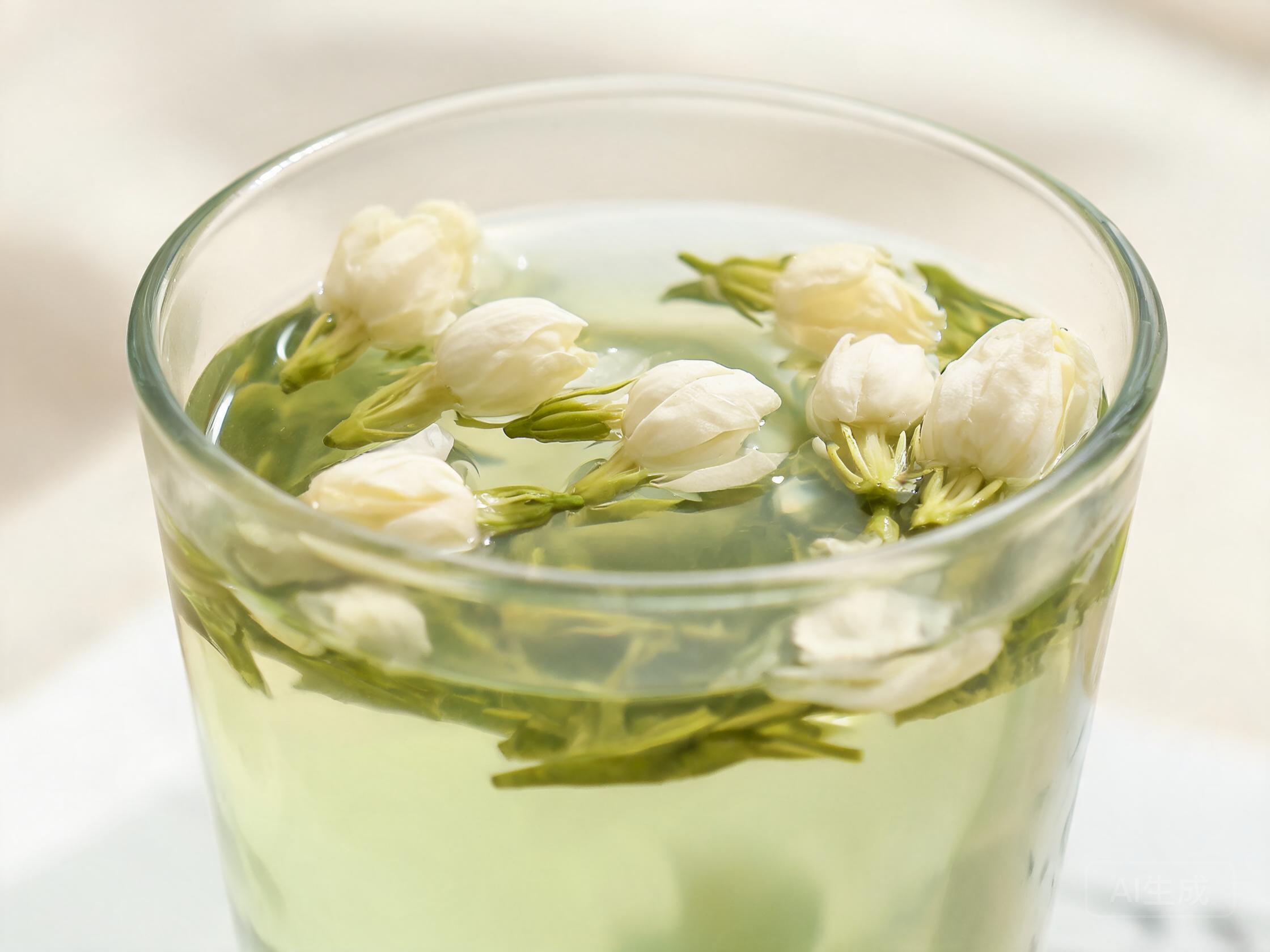
What scented tea actually is
Scented tea is a finished tea that has been given the aroma of fresh flowers.
The Chinese term is hua cha(花茶), and jasmine is the flower most people mean.
The base is usually a green tea, and it is a finished tea before the flowers arrive.
That is the part people get wrong, since the tea is not blended with dried petals.
The flowers are fresh, and they are removed again once they have given up their scent.
What remains in the cup is the aroma of the flower and the taste of the base tea.
A cup with petals floating in it is usually a lower grade or a decorative blend.
The best versions contain no flower material at all in the finished leaf.
The category also includes white and oolong bases, and those are less common.
Osmanthus, rose and gardenia are all used, and each gives a different result.
Jasmine remains the standard, and it is what most of the market is built on.
The method is old, and the written record for jasmine scenting is thin but real.
Song dynasty writing praises the flowers, and the technique is clearly older than that.
How the scenting is done
The scenting is done in rounds, and each round uses fresh blossoms.
The finished tea and the flowers are layered together and left for a night.
Jasmine blooms in the evening, and the scent is released as the flower opens.
The tea absorbs the aroma, and the spent flowers are sifted out in the morning.
The process is repeated on following nights, and each round is a yin(窓).
A standard jasmine tea may take 3 rounds, and a fine one takes 9 or more.
Each additional round adds cost, since the blossoms are used once and discarded.
That is why the number of rounds appears in the grade name of better teas.
The base tea has to be dry enough to take the aroma without going damp.
Too much moisture and the leaf spoils, which is why the leaf is refired between rounds.
The work is labour heavy and seasonal, and it is concentrated in a few weeks.
Fuzhou is the centre of the trade, and the name carries weight for buyers.
Everything about the price comes back to how many nights the tea was scented.
Which flowers are used
Jasmine is the default, and it gives a sweet, heavy floral aroma.
The best jasmine tea smells fresh rather than perfumed, and the difference is obvious.
Osmanthus gives a softer, apricot like scent, and it suits an oolong base.
Rose gives a heavier and more obvious aroma, and it divides drinkers.
Gardenia is used less often, and it gives a thick, creamy scent.
Chrysanthemum is usually brewed on its own rather than used to scent a tea.
That distinction matters, since a flower brewed alone is not a scented tea.
The base leaf decides how the aroma sits, and green gives the cleanest result.
A white base gives a lighter cup, and the aroma seems to float in it.
An oolong base carries roast as well as flower, and it is an acquired taste.
The flower should never taste soapy, and soapy means the blossoms were stale.
A good scented tea tastes like tea first and like flowers second.
Anything the other way round was made with an essence rather than with flowers.
Buying and brewing it
Buying starts with the smell, and the dry leaf should smell clean and sweet.
A sharp or chemical note means an added flavouring rather than real scenting.
Look for the number of rounds on better teas, since it is printed on the grade.
Petals in the leaf are not a fault, but they are not a sign of quality either.
A very low price means one round at most, and usually an essence afterwards.
Brew 3 g in 150 ml at 85 °C, and the aroma comes through at that temperature.
Hotter water flattens the flowers and pulls bitterness out of the green base.
Give the first steep about 60 seconds, and the leaf will take three or four.
Rinse is not needed, since the leaf is a finished tea before scenting.
Cold brewing suits jasmine well, and 6 g in a litre overnight is pleasant.
Store it sealed, since the aroma leaves faster than the taste does.
A scented tea that has lost its smell is still drinkable, and it is still a green tea.
Buy in small amounts and drink it within the year, and the aroma stays where it should.