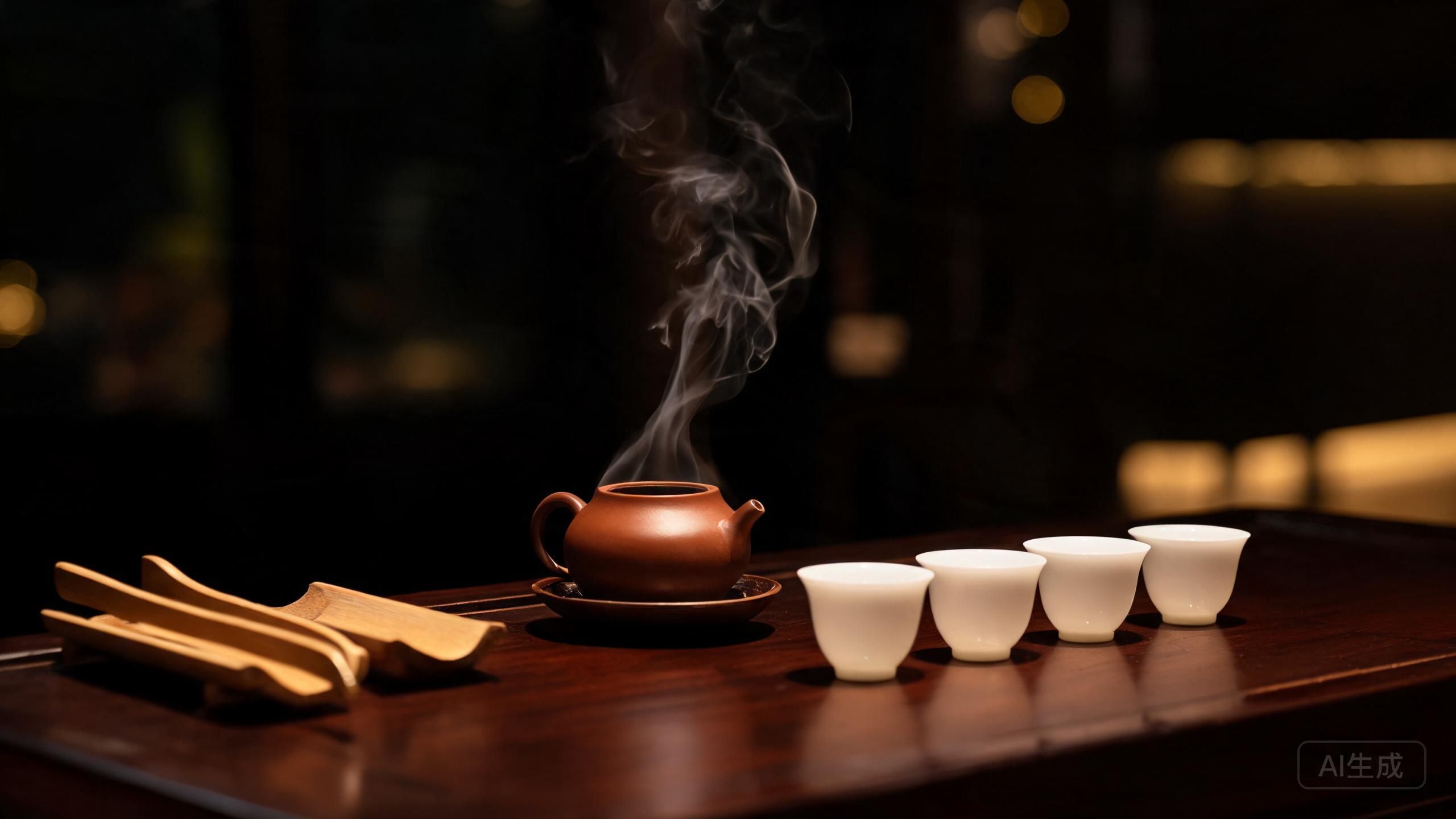
- Historical Origins
- Chinese Tea Ceremony
- Japanese Tea Ceremony (Chanoyu)
- Tea Type: The Fundamental Difference
- Chinese Ceremony
- Japanese Ceremony
- Philosophy and Spirit
- Chinese Gongfu Tea
- Japanese Chanoyu
- Equipment and Setting
- Procedure Comparison
- Chinese Gongfu Tea Steps
- Japanese Chanoyu Steps
- Sweets and Food
- Chinese
- Japanese
- Which to Experience?
The tea ceremonies of China and Japan represent two of the world's most refined tea traditions. While both originate from the same cultural root - the Chinese discovery and early practice of tea - they have evolved over centuries into distinct practices with different philosophies, aesthetics, and techniques. Understanding the comparison between these two traditions reveals the diversity of tea culture and the distinct cultural values behind each one.
Historical Origins
Chinese Tea Ceremony
- Roots trace back to the Tang Dynasty (618-907) with Lu Yu "Classic of Tea"
- Evolved naturally over centuries through social practice rather than formal codification
- Modern Gongfu tea ceremony developed in the Ming-Qing era in Fujian and Guangdong
- No single founder or formal school system
- More flexible and improvisational
Japanese Tea Ceremony (Chanoyu)
- Introduced from China in the 9th century by Buddhist monks Saicho and Kukai
- Formalized by Sen no Rikyu (1522-1591) into the Way of Tea (Chado)
- Deeply influenced by Zen Buddhism
- Highly structured with defined schools (Omotesenke, Urasenke, etc.)
- Requires years of formal study under a teacher
Tea Type: The Fundamental Difference
Chinese Ceremony
- Uses loose-leaf tea - primarily oolong, Pu-erh, black, or white tea
- Multiple tea types can be used in the same ceremony
- The focus is on the variety and quality of the tea itself
- Leaves can be re-steeped 5-15 times, with each steep revealing different flavors
Japanese Ceremony
- Uses matcha (powdered green tea) exclusively for the formal ceremony
- Also includes sencha (leaf green tea) in the sencha ceremony, but this is less formal
- The tea is whisked, not steeped, and consumed entirely
- Focus is on the preparation ritual rather than tea variety
Philosophy and Spirit
Chinese Gongfu Tea
- Philosophy: Harmony between humans, tea, and nature
- Emphasis on tasting and appreciating the tea evolving flavors
- More social and conversational - guests discuss the tea
- The host demonstrates skill through precision and attention to the tea response
- "Tea and Zen are one" but expressed through practical enjoyment
Japanese Chanoyu
- Four principles: Harmony (Wa), Respect (Kei), Purity (Sei), Tranquility (Jaku)
- Deeply influenced by Zen Buddhism - the ceremony is a moving meditation
- Silence and mindfulness are emphasized
- The host movements are precisely choreographed
- Every element of the tea room - scroll, flowers, utensils - carries symbolic meaning
Equipment and Setting
| Element | Chinese Gongfu | Japanese Chanoyu |
|---|---|---|
| Vessel | Gaiwan or Yixing teapot | Chawan (tea bowl) and chasen (whisk) |
| Setting | Any clean, quiet space; tea table | Dedicated tea room (chashitsu) with specific architecture |
| Utensils | Practical tools: pitcher, strainer, cups, tray | Ritualized objects: natsume, chashaku, chakin, fukusa |
| Art | Calligraphy or paintings nearby | Tokonoma alcove with hanging scroll and flower arrangement |
| Guests | 2-8 typically | Typically 4-5 guests, precisely arranged |
Procedure Comparison
Chinese Gongfu Tea Steps
- Warm the teapot and cups
- Add tea leaves to the pot
- Rinse the leaves with hot water
- Brew multiple short steeps (10-30 seconds each)
- Pour into a fairness cup (gongdao bei) for even strength
- Serve guests, discussing aroma, flavor, and aftertaste
- Continue steeps until the tea is exhausted
Japanese Chanoyu Steps
- Guests enter through a low door (requiring bowing, showing humility)
- Guests admire the scroll and flower arrangement
- Host brings tea utensils into the room
- Host cleans utensils with silk cloth (fukusa)
- Matcha is placed in the bowl
- Hot water is added
- Tea is whisked to a smooth froth
- Bowl is presented to the first guest
- Guest admires the bowl, drinks, then cleans the rim
- Bowl is returned to the host
Sweets and Food
Chinese
- Light snacks or nuts may be served
- Food is secondary to the tea experience
- Some regions serve dim sum with tea (yum cha tradition)
Japanese
- Wagashi (traditional sweets) are an integral part of the ceremony
- Sweets are served before the tea to balance the bitter matcha
- The seasonal sweet is carefully chosen to complement the occasion
Which to Experience?
- For tea flavor exploration: Chinese Gongfu ceremony offers more variety and depth of taste
- For spiritual mindfulness: Japanese Chanoyu provides a more structured meditative experience
- For beginners: Chinese Gongfu is more accessible and flexible
- For ritual appreciation: Japanese Chanoyu offers a precision and symbolism few other ceremonies match
The two are not rivals, and neither is a version of the other. Chinese gongfu brewing is built around reading the leaf across several infusions. Japanese chanoyu is built around the act of preparing it, and every movement in the room has a reason. If you only ever try one, you will miss what the other explains well.