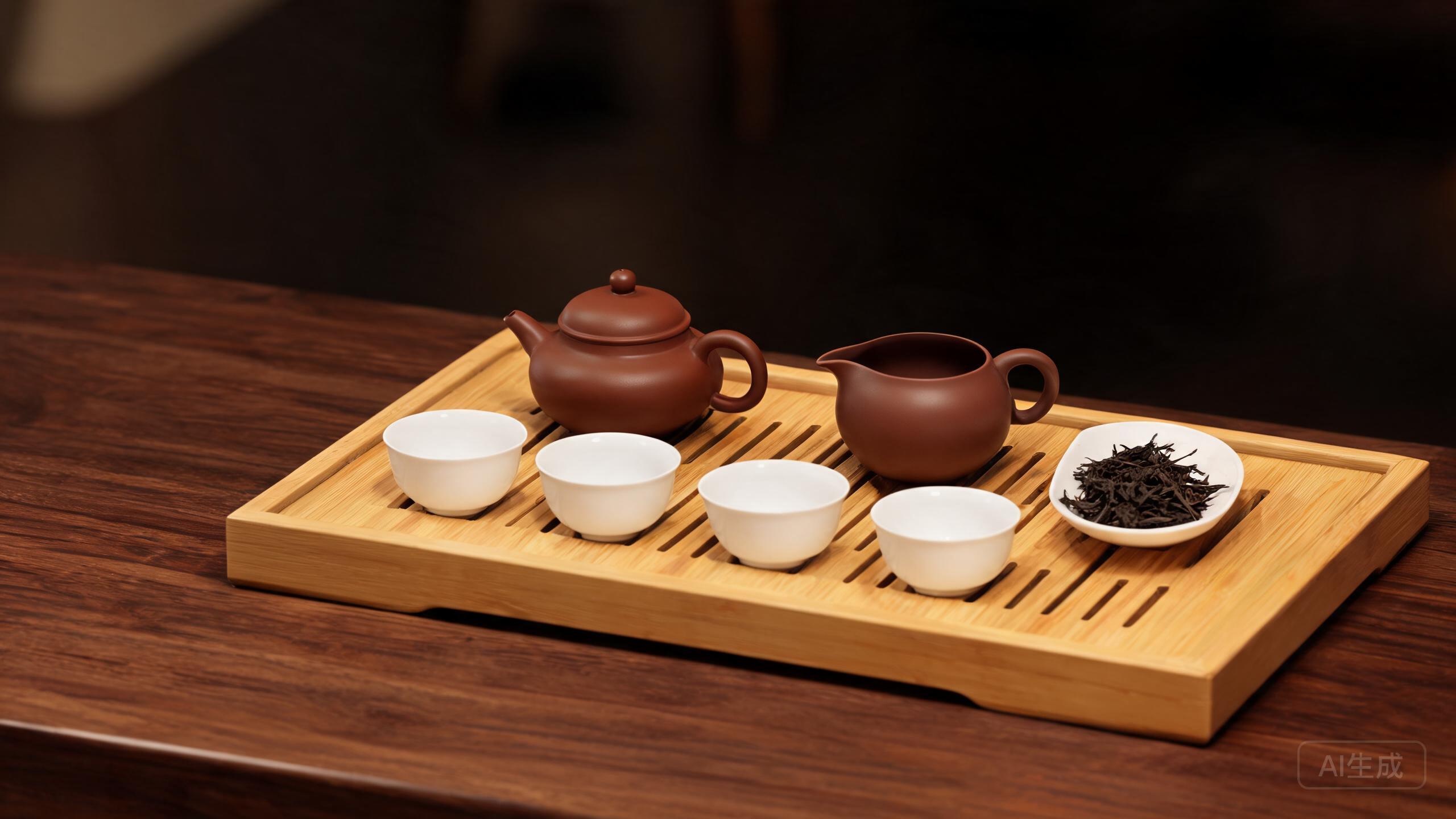
- The parameters, and why each one matters
- The vessel question
- The four-steep test
- Tasting vocabulary, briefly
- Common mistakes
- How the aroma changes across a session
- Water, and the mineral question
- How to adjust for the three types
- Frequently asked questions
- What temperature for Tieguanyin?
- How much leaf?
- How long to steep?
- What is the four-steep test?
- Should I use a clay pot?
- Why does my Tieguanyin taste weak?
Tieguanyin is brewed at 95 to 100 Celsius in a small gaiwan or a thin teapot, at five to seven grams per 120 millilitres, with steeps of fifteen to thirty seconds that lengthen as the leaf opens. The ball-rolled leaf needs the heat to unfurl and the short steeps to keep the bitterness down. The four-steep test, described below, tells you in ten minutes whether a tin was worth its price.
This page covers only how to brew and how to taste. The cultivar, the aroma types and the grading are a separate subject, and a drinker who wants to buy well should read that first and come back here with a tin in hand.
The parameters, and why each one matters
Water at 95 Celsius and above. A ball-rolled oolong is dense, and water below 90 does not penetrate the ball in a twenty-second steep. The result is a thin, flavorless infusion that makes the tea seem poor when it is not.
Five to seven grams per 120 millilitres. Anxi gongfu practice runs heavier than Wuyi practice, and a seven-gram dose in a small vessel is normal. A Western mug at three grams per 200 millilitres will produce a drinkable cup and will not show what the leaf can do.
Steeps of fifteen to thirty seconds. The first steep wets the ball; the second and third extract most of the flavor. Anything past forty seconds in the first three steeps brings out astringency that the tea does not have when brewed short.
| Steep | Water | Time | What to expect |
|---|---|---|---|
| Rinse | 100 C | 5 s, discard | Opens the ball, removes dust |
| First | 95 to 100 C | 20 s | Light, aromatic, thin |
| Second | 95 to 100 C | 15 s | The best steep, fullest |
| Third | 95 to 100 C | 25 s | Still strong, aroma fading |
| Fourth | 95 to 100 C | 40 s | Thinner, sweetness remains |
| Fifth onward | 100 C | 60 s and up | Sweet water, little body |
The vessel question
A porcelain gaiwan is the standard and the best choice. It is neutral, it pours cleanly, and it lets you smell the wet leaf between steeps, which is half of tasting an oolong.
A thin-walled porcelain teapot works nearly as well and holds heat slightly better. A thick clay pot is a different matter: unglazed clay absorbs aroma, which is desirable for a heavily roasted tea and undesirable for a delicate qingxiang.
A glass is a reasonable compromise for a beginner, because it shows the leaf unfurling. It loses heat fast, so the steeps need to be a little longer.
The four-steep test
The test is a way to judge a tin without any expertise. Brew four steeps as above and taste each one.
A good Tieguanyin is present in all four. The first is aromatic, the second full, the third still has a clear aroma, and the fourth is thinner but sweet. If the tea is gone by the third, the leaf is thin or the grade is low.
The second thing to watch is the finish. A good tea leaves a sweetness at the back of the throat that lasts a minute or more after swallowing. A poor tea leaves a dry, rough sensation, which is astringency and indicates under-oxidized or over-brewed leaf.
The third is the wet leaf. After four steeps, a good leaf is thick, soft and evenly green with a red border. A thin, torn or uniformly brown leaf suggests coarse picking or heavy processing.
Tasting vocabulary, briefly
Aroma is judged before and after swallowing. The Chinese terms are xiang, the smell in the cup, and yun, the sensation that lingers in the throat. A tea with good yun is described as having a throat feel, and it is the quality most prized in Anxi.
Body is the weight of the liquor on the tongue. A qingxiang tea is light-bodied by design; a nongxiang tea is fuller. Judging a qingxiang for body is judging it for something it does not aim at.
Sweetness is the finish, not the front. Tieguanyin is not a sweet drink at first sip; it becomes sweet after swallowing, and that delayed sweetness is the marker of good leaf.
- Use 95 to 100 Celsius water, never cooler for ball-rolled leaf.
- Five to seven grams per 120 ml for gongfu.
- Twenty-second first steep, shorter second, then lengthen.
- A porcelain gaiwan is the neutral choice.
- Judge the tea by four steeps, not one.
- Look for a sweet finish, not a sweet front.
Common mistakes
The most common is too little leaf. A drinker used to Western brewing puts three grams in a mug and concludes that Tieguanyin is weak. The tea is built for a high leaf-to-water ratio.
The second is water that is too cool. Green tea habits carry over, and 85 Celsius does not open a ball-rolled leaf. The result tastes like water with a smell.
The third is a steep that is too long. Five minutes in a gaiwan produces a bitter, drying cup, and the bitterness is not the tea’s fault. Short steeps are the whole technique.
The fourth is judging by the first steep. The first is always thin, because the ball has not opened. A drinker who stops there has tasted the rinse, not the tea.
How the aroma changes across a session
The first steep is mostly surface aroma. The volatile compounds that make qingxiang smell of orchid are on the outer layers, and hot water lifts them immediately. That is why the first steep smells stronger than it tastes.
The second and third steeps are the body of the session. The ball has opened, the leaf is fully wet, and the extraction is even. If a tea is going to show thickness and sweetness, it shows them here.
Past the fourth steep the aroma is largely gone and what remains is sweetness and a mineral taste from the leaf itself. That tail is pleasant and it is not the reason to buy the tea.
A drinker who wants to compare two tins should taste them side by side at the second steep, not the first. The second is where the leaf is doing its real work.
Water, and the mineral question
The mineral content of the water changes the cup more than most drinkers expect. Soft water extracts aroma well and produces a thin body; hard water produces a fuller body and mutes the aroma.
For a qingxiang tea, soft water is usually better, because aroma is the point. For a nongxiang tea, slightly harder water suits the roast. A drinker with very hard tap water can filter it and hear the difference immediately.
The temperature matters more than the mineral content, and neither matters as much as the leaf quantity. A weak cup is almost always a dosing problem before it is a water problem.
- Taste at the second steep when comparing two tins.
- The first steep is aroma, not body.
- The tail after the fourth is sweetness and mineral, not aroma.
- Soft water for qingxiang, harder water for nongxiang.
- Temperature above 95 Celsius for ball-rolled leaf.
- Dose before you blame the water.
How to adjust for the three types
Qingxiang wants the highest leaf ratio and the shortest steeps, because its aromatics are volatile and its body is thin. Six to seven grams in 120 millilitres, fifteen to twenty seconds, and stop at the fourth.
Nongxiang tolerates more water and longer steeps. Five to six grams in 120 millilitres, twenty to thirty seconds, and it keeps going to the sixth or seventh because the roast has stabilized the leaf.
Chenxiang is brewed like a dark tea: boiling water, a rinse, and longer steeps, sometimes simmered. Its aromatics are already developed and the leaf is dense, so it needs more heat and time than either of the others.
The common error is brewing all three the same way. A drinker who learns one set of parameters on a qingxiang tea and applies them to a chenxiang will find the aged tea thin and closed.
- Qingxiang: 6 to 7 g, 15 to 20 s, four steeps.
- Nongxiang: 5 to 6 g, 20 to 30 s, six or seven steeps.
- Chenxiang: 5 g, boiling, rinse, longer steeps or simmer.
- Do not use one parameter set for all three.
- Taste at the second steep, not the first.
- A weak cup is usually a dosing problem.
One last note concerns the rinse. A ball-rolled leaf benefits from a five-second rinse that is discarded, which opens the ball and removes the dust that collects in the rolling. Skipping it leaves the first steep cloudy and slightly bitter, and a drinker may conclude the tea is poor when it was only unrinsed.
Frequently asked questions
What temperature for Tieguanyin?
95 to 100 Celsius. The ball needs heat to unfurl.
How much leaf?
Five to seven grams per 120 ml in gongfu, which is heavier than Western brewing.
How long to steep?
Twenty seconds for the first, fifteen for the second, then lengthen.
What is the four-steep test?
Brew four steeps and check that aroma and sweetness survive to the fourth. Thin leaf dies by the third.
Should I use a clay pot?
Only for heavily roasted tea. Unglazed clay absorbs the aroma of a delicate qingxiang.
Why does my Tieguanyin taste weak?
Usually too little leaf or water that is too cool.