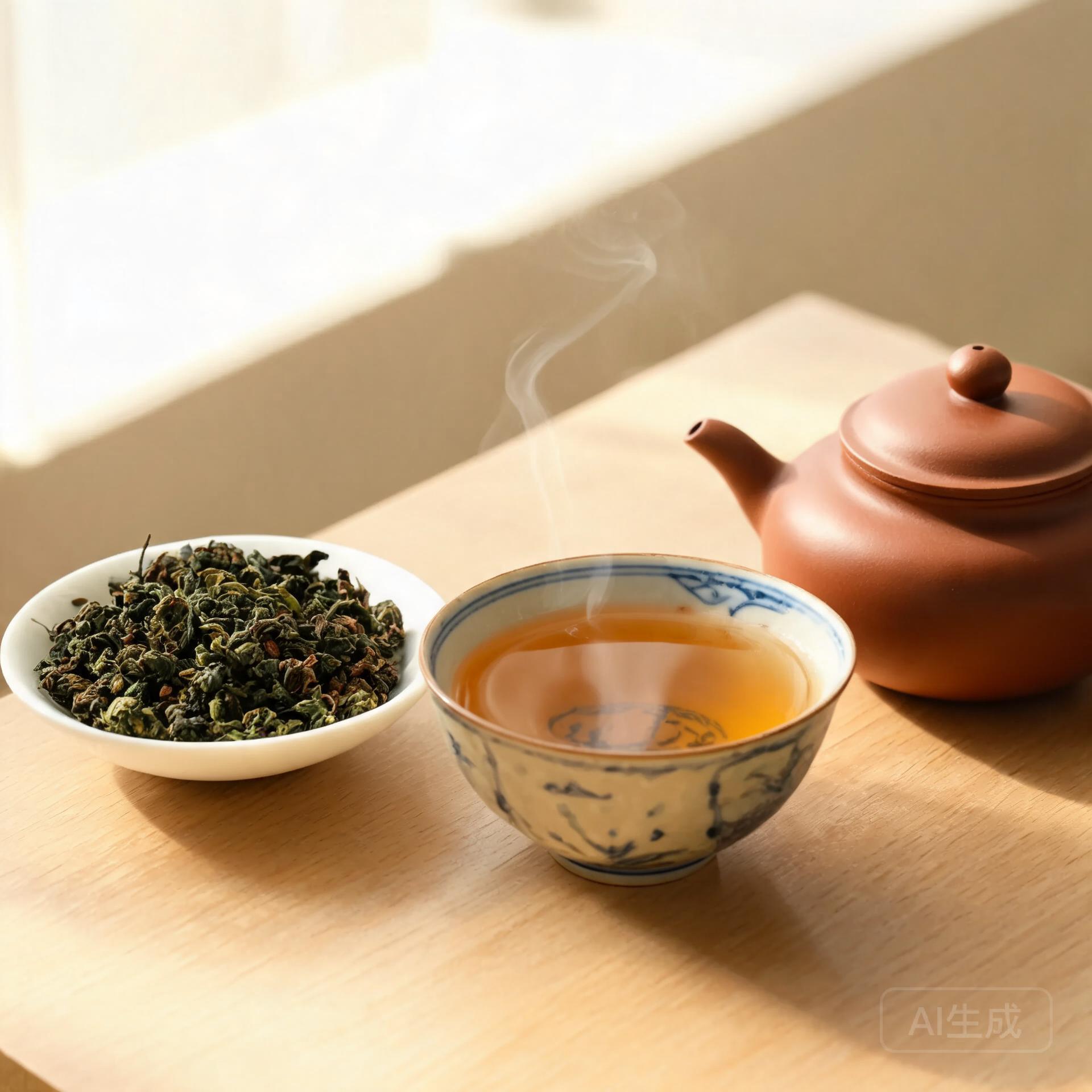
- Between meals, not with them
- The mid-afternoon cut-off
- Morning, and the empty stomach problem
- Evening, and the two exceptions
- Seasonal adjustments
- Why gongfu changes the arithmetic
- The meal question in Chinese practice
- Frequently asked questions
- When is the best time to drink oolong?
- Can I drink oolong before bed?
- Should I drink oolong with meals?
- Is oolong good on an empty stomach?
- Does oolong being neutral mean timing does not matter?
- How late can I drink oolong?
The best time to drink oolong is between meals, from mid-morning to mid-afternoon, with the last infusion at least six hours before sleep. The reason is not the tea’s nature, which is neutral, but its caffeine at 25 to 45 mg per infusion combined with the gongfu habit of drinking six or more infusions in a session. A single cup is easy to place; a two-hour session is not.
Oolong has an advantage over green and red tea on one point: being neutral, it does not push against the season or the body’s temperature the way the two extremes do. That makes the timing question almost entirely about caffeine and food, which is simpler than it is for the other categories.
Between meals, not with them
The traditional advice is to drink oolong between meals rather than during them, and there are two separate reasons. The first is iron: catechins bind iron in the gut, and a cup with a meal reduces absorption. Oolong has half the green tea catechin load, so the effect is smaller, but it is not zero.
The second is taste and digestion. A strong gongfu infusion alongside food overwhelms the food, and the astringency that makes oolong pleasant between meals makes it harsh against a rich dish. The Chinese convention of serving tea after rather than during a meal is partly about this.
The exception is dim sum, where tea is served throughout. That works because the tea is brewed weak and long, which dilutes both the astringency and the iron effect. The convention is not a rule against tea with food, it is a rule against strong tea with food.
The chart above is the default pattern. It is worth noting what it does not include: nothing before breakfast, because a strong infusion on an empty stomach is the most reliable way to feel unwell from oolong.
The mid-afternoon cut-off
The half-life of caffeine is five to six hours, which means a quarter of the dose is still circulating six hours later and an eighth after nine. For a single 30 mg infusion that is negligible. For a session totalling 150 mg it is not.
A practical cut-off is 2 pm for a long session and 4 pm for a single cup. That keeps the residual dose under about 40 mg at bedtime, which is the range where most people sleep normally. Anyone who is a slow metaboliser, and roughly half the population carries a variant that slows it, should move both times earlier.
The session structure is what makes oolong different from other teas. Six infusions over two hours is a normal gongfu pattern, and the caffeine accumulates across them rather than arriving at once. The curve is flatter than coffee but the total is comparable, which is why the cut-off has to account for the session rather than the cup.
Morning, and the empty stomach problem
Oolong is a reasonable morning tea because it is less astringent than green tea and less likely to cause the hollow feeling. But the empty stomach caution still applies, and it applies more to oolong than to a Western-style brewed tea because gongfu strength is higher.
The workable compromise is to eat first and drink second, or to make the first infusion weak and short. A thirty-second first steep at five grams per 120 ml is strong; a fifteen-second steep is not. The same leaf, a different dose.
There is also a traditional reason to prefer oolong in the morning that has nothing to do with caffeine. The spleen and stomach attribution makes it a digestive tea, and the tradition treats a warm bitter drink after food as supportive of the morning’s digestion. That is a claim about comfort rather than a measured effect.
Evening, and the two exceptions
Oolong is not an evening tea for most people. The caffeine load from a session is too high, and the tradition’s own warning against late tea applies without modification.
There are two exceptions worth naming. A single weak infusion at six in the evening, after an early dinner, delivers maybe 20 mg of caffeine and most people sleep fine. And a heavily roasted oolong, drunk weak, is sometimes recommended in the evening in Chinese practice on the grounds that the roast makes it gentler on the stomach. The caffeine is unchanged, so that advice works for digestion and not for sleep.
| Time | Suitable | Reason |
|---|---|---|
| On waking, before food | No | Strong infusion on an empty stomach causes jitter |
| After breakfast, 9 to 10 am | Yes, best | Food buffers, caffeine is useful |
| Midday, with lunch | Weak only | Catechins bind iron, strong tea overwhelms food |
| 2 to 4 pm | Yes | Last useful window for a session |
| After 4 pm | Single cup only | Residual caffeine reaches bedtime |
| Late evening | No | A session can total 150 mg |
Seasonal adjustments
Neutral nature means oolong does not need a seasonal schedule, which is one of its practical advantages. Green tea is traditionally a summer drink and red tea a winter one; oolong is drunk year-round.
The one seasonal variation worth making is strength. In hot humid weather a strong roasted oolong feels heavy, and a light Tieguanyin served cooler works better. In cold weather the same roasted oolong, served hot and strong, is what the tradition would recommend. The leaf does not change; the brew does.
- Between meals, not during them, unless the tea is weak.
- Last session by 2 pm, last single cup by 4 pm.
- Eat before the first infusion, never after.
- A long session totals more caffeine than a cup of coffee.
- Skip the evening session, keep at most one weak cup.
- Adjust strength by season, not the leaf.
Why gongfu changes the arithmetic
A Western steep puts two grams of leaf into a mug and leaves it there. A gongfu session puts seven grams into a small vessel and pours it off after twenty seconds, then repeats. The cup looks weaker, and the session is stronger. Six infusions of a seven gram leaf can extract more total caffeine than one four gram mug steep, and it arrives over two hours rather than twenty minutes.
This is why the timing advice for oolong cannot be copied from green tea. A green tea drinker who times the last cup by the mug is reasoning about a single dose. An oolong drinker is reasoning about a curve that keeps rising while the pot is still on the table. The relevant question is not when the last cup was but when the session ended.
The practical fix is to end the session rather than the cup. Stopping at the fourth infusion does more than switching to a weaker leaf, because the fifth and sixth infusions are where the cumulative dose crosses the threshold that affects sleep. A shorter session at the same strength is the cleaner adjustment.
The meal question in Chinese practice
Chinese practice separates tea from food more firmly than Western practice does. Tea is served before a meal to open the appetite or after it to settle the stomach, and the strong gongfu service that accompanies a banquet is deliberately brewed weak and long so that it can run all evening without becoming harsh.
The reason given is taste: a strong tea overwhelms delicate food and fights rich food. The reason a nutritionist would give is iron: the catechins in a strong infusion bind iron from the meal, and oolong at 80 to 150 mg per gram still carries enough to matter. Both point to the same arrangement, which is a weak tea alongside food and a strong one between meals.
Anyone with low ferritin should take the separation seriously rather than as etiquette. Two hours either side of a meal removes the interaction almost completely, because the iron has passed the absorption window by then. That is a larger effect than any choice of tea category.
There is a second reason to keep the session away from bedtime that has nothing to do with caffeine. Gongfu drinking is slow and deliberate, and a long session late at night tends to displace sleep rather than delay it. The ritual is part of what keeps people awake, and ending the pot at eight settles the question more effectively than counting milligrams.
For anyone who wants an evening tea, the workable option is a weak first infusion poured at six and finished by seven, with no second steep. That delivers perhaps twenty milligrams of caffeine and gives the drinker the warmth and the ritual without the sleep cost. It is a smaller tea, not a later one.
The seasonal habit is worth adding to the timing rule. A light oolong suits a warm afternoon better than a heavy roast does, and a roasted oolong suits a cold morning better than a light one. Neither changes the caffeine arithmetic, but both change how likely you are to overbrew the leaf to get the taste you want.
| Session | Leaf | Caffeine | Last cup |
|---|---|---|---|
| Single cup, weak | 3 g, 200 ml | 30 mg | 4 pm |
| Single cup, strong | 5 g, 150 ml | 55 mg | 2 pm |
| Short session, 3 infusions | 5 g, 120 ml | 75 mg | 3 pm |
| Full session, 6 infusions | 7 g, 120 ml | 150 mg | 2 pm |
| Evening weak cup | 2 g, 150 ml | 20 mg | 7 pm |
Frequently asked questions
When is the best time to drink oolong?
Mid-morning to mid-afternoon, between meals, with the last infusion six hours before sleep.
Can I drink oolong before bed?
A single weak cup is fine for most people. A full session is not, because it can total 150 mg of caffeine.
Should I drink oolong with meals?
Weak tea is fine. Strong gongfu tea with a meal reduces iron absorption and overwhelms the food.
Is oolong good on an empty stomach?
A weak short steep is fine. A strong first infusion is the most reliable way to feel unwell from oolong.
Does oolong being neutral mean timing does not matter?
No. Neutrality is about the traditional classification, not about caffeine.
How late can I drink oolong?
4 pm for a single cup, 2 pm for a session, earlier if you are a slow caffeine metaboliser.