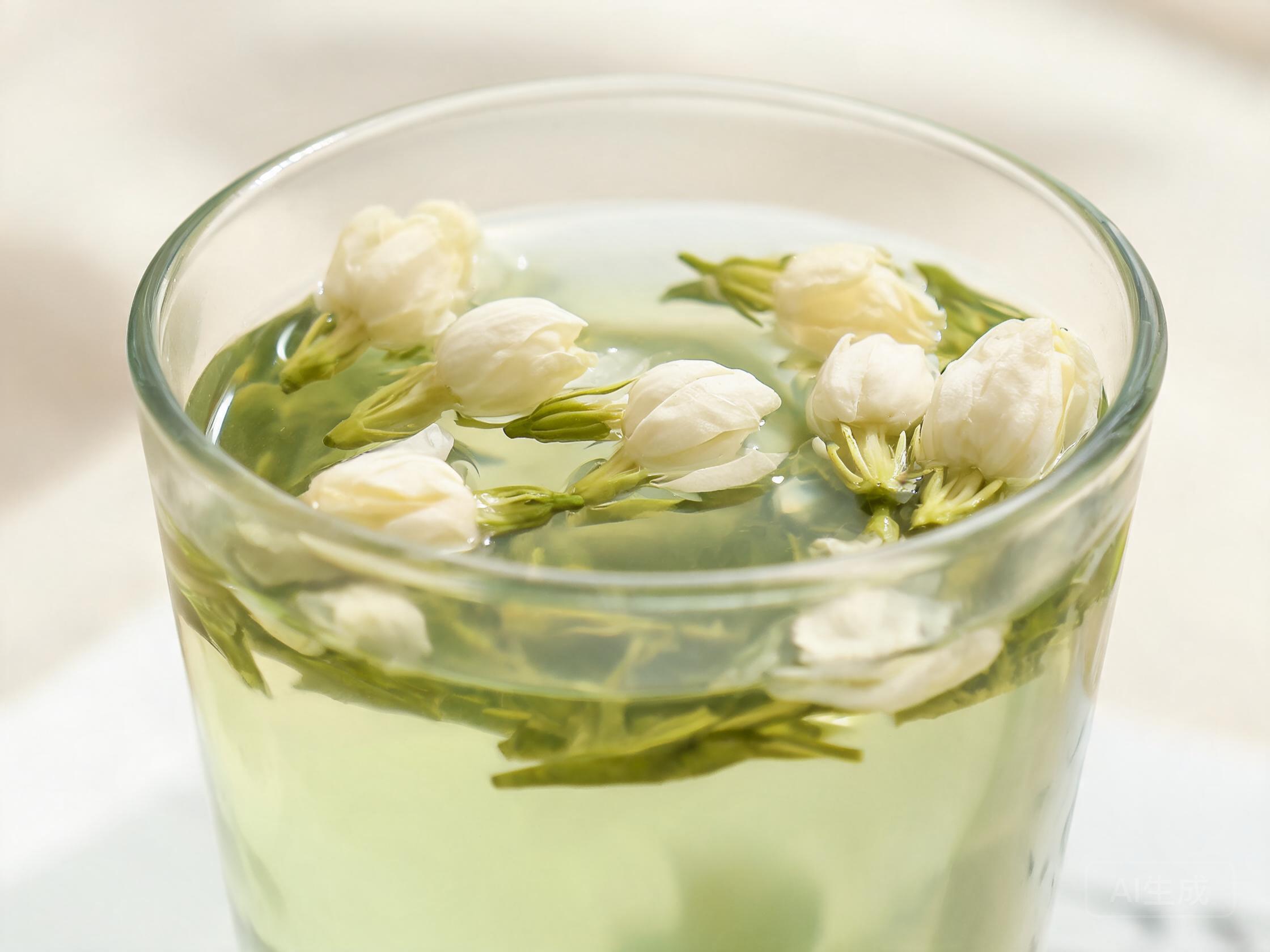
- What scenting actually does
- The three commercial methods
- Why jasmine dominates
- Where it sits in the six classes
- How to brew and judge it
- Why the base is baked, not fresh
- The scenting calendar
- How to read a jasmine label
- Frequently asked questions
- Is flower tea the same as herbal tea?
- What is xunzhi?
- How can I tell scented from flavored?
- Why is jasmine the most common?
- Are the petals in my tea a good sign?
- Does scenting reduce the catechins?
Flower tea in the Chinese sense is tea leaf that has absorbed the aroma of fresh flowers, a process called xunzhi or scenting. It is not a dried flower infusion. A jasmine tea is green tea leaf that spent several nights layered with fresh jasmine blossoms; a chamomile tea is dried flowers in hot water with no tea leaf at all. The two are sold on adjacent shelves in English-speaking countries and they are not the same kind of product.
The confusion is a translation problem. English uses flower tea for both, while Chinese distinguishes huacha, scented tea, from huacao cha, herbal flower infusion. One is a tea, the other is not a tea at all under the six-class system, because it contains no leaf from Camellia sinensis.
What scenting actually does
Fresh flowers release volatile aromatic compounds as they open. Tea leaf is porous and dry, and it adsorbs those compounds onto its surface and into its cell structure. Lay the two together in the right conditions and the leaf takes on the flower’s smell without any liquid ever touching it.
The leaf must be dry for this to work. A tea destined for scenting is dried to about four to five percent moisture, lower than a drinking tea, because water in the leaf blocks adsorption. That is why scented teas are made from a baked green base rather than from a delicate one.
The flower must be fresh and just opening. A jasmine blossom releases most of its volatiles in the first twelve hours after opening, and a flower that has already opened and faded has nothing left to give. The timing of the layering is therefore the whole craft.
The three commercial methods
| Method | What is used | Additive | Quality |
|---|---|---|---|
| Scenting, xunzhi | Fresh flowers, repeated | None | Highest |
| Blending, banhua | Dried petals mixed in | None, but petals remain | Low |
| Flavoring | Essential oil or synthetic | Yes, listed | Lowest |
Scenting is the only method that produces what the category means. It is slow, it uses large quantities of flowers, and it cannot be shortcut without losing the effect.
Blending is what most cheap jasmine tea is. Dried petals are stirred into the leaf so that the product looks floral, and the petals contribute almost no aroma because they dried before they could give it up.
Flavoring is an addition. A spray of jasmine oil gives an immediate and obvious smell that fades within one infusion, and the ingredient list will say flavoring if the product is labeled honestly.
Why jasmine dominates
China produces scented tea from at least a dozen flowers, and jasmine accounts for the overwhelming majority of it. The reason is agricultural rather than aesthetic: jasmine grows in the same southern provinces as tea, flowers reliably through the summer, and yields heavily.
The other flowers are seasonal and local. Osmanthus flowers for a few weeks in autumn, rose in late spring, white orchid in summer, pomelo blossom in a short window. Each makes a distinctive tea and none can be produced at jasmine’s scale.
That is why a Chinese tea shop will have one jasmine tea and a handful of the others, and why jasmine is the entry point for almost everyone.
- Flower tea means scented leaf, not a dried flower infusion.
- Scenting relies on dry leaf adsorbing fresh flower volatiles.
- The base is dried to 4 to 5 percent moisture before scenting.
- The flower must be just opening, not faded.
- Scenting, blending and flavoring are three different products.
- Jasmine dominates because it grows where tea grows and yields heavily.
Where it sits in the six classes
Scented tea is not one of the six classes. It is a reprocessed tea: one of the six used as a base, then treated. The class of the finished tea follows its base, so a jasmine green tea is chemically a green tea with added aroma.
That matters for how it should be described. A jasmine tea is not a seventh category alongside green and red; it is a green tea that went through an extra step. The same is true of osmanthus oolong and rose red tea.
It also means the chemistry of the base survives. A jasmine green tea carries 90 to 140 mg of catechins per gram, close to the unscented leaf, with a small loss from the repeated drying between scenting cycles.
How to brew and judge it
Use 85 to 90 Celsius, three grams per 150 millilitres, and two minutes. Boiling water drives off the volatiles that the whole process was designed to put there.
The aroma should come off across several infusions, strongest in the first two and fading after that. A tea that smells strongly in the first infusion and of nothing in the second was flavored rather than scented.
The dry leaf of a properly scented tea is even in color and slightly dull, with no visible petals. Petals in the tin are a sign of blending, not of quality.
A drinker judging a jasmine tea should therefore smell the empty cup after drinking. A scented tea leaves aroma in the cup; a flavored one leaves almost none.
Why the base is baked, not fresh
A scented tea’s base is dried harder than a drinking tea, and often baked rather than merely fired. Baking drives the moisture down to four or five percent, which is what makes the leaf receptive to aroma.
The trade-off is that the base’s own aroma is reduced. A jasmine tea does not taste of the green tea underneath it in the way an unscented green tea would, because the baking and the repeated redrying have flattened it.
That is why the base is chosen for neutrality rather than character. A delicate leaf would lose the qualities that justified its price, and a strongly flavoured one would compete with the flower.
Premium jasmine on a bud base is the exception, and it works because the bud’s sweetness survives the process and adds to the flower rather than fighting it.
The scenting calendar
Scenting is a summer activity in China because that is when jasmine flowers. The season runs from June to September in Fujian and from May to October in Guangxi, and it follows the flowering of the plant rather than any decision by the producer.
That means the year’s jasmine tea is made in a few months and sold over the following twelve. A tin bought in March was scented the previous summer, and its aroma has had months to fade.
A drinker who wants the freshest jasmine should buy in autumn, shortly after the season ends, rather than in spring when the stock is oldest.
How to read a jasmine label
Chinese jasmine tins usually carry a grade by cycle count, and sometimes a number written as a fraction or a series of stars. The count is the useful part; the stars are decoration.
The base is rarely stated. A tin that says jasmine and nothing else could be built on a commodity green tea or on a silver needle, and the price is the only clue.
A tin with visible petals is blended rather than scented, and the petals are there to be seen rather than to be smelled. This is the single most reliable visual check a buyer has.
None of these labels is regulated in the way a food label is, so a producer can put a cycle count on a tin without anyone verifying it. A buyer is relying on the producer’s honesty either way.
- Cycle count is the useful grade; stars are decoration.
- The base is rarely stated and the price is the only clue.
- Visible petals mean blended, not scented.
- No label is independently verified.
- Buy from a producer whose count you can trust.
- Smell the empty cup as the final test.
One more consequence of the process deserves a note. Because the base is baked hard before scenting and dried again after each cycle, a scented tea is more shelf stable than an unscented green tea of the same freshness. The aroma fades over a year, but the leaf itself does not go stale as quickly.
That makes scented tea a reasonable product for a casual drinker who will not finish a tin quickly, which is part of why it sells in volume. The trade-off is that the aroma is already declining from the day it is finished.
A drinker who wants the peak should buy soon after the season and finish the tin within six months, which is the opposite of how most jasmine tea is actually consumed.
Frequently asked questions
Is flower tea the same as herbal tea?
No. Flower tea is scented tea leaf. Herbal tea contains no Camellia sinensis at all.
What is xunzhi?
The Chinese scenting process, layering dry tea leaf with fresh flowers so the leaf adsorbs the aroma.
How can I tell scented from flavored?
Scented aroma fades across infusions and leaves scent in the empty cup. Flavored hits once and vanishes.
Why is jasmine the most common?
It grows in the tea provinces, flowers through the summer and yields heavily.
Are the petals in my tea a good sign?
No. Visible petals mean the tea was blended rather than scented.
Does scenting reduce the catechins?
Slightly. The repeated drying between cycles costs some, leaving 90 to 140 mg per gram.