- The arithmetic of a cycle
- The two producing regions
- What the base leaf contributes
- How to brew it and what to look for
- What the cycle count does not tell you
- How the price is built
- How the tea is graded in practice
- What the aroma actually contains
- Frequently asked questions
- What do scenting cycles mean?
- Which cycle count is good?
- Why does cycle count raise the price?
- Fuzhou or Hengxian?
- What tea is jasmine built on?
- Why are there petals in my tea?
Jasmine tea is graded mainly by how many times it was scented: three, five, seven or nine cycles, each using a fresh batch of flowers. A three-cycle tea is ordinary, a five-cycle tea is good, and a nine-cycle tea is rare and expensive. The cycle count is the single most useful number on the market, and it is almost never printed on the tin.
Each cycle means the leaf was layered with fresh jasmine, left overnight, separated from the spent flowers and dried again. Doing it more times puts more aroma in and costs more flowers, which is why the count drives the price.
The arithmetic of a cycle
The standard ratio is 40 to 100 kilograms of fresh flowers per 100 kilograms of tea leaf, per cycle, depending on the grade. A five-cycle tea at the higher ratio has used as much flower as leaf by weight.
Fresh jasmine loses most of its weight as it opens and fades, and the spent blossoms are discarded. So the flower cost is not the weight of what went in but the weight of what was bought and thrown away, which is why scenting is expensive even when jasmine is cheap.
A nine-cycle tea is therefore a product with a very high input cost and a small output. That is the whole explanation of its price, and it is worth knowing before assuming the price reflects a better leaf.
The two producing regions
| Region | Province | Season | Character |
|---|---|---|---|
| Fuzhou | Fujian | June to September | Traditional, complex, expensive |
| Hengxian | Guangxi | May to October | Largest volume, cleaner, cheaper |
| Qianwei | Sichuan | July to August | Small volume, high aroma |
| Jinhua | Zhejiang | Summer | Mostly for local blends |
Fuzhou is the historic center and the source of the classic style: a deep, round, slightly honeyed aroma that comes from long cycles and careful drying. The city’s jasmine gardens have shrunk as land was built over, so Fuzhou tea is now made largely with flowers trucked in from elsewhere.
Hengxian in Guangxi is the volume center and produces most of China’s jasmine. The style is brighter and cleaner, with less of the honeyed depth, and the price is lower.
A drinker comparing the two is comparing styles as much as quality. Fuzhou is deeper, Hengxian is fresher, and both are legitimate.
What the base leaf contributes
Jasmine tea is usually built on a baked green tea from Fujian or Guangxi, chosen because it is cheap, neutral and dry. A delicate leaf would be damaged by repeated scenting and drying, and a strongly flavored one would fight the flower.
Some premium jasmine is made on a silver needle or a white peony base. Those teas carry more of their own character into the cup and the jasmine sits on top of it rather than replacing it.
The base is rarely stated on a tin, which is a loss, because it changes the tea more than most buyers expect. A jasmine on a bud base tastes of jasmine and of the bud; one on a commodity base tastes of jasmine and of not much else.
- Cycle count, not grade name, is the useful measure.
- Each cycle uses 40 to 100 kg of fresh flowers per 100 kg of leaf.
- Fuzhou gives depth, Hengxian gives volume and freshness.
- The base is usually a baked green tea, chosen for neutrality.
- Premium versions use bud or white peony bases.
- Ask for the cycle count and the base.
How to brew it and what to look for
Use 85 to 90 Celsius, three grams per 150 millilitres, two minutes. The aroma is volatile and boiling water removes it.
A good jasmine tea gives its aroma across three or four infusions, strongest in the second. A three-cycle tea fades by the second; a seven-cycle tea is still perfuming the fourth.
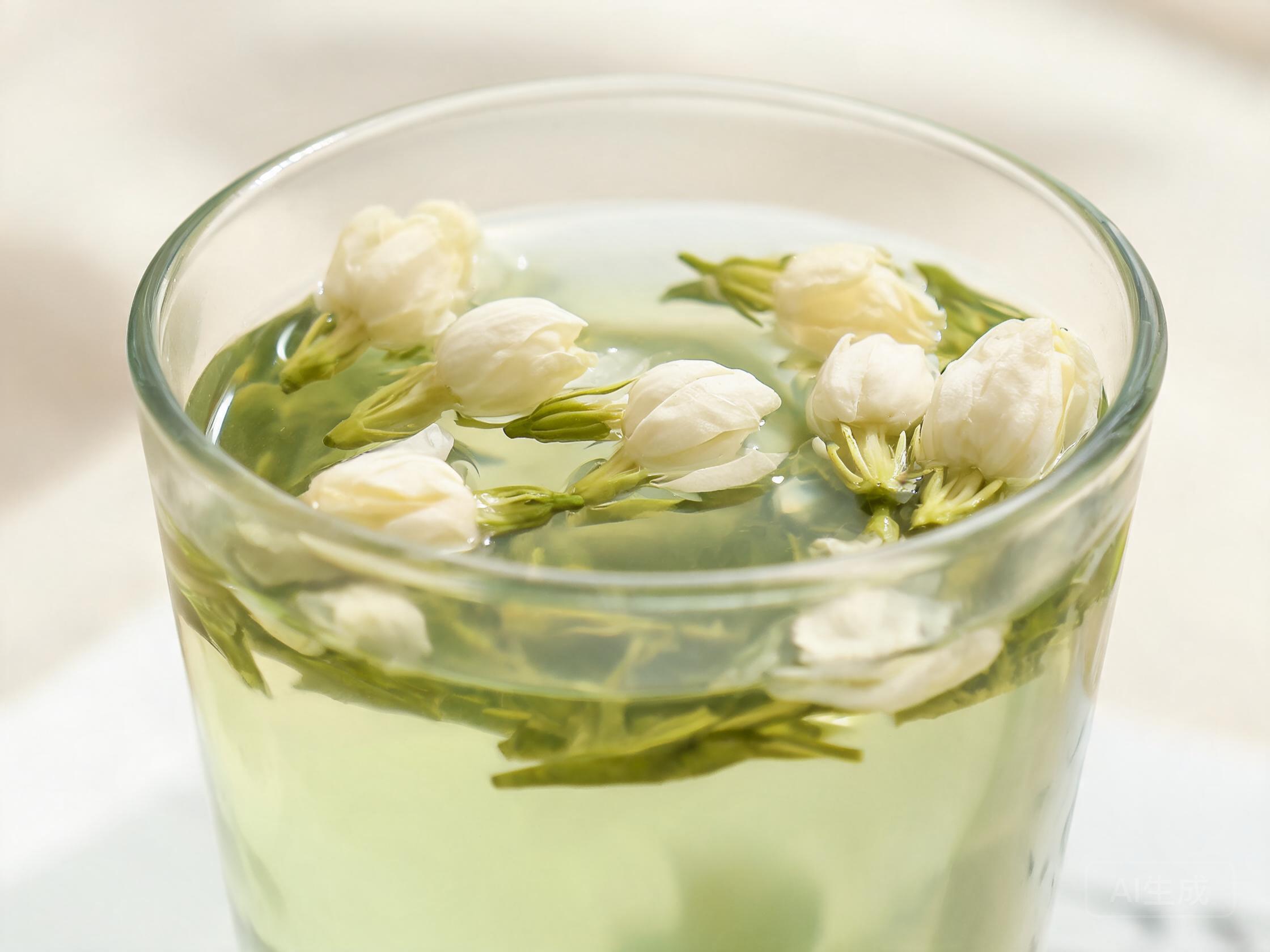
The dry leaf should be even and slightly dull with no petals. If there are petals, the tea was blended rather than scented, and the petals are decoration.
The empty cup is the final test. A well-scented tea leaves a clear jasmine smell in the cup after it is drunk; a flavored tea leaves a sweet chemical note or nothing.
What the cycle count does not tell you
A high cycle count is not a guarantee of quality on its own. A nine-cycle tea built on a poor base with stale flowers can be worse than a five-cycle tea made carefully.
The count measures input, not judgement. What it tells you is how much flower was used, and what it does not tell you is how well the process was run.
The other thing it does not tell you is the base. A nine-cycle tea on a commodity green base and a five-cycle tea on a silver needle base are not comparable, and the count alone would rank them the wrong way.
How the price is built
The cost of a jasmine tea is flowers, labour and drying, in that order. Flowers dominate at high cycle counts, which is why the price rises steeply rather than linearly with the count.
Labour is the night work: the layering, the turning, the sieving and the redrying all happen on a schedule set by the flower. A producer who misses the window loses the batch.
Drying is the hidden cost. Each cycle ends with a redry, and each redry uses fuel and risks over-drying the leaf. A nine-cycle tea has been dried nine extra times.
That is the whole arithmetic, and it explains why a cheap nine-cycle claim is usually false. The flower input alone would cost more than the tin is being sold for.
- Cycle count measures input, not judgement.
- A high count on a poor base can be worse than a low count done well.
- Flowers dominate the cost at high counts.
- Labour is the overnight schedule set by the flower.
- Each cycle ends with a redry that costs fuel and risk.
- A cheap nine-cycle claim is usually false.
A note on the difference between Fuzhou and Hengxian in the cup. A Fuzhou tea is deeper and slightly honeyed, with the aroma sitting in the body rather than on top. A Hengxian tea is brighter and cleaner, with the aroma more obviously floral and less integrated.
Neither is better, and the price difference is larger than the quality difference. A drinker paying a Fuzhou premium is buying a style and a history, which is a legitimate purchase and worth knowing about.
The Hengxian tea is also more consistent year to year, because the volume is larger and the blending more controlled. A Fuzhou tea varies more with the season and the flower supply.
One more point on storage. Jasmine aroma is volatile and it leaves the leaf slowly through the tin. A sealed tin holds it for about a year, and an opened tin loses a noticeable amount within three months.
The leaf itself keeps longer than the aroma, so an old jasmine tea is not spoiled, only less perfumed. A drinker who finds a two-year-old tin disappointing has not been sold a bad tea; they have been sold a tea past its peak.
Buying in small quantities and drinking promptly is the practical answer, and it costs nothing except a second trip to the shop.
How the tea is graded in practice
In the Chinese trade, jasmine is often described by a set of levels rather than by cycle count, and the two do not map exactly. A top level implies many cycles, a long season and a good base, and the phrase is applied by the producer rather than certified.
That means a buyer comparing two tins labelled at the same level may be comparing two very different teas. The cycle count is more concrete, which is why it is the better question to ask even when the answer is unofficial.
The most reliable signal remains the cup. A tea that perfumes four infusions and leaves scent in the empty cup was scented well, whatever the label says.
What the aroma actually contains
Jasmine’s characteristic volatiles include benzyl acetate, linalool, indole and methyl jasmonate. Benzyl acetate carries the sweet floral note, indole adds a slightly animal depth in small amounts, and linalool contributes the softer, tea-like part.
The balance between them changes as the flower opens and fades, which is why the timing of the layering changes the character of the tea and not only its strength.
A tea scented early in the flower’s opening is sweeter; one scented later is heavier and more indolic. Neither is a fault, and a producer working a large batch gets a blend of both.
Frequently asked questions
What do scenting cycles mean?
The number of times the leaf was layered with fresh jasmine, from three to nine.
Which cycle count is good?
Five is good, seven is premium, nine is rare. Three is ordinary.
Why does cycle count raise the price?
Each cycle uses a fresh batch of flowers, up to 100 kg per 100 kg of leaf.
Fuzhou or Hengxian?
Fuzhou is deeper and traditional, Hengxian is fresher and cheaper.
What tea is jasmine built on?
Usually a baked green tea. Premium versions use bud or white peony bases.
Why are there petals in my tea?
Because it was blended, not scented. Petals are a sign of a cheaper method.