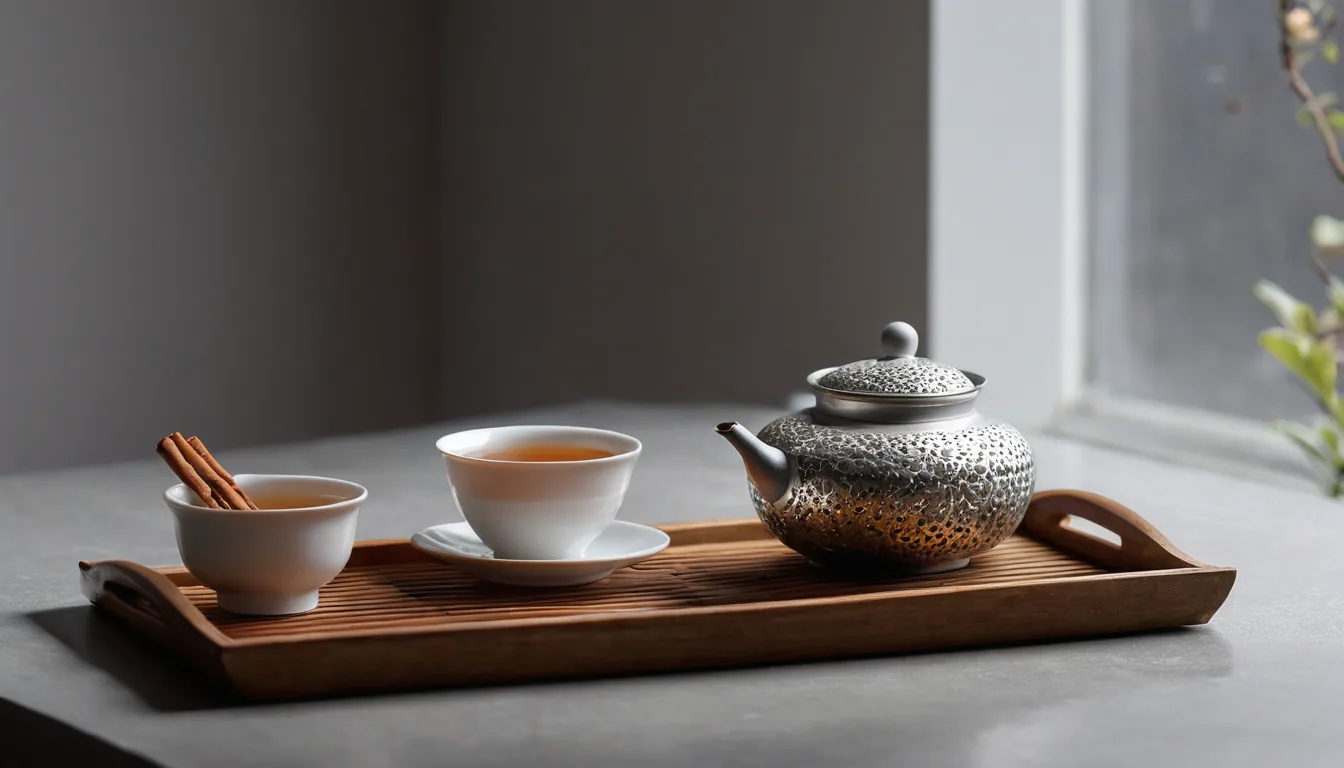
Tea packaging is a barrier system, not a bag. The material has to hold back oxygen, water vapour, light and odour long enough for the leaf inside to reach the cup. Foil, tin and paper sit at different points on that scale, and the right choice depends on the tea.
A green tea and a raw pu-erh do not want the same package. One is trying to stay fresh; the other is trying to change slowly. Treating both as “tea” is how a good leaf ends up flat or mouldy.
Foil is a barrier with a weakness
A foil laminate combines aluminium with plastic. The metal layer blocks light and slows oxygen and water vapour, while the plastic gives it strength and a heat seal. A sealed pouch with a good seal is the closest thing to a home-sized barrier.
The weakness is mechanical. Foil creases, and a crease can become a pinhole. A pouch that has been folded into a cupboard for months may look intact while passing air at the fold. Store it flat, keep the seal clean, and use the whole pouch within the window printed by the seller.
Tin is rigid, dark and not automatically airtight
A tin blocks light and resists crushing, which makes it a good outer container. Its performance depends on the seam and the lid gasket. A decorative tin with a loose lid is a display box, not a storage vessel.
Tin also has a smell risk. New metal and lining can carry an odour, and a damp tin can rust at the seam. Air the empty tin for a day, then smell it before filling. If the tin smells of metal or paint, line it with a food-grade pouch.
| Package | Blocks | Weak point | Best use |
|---|---|---|---|
| Foil laminate | Light, oxygen, most moisture | Creases, pinholes, seal | Green, white and lightly oxidised tea |
| Tin | Light, physical damage | Seam, gasket, odour | Short-term display and refill |
| Paper | Dust and handling | Air and moisture | Raw pu-erh and tea meant to breathe |
Paper is breathable by design
Paper wraps let air and moisture move. That is wrong for a green tea and right for a raw pu-erh that is meant to age. The paper is not a seal; it is a slow exchange membrane with the room.
A paper-wrapped cake still needs a stable room. It can pick up kitchen odours, perfume and smoke. Keep it away from spices and cleaning products, and do not put it in a sealed box with a wet sponge. The wrapper is part of the storage system, not a substitute for one.
The tea decides the package
Green and white teas lose aroma and colour when oxygen and light reach the leaf. A sealed foil pouch with a small oxygen absorber is a reasonable home solution. Remove the absorber when you open the pouch; it is not a reusable drying agent.
Oolong sits between the extremes. A lightly oxidised oolong behaves like green tea, while a roasted oolong is more stable. Raw pu-erh wants air; ripe pu-erh is more forgiving but still dislikes damp and odour. Match the package to the tea, not to the price of the tin.
- Buy the smallest package you will finish in four to six weeks after opening.
- Keep the leaf in its original sealed pouch until you open it.
- Press air out of a foil pouch, seal it, and store it flat.
- Keep a paper-wrapped cake in a stable room, away from light and smell.
Test the package, not the label
A simple test is to weigh a small amount before and after storage. A 5 g sample in a breathable paper bag can gain moisture in a humid week; the same sample in a sealed foil pouch should not. A kitchen scale with 0.1 g resolution is enough to see a change.
Smell the empty package first. A tin that smells of paint, a pouch that smells of solvent, or a paper wrapper that smells of perfume will transfer that note to the tea. No barrier can fix a contaminated package.
What to do next
Choose the barrier that matches the tea. Foil for fresh and delicate leaf, tin as a rigid outer shell with a sealed inner pouch, paper for raw pu-erh that is meant to age. Then control the room: heat, humidity and odour matter as much as the material.
For the storage side, see Tea Storage; for the brewing variable, see Tea Steeping Time.
What the seal is doing
A package is only as good as its seal. Heat-sealed foil fails at a crease or a crumb trapped in the seam. A tin fails at the gasket. A paper bag fails everywhere, which is why it is used for tea that is meant to breathe. Check the seal with a gentle squeeze: a pouch that hisses has a leak.
Headspace matters too. A pouch filled with 250 g of leaf and little air behaves differently from the same pouch half empty. If you buy a large bag, split it into smaller sealed portions instead of opening the same bag every morning.
How long the package buys you
At 25 °C and 60 per cent relative humidity, a sealed foil pouch is a short-term tool, not a time capsule. Green tea is best within six to twelve months of production; roasted oolong can hold longer; raw pu-erh is meant to change over years. The package slows the change, but it does not stop it.
A 0.5 mm pinhole is enough to move the odds. A pouch that has been folded repeatedly at the same line will fail there first. Store it flat, not crushed behind a stack of pans.
A test you can run
Weigh 5 g of leaf and put it in the package you plan to use. Weigh again after 48 hours in the same room. A change of 0.1 g or more in a small paper bag is a warning; a sealed foil pouch should be much closer to its starting weight. This is not a laboratory test, but it tells you whether the package is doing anything.
Smell the empty package before you trust it. A tin that smells of paint, a pouch that smells of solvent, or paper that smells of perfume will transfer that note to the leaf. No barrier can fix a contaminated package.
The practical choice
Foil for fresh leaf, tin as a rigid outer shell with a sealed inner pouch, paper for raw pu-erh that is meant to age. Then control the room. Heat, humidity and odour matter as much as the material, and a good package in a bad cupboard is still a bad result.
For the storage side, see Tea Storage; for the brewing variable, see Tea Steeping Time.
A packaging decision is easy to make at the shop and hard to judge at home. Keep a simple note on the first day you open a bag: the date, the smell, the colour of the leaf and the first cup. Repeat it after two weeks. If the aroma has moved from bright to flat, the package or the cupboard is the first suspect, not the tea. This takes less time than buying a replacement, and it gives you a record that is specific to your room rather than to a seller’s claim.
There is a simple rule for a household with more than one tea: do not store everything in the same container. A sealed foil pouch for the green tea, a paper wrap for the raw cake, and a small tin for the oolong you drink every week. The separation prevents one loud leaf from perfuming the rest, and it lets you open only the package you are actually using. A 250 g bag that is opened every day is exposed to the room far more often than a 50 g portion that stays sealed until its turn.
When a package fails, the failure is usually visible before it is tasted. The leaf may clump, the paper may show a dark tide mark, or the inside of the tin may carry a sharp smell. Those are reasons to stop using the package, not reasons to add a stronger scent or a longer brew. If the leaf itself has changed, no container can reverse it; the useful move is to finish the tea sooner and buy a smaller amount next time.
If you buy tea in a large bag, divide it the day it arrives. Work at the kitchen table, keep the empty pouches open for only a minute, and seal each portion before opening the next. A 250 g bag becomes five 50 g portions, each with less headspace and fewer openings. The extra ten minutes at the start saves months of stale mornings later.
A final check is to compare the same tea from two packages after a month. Keep one in the original foil and one in a decorative tin with a loose lid. Brew both at the same temperature and dose. If the tin sample is flatter, the tin is a display object, not storage. That result is more useful than any claim on the label.
The best package is the one you will actually reseal. A beautiful tin that is awkward to close stays open on the counter; a plain pouch with a zip seal goes back in the cupboard. Convenience is part of the barrier because a package that is left open is no barrier at all. Choose a container you can close with one hand while the kettle is heating.
None of this requires a laboratory. It requires a consistent habit: buy less, split the bag, seal it flat, keep it away from heat and smell, and taste the same tea again after two weeks. The package is a tool for protecting a product that is already changing. The habit is what makes the tool work.
A package also has a social life in the kitchen. It is moved, opened, sniffed and put back beside coffee, spices and cleaning supplies. Those neighbours matter. Tea is a dry leaf with a large surface area and no skin; it takes on the smell of whatever sits next to it. Give it a shelf away from the strongest odours, even if that shelf is less convenient.
Finally, do not confuse a pretty package with a protective one. The useful questions are simple: does it close, does it block light, does it keep air out, and does it smell neutral? If the answer is yes to those four, the material is doing its job. The rest is marketing.
Packaging is also a record-keeping problem. Write the opening date on the pouch, not just the harvest date on the label. A tea that has been open for three months is a different product from the same tea opened last week, even when both carry the same year. When you compare two teas, compare them at the same point after opening. If one has been in a tin for a season and the other arrived yesterday, the difference in the cup may have nothing to do with origin or craft. This is why a small piece of tape and a pencil are useful kitchen tools: they turn an impression into a date you can check. The same discipline applies to the container itself. A tin that was used for a scented tea will carry that scent into a green tea unless it is aired and lined. A paper wrapper that has absorbed kitchen moisture will not dry out just because the cake is moved to a cupboard. The package and the room are one system, and the note on the tape is the only part of that system that remembers what happened.