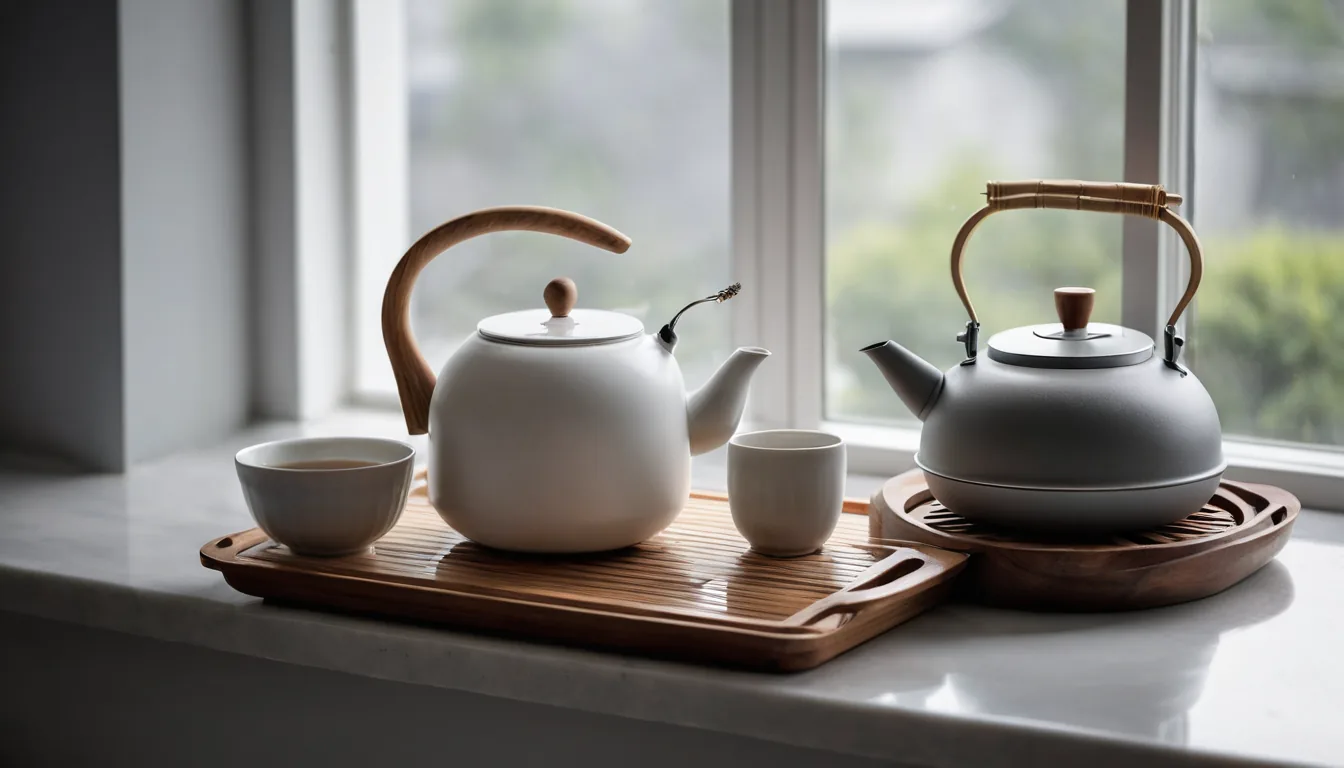
Speed is not the same as control
A 1,500 W electric kettle can bring 1 litre of water to a rolling boil in about four minutes. That is faster than most stovetops, but the switch usually cuts at the local boiling point. If you want 85 °C, you either wait or use a variable-temperature model. A stovetop kettle gives you a visible boil and a gradual fall in temperature after you lift it. That is useful for green tea, where the water should cool before it hits the leaf. The cost is attention: you have to stay in the kitchen.
Temperature control
A variable-temperature kettle is the most repeatable option for a household that brews several tea types. Set 80 °C for a delicate green, 90 °C for a white or light oolong, and 100 °C for a black tea or a rolled oolong. The numbers are starting points, not laws. A stovetop kettle with a probe thermometer gives the same information with more work. It also lets you see the water, which is useful when the kettle is old or the thermometer is uncertain. Neither method is inherently better; one is more convenient, the other more observable.
| Method | Strength | Weakness | Best for |
|---|---|---|---|
| Electric, fixed switch | Fast, simple | Boils to local point | Black tea, daily use |
| Electric, variable | Repeatable temperature | Cost, sensor drift | Green, white, oolong |
| Stovetop | Visible, gradual cooling | Needs attention | Slow sessions, larger pots |
Pour and weight
A full 1.7 litre kettle is heavy. A 0.8 litre kettle is easier to control at the end of a gongfu session. The spout matters too: a narrow gooseneck gives a thin stream, while a short spout can dump water into the gaiwan. For tea, a controlled pour is part of the recipe.
The material affects heat retention. Stainless steel loses heat faster than a thick ceramic pot; glass lets you see the water but loses heat quickly. None of these is a defect if you know what you are doing. Preheat the vessel and the difference shrinks.
- Fill only what you will use; a full kettle takes longer and pours heavier.
- Use a thermometer if the kettle has no temperature control.
- Let the water settle for 10–20 seconds after boiling before a green tea.
- Pour slowly; the stream should not splash the leaf.
What about induction and gas?
Induction is fast and precise, but the pot must be magnetic. Gas gives a visible flame and a gradual heat, but the handle can get hot and the boil is less consistent. Electric resistance is the most common because it is cheap and predictable. The tea does not care which heat source you use; it cares about the water temperature at the leaf.
If you use a stovetop kettle, do not leave it at a rolling boil for ten minutes. The water volume drops, the minerals concentrate, and the kettle can scale. Bring it to a boil, use it, and turn it off.
Cleaning and scale
Scale is the visible sign of hard water. A 0.5 mm layer on the element slows heating and can flake into the water. Descale with a food-safe acid according to the maker, then rinse twice. Do not use a metal scraper on a coated element. A stovetop kettle with a thin base can warp. A warped base heats unevenly and may not sit flat on an induction plate. Replace it rather than trying to bend it back. A kettle is a tool, not a repair project.
The practical choice
For most households, a variable-temperature electric kettle is the easiest way to get repeatable water. For a slow tea session, a stovetop kettle and a thermometer are more pleasant. The best choice is the one you will use consistently, not the one with the longest feature list. For temperatures by tea type, see Tea Water Temperature Chart; for the boiling-point variable, see Water Temperature: Boiling Point Varies. A thermostat is not a thermometer.
A kettle that says 85 °C may be accurate at the factory and drift after a year of scale. Check it once with a probe in a cup of water and compare. If the reading is 5 °C off, you can still use the kettle; just adjust the setting. The same applies to a stovetop: the dial is a guide, not a measurement.
Pour slowly from a height of about 10 cm. A fast pour agitates the leaf and adds air; a slow pour keeps the bed even. For a gaiwan, aim for the wall, not the center. For a teapot, fill through the spout only if the pot is designed for it; otherwise lift the lid and pour gently.
Two kettles are not a luxury if you brew green tea and black tea every day. A variable electric kettle for the delicate teas and a simple stovetop for the morning black tea is a practical split. It also reduces the number of times you reheat the same water, which is better for the kettle and for the cup.
Avoid keeping water hot for hours. A kettle on a keep-warm setting loses volume and concentrates minerals. If you need hot water through a session, use a thermos or a small insulated pot and refill it. The tea will taste fresher, and the kettle will scale less. The final choice is about attention. If you like to watch the water and adjust by eye, a stovetop is satisfying. If you want the same cup every morning before work, a variable electric kettle is easier. Neither makes better tea by itself; the person using it does.
Choose the kettle you can fill, pour and clean without thinking. That is the one that will still be on the counter in a year. A practical test is worth more than a shelf of claims. Keep the leaf, water and vessel the same, change one thing, and taste the result. That habit turns a vague preference into a repeatable cup. If the kettle has a plastic window, check it for clouding. A cloudy window is a sign of scale or heat damage, and it makes the water level hard to read.
Descale it or replace the kettle. A clear window is a small thing that makes the daily routine easier. A kettle with a flat base heats faster than a coiled element, but the difference is small in a 1 litre fill. The bigger factor is the vessel material and the lid fit. A loose lid lets heat escape and slows the boil. Close it. Do not fill above the maximum line. Water can spit from the spout or reach the handle.
The maximum line is a safety limit, not a target. For tea, a half-full kettle is often the better fill because it heats faster and pours more calmly. The cord length matters more than you think. A short cord forces the kettle to sit near the edge of the counter, where it can be knocked. A long cord can loop around a hot surface. Choose a spot where the cord is out of the way and the kettle is stable.