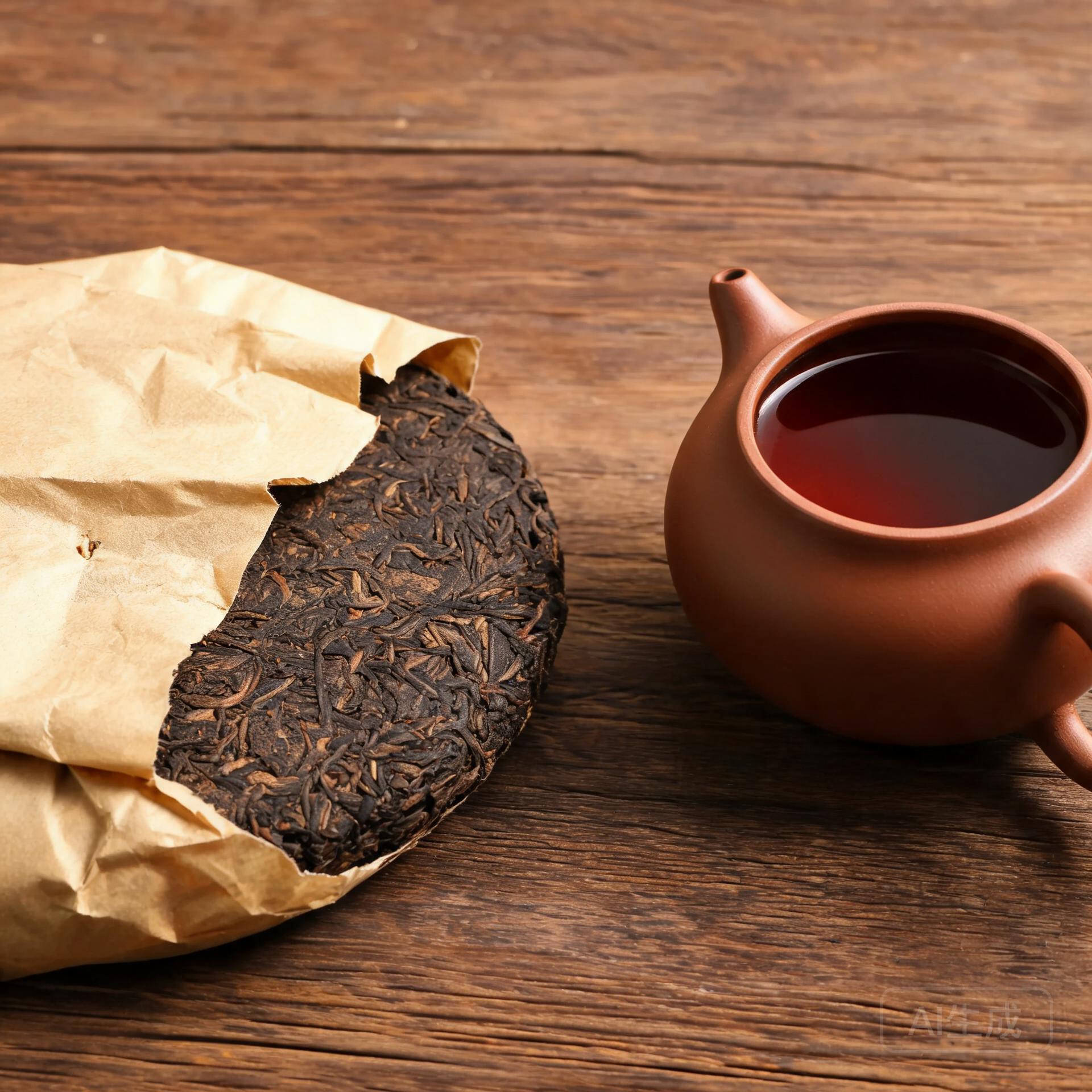
- The processing difference
- What each one tastes like
- Ageing: similar-looking cakes, different trajectories
- Price and what you are actually paying for
- Which should you start with?
- Frequently asked questions
- How to tell them apart without tasting
- Storage changes the answer over time
- A practical way to start
- Frequently asked questions
- Can you drink raw pu-erh when it is new?
- Is ripe pu-erh artificially aged tea?
- Which has more caffeine?
- Can you mix them?
- Does ripe pu-erh get better with age?
- Which is better for beginners, raw or ripe pu-erh?
- Can ripe pu-erh be aged like raw?
Raw pu-erh (sheng) is pressed leaf that ages on its own over years, starting bitter and green and gradually turning darker and smoother. Ripe pu-erh (shou) is leaf that has been pile-fermented in a controlled way before pressing, which mimics decades of ageing in a few weeks and produces a dark, earthy tea that is ready to drink now. Raw is a long project with real upside; ripe is a dependable everyday drink. Beginners are usually advised to start with ripe, because young raw pu-erh is genuinely difficult and gives a misleading first impression of the category.
The processing difference
Both start as maocha — sun-dried leaf from Yunnan’s large-leaf varietals. From there they part ways.
- Raw: maocha is steamed briefly, pressed into a cake and dried. Nothing else happens. The cake then ages in storage.
- Ripe: maocha is piled, moistened and covered, letting microbial fermentation heat the pile for several weeks. The result is then pressed.
The pile fermentation is a controlled version of what happens slowly in raw cakes. It was developed in the 1970s to meet demand for aged pu-erh without the twenty-year wait — a point worth remembering, because it means ripe pu-erh is deliberately engineered to imitate something that raw pu-erh does naturally.
What each one tastes like
| Raw (sheng) | Ripe (shou) | |
|---|---|---|
| Young (0–5 years) | Bitter, astringent, hay, green | Earthy, woody, smooth, cocoa |
| Mature (10–20 years) | Wood, camphor, dried fruit, cooling | Changes little; softer |
| Body | Can be thin or aggressive | Full, rounded, thick |
| Stomach impact | Young sheng can upset an empty stomach | Generally gentle |
| Faults to watch | Bitterness, harshness | Fishy note, mould, damp storage |
The fishy smell sometimes found in ripe pu-erh is a processing or storage fault, not a characteristic. Good ripe pu-erh smells of damp wood and earth, sometimes with cocoa or dried fruit. A fishy note is a reason to return the tea rather than to assume pu-erh is not for you.
Ageing: similar-looking cakes, different trajectories
This is the biggest practical difference. Raw pu-erh has genuine ageing potential. A well-stored young sheng will change substantially over one to two decades, and the market prices that change steeply.
Ripe pu-erh has already had its major transformation. It will soften and settle over a few years, but it will not become a different tea. Buying ripe pu-erh as an investment is a category error.
An important caveat on raw ageing: the direction of change depends on storage. Temperature, humidity and the absence of odours determine how a cake ages, and two cakes from the same production stored in different cities will diverge. Anyone who tells you exactly what a cake will taste like in fifteen years is speculating.
Price and what you are actually paying for
Ripe pu-erh prices are relatively stable. You are paying for leaf quality and processing skill, and the price range is manageable.
Raw pu-erh prices rise steeply with age, and this is where the category’s counterfeiting problem lives. A wrapper printed with an old year proves nothing. If a cake claiming to be from the 1990s is being sold cheaply, the price is the information you need.
Which should you start with?
Ripe, for almost everyone. It is drinkable immediately, forgiving to brew, cheap enough to experiment with, and it lets you learn what pu-erh tastes like without also learning how to judge a young sheng.
Buy raw when you have drunk enough pu-erh to have a view on the style, and when you are willing to store tea for years without touching it. Buying one young cake to taste occasionally while you drink ripe pu-erh is a reasonable middle path.
Frequently asked questions
How to tell them apart without tasting
Before you break a cake, there are reliable visual and packaging signals.
- Colour of the leaf on the cake face. Raw pu-erh is green-brown when young, darkening to deep brown with age. Ripe pu-erh is dark brown to nearly black from the day it is pressed.
- The wrapper text. Chinese wrappers state sheng (生) or shou (熟). If the wrapper only gives a year and a factory, ask.
- Smell. Ripe pu-erh smells of damp earth, wood and sometimes cocoa even through the wrapper. Young raw smells of hay and green leaf.
- Compression. There is no reliable difference; both are pressed similarly.
- Liquor colour. Ripe brews almost black-red immediately. Young raw brews pale gold and darkens with age.
The most common mistake is buying what looks like an old cake and finding it is a recent ripe one, or vice versa. Ripe pu-erh was developed in the 1970s, so a cake claiming to be from the 1960s cannot be ripe. That single fact rules out a whole category of mislabelled products.
Storage changes the answer over time
A comparison between raw and ripe is not fixed, because raw pu-erh moves. A young sheng is bitter and green; a twenty-year-old sheng has darkened, softened and developed notes closer to a ripe tea, though it rarely loses its distinct structure entirely.
Where the cake is stored matters as much as how long. Kunming’s dry, high-altitude climate ages tea slowly and keeps more of the original character. Guangzhou’s heat and humidity age it fast, producing the sweet, woody profile associated with old tea — and a higher risk of damp if the storage is careless.
The practical consequence is that “aged raw pu-erh” is not one thing. Two cakes of the same production, stored in different cities for a decade, will not taste related. Anyone selling age without describing storage is giving you half the information, and our guide to Yunnan tea regions explains why the geography matters so much to the outcome.
A practical way to start
Buy one ripe cake and one young raw cake from the same producer, and taste them side by side. That single comparison teaches more than any amount of reading: it shows you what fermentation does, what young sheng actually tastes like, and whether you are willing to wait for a raw cake to mature.
Total cost is modest if you buy small cakes or tuocha. Ripe is drinkable immediately, so it carries no risk; the raw cake becomes an experiment you check once a year. If you find you dislike young sheng entirely, you have learned that cheaply rather than by buying a case of it.
Frequently asked questions
Can you drink raw pu-erh when it is new?
Yes, but it is often bitter and hard on an empty stomach. Some drinkers enjoy the green, aggressive character of young sheng; others wait several years.
Is ripe pu-erh artificially aged tea?
It is fair to describe it that way, with a caveat. Pile fermentation is a real microbial process, not a chemical shortcut, but it is deliberately designed to produce in weeks what raw pu-erh produces in decades.
Which has more caffeine?
Both come from the same leaf and similar processing up to the fermentation stage. In practice caffeine delivered per session depends far more on how much leaf you use and how many infusions you drink.
Can you mix them?
You can, and some blended cakes exist, but the flavours do not complement each other well. Most drinkers keep the two separate.
Does ripe pu-erh get better with age?
It settles and softens over a few years, losing some of the sharp pile notes. It does not undergo the transformation that raw pu-erh does.
Which is better for beginners, raw or ripe pu-erh?
Ripe, almost always. It is drinkable immediately, forgiving to brew, and gives you a reference point for what pu-erh tastes like before you attempt to judge a young raw sheng that is deliberately bitter.
Can ripe pu-erh be aged like raw?
It can be stored and it will soften, but it has already had its major transformation and will not develop the way raw pu-erh does. Buying ripe pu-erh as an investment is a category error.