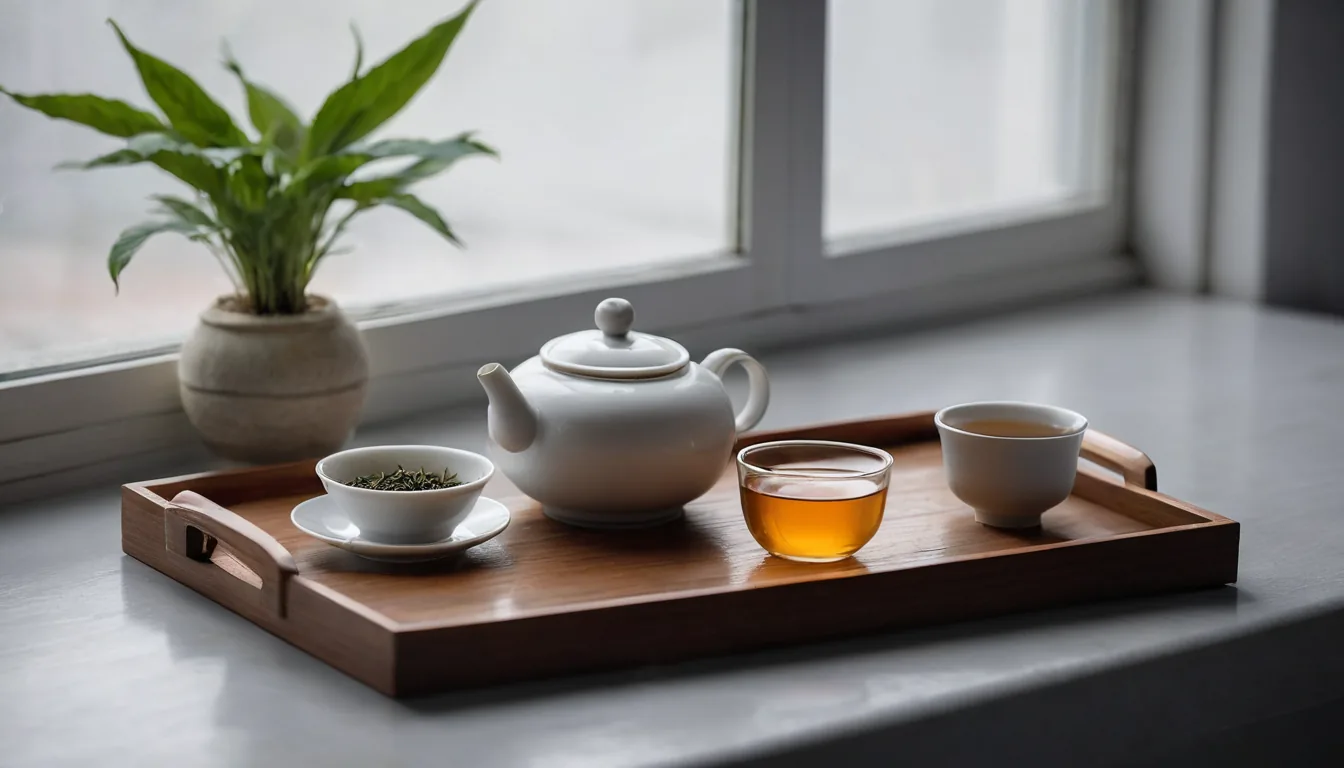
- Tea and Alcohol: What Tea Does Not Fix
- The habit and the claim behind it
- Why caffeine makes a hangover worse
- What tea can and cannot do
- The three mechanisms the folk remedy misses
- The diuretic story is more complicated than it sounds
- What to drink instead, and when
- The one real risk worth naming
- Why the myth survives
- Where tea does help
- What actually helps
- Does tea sober you up?
- Why does tea make a hangover worse?
- Is tea a diuretic?
- What should I drink after alcohol?
- Can I drink tea the morning after?
Tea and Alcohol: What Tea Does Not Fix
The habit and the claim behind it
Strong tea after a night of drinking is an old habit across much of East Asia, and in Chinese banquet custom tea is served after the wine has gone round several times, to clear the palate and soften the atmosphere. That is a piece of hospitality, not a medicine., and the claim attached to it is that tea clears the alcohol. The claim is wrong, and the mechanism is not subtle: the caffeine in the tea does the opposite of what the situation needs.
What actually clears alcohol is time and the liver. Ethanol is oxidised to acetaldehyde, then to acetate, and the rate is set by enzyme capacity rather than by anything you drink. No beverage speeds that up. The only thing a cup of tea can change is how the symptoms feel, and on the two symptoms that matter most it makes them worse.
Why caffeine makes a hangover worse
A hangover is not one thing. The known contributors include acetaldehyde accumulation, immune changes, a drop in available glucose, dehydration and metabolic acidosis. Acetaldehyde is the first breakdown product of ethanol and is roughly 10 to 30 times more toxic than ethanol itself, and it can stay elevated for hours after drinking stops. That is the chemistry you are waiting out.
Chinese tea literature adds a third concern that the English-language sources rarely mention. Both caffeine and alcohol stimulate the heart and speed circulation; taken together, especially as strong tea, the double stimulation can add to cardiac load and produce palpitations. Caffeine works against the recovery in two ways. It narrows blood vessels and raises blood pressure, and a hangover already involves a dilated, throbbing vascular state that a vasoconstrictor aggravates rather than relieves. It also slows rehydration, which is the one thing the body genuinely needs. A strong cup delivers 40 to 60 mg of caffeine, and its half-life runs from about 3 to 7 hours depending on the person, so the alertness arrives as a short window on top of a body that is still dehydrated on top of a body that is still dehydrated and still clearing acetaldehyde. The alertness is real and it is borrowed against a slightly worse hour afterwards.
What tea can and cannot do
| Claim | Reality | Mechanism |
|---|---|---|
| Tea clears alcohol | No | Only the liver clears it, at a fixed rate |
| Tea sobers you up | No | Alertness is not a lower blood alcohol level |
| Tea rehydrates | Poorly | Caffeine slows rehydration |
| Tea eases the headache | Usually worse | Caffeine raises blood pressure |
| Strong tea with alcohol | Avoid | Caffeine + alcohol double cardiac load |
The three mechanisms the folk remedy misses
The Chinese-language literature on drinking tea with alcohol names three mechanisms that explain why the habit is a poor remedy, and none of them is the diuretic story most people repeat.
The first is cardiac. Caffeine and alcohol both raise heart rate and speed circulation, and together they can produce palpitations in someone whose cardiovascular system is already under load from a night of drinking. The second involves theophylline, a second stimulant in tea. Its diuretic effect pushes incompletely broken-down acetaldehyde through the kidneys while the liver has not finished clearing it, which is a reason to be cautious rather than a route to detoxification.
The third is the simplest: tannic acid can combine with alcohol to form precipitates, which does nothing useful for digestion. Taken together they explain why the traditional advice is to keep the two apart rather than to use one against the other.
None of this makes tea dangerous in ordinary amounts. It is the strong cup taken specifically as a remedy, on a body already processing alcohol, that the advice is about.
The diuretic story is more complicated than it sounds
Part of the reason tea is thought to help is the belief that it flushes the alcohol out. That rests on caffeine being a diuretic, and the belief is only half right. Caffeine is a diuretic when taken in large amounts by someone not used to it; in habitual drinkers the effect largely disappears. A person who drinks tea every day is not going to flush anything out with another cup.
Even if it did, urine is not the route by which alcohol leaves the body. The great majority of ethanol is metabolised in the liver, and only a small fraction is excreted unchanged. Increasing urine output removes water and electrolytes, which is the opposite of what a dehydrated person needs. This is the point where the folk remedy inverts. A cup of tea after drinking adds a mild diuretic on top of alcohol’s own diuresis, in a body that is already short of water.
What to drink instead, and when
Warm water is the standard recommendation in the Chinese-language guidance too, and a sugary food alongside it is reasonable: sugar addresses the low blood glucose that contributes to feeling wretched, which tea does nothing for. Water is the answer, and it works better before bed than in the morning. Drinking 250 ml of water alongside alcohol, and again before sleeping, reduces the dehydration component rather than trying to correct it afterwards; a 250 ml glass between drinks and another before bed is the usual version of this advice. Electrolytes help if the drinking has been heavy, mostly because they replace what the diuresis removed.
Food matters more than most drinks. Alcohol metabolism depletes vitamins and electrolytes, and a meal with the drinking slows absorption and supplies some of what is lost. The traditional advice to eat before drinking is sound, and it is more effective than anything consumed the next morning. If you want tea anyway, the sensible version is weak, after water, brewed at 2 g per 200 ml rather than the 4 g the habit calls for, and not the strong cup the habit calls for. A light cup delivers a small caffeine dose, which is the thing that helps least and hurts most, and it does at least add fluid.
The one real risk worth naming
There is a version of this habit that is worse than a mild mistake. Using caffeine to push through the impairment of alcohol, rather than to ease a hangover, is genuinely dangerous. Being awake and feeling alert is not the same as being sober, and drinkers who feel sharpened by coffee or strong tea routinely misjudge their own impairment.
The effect is well known enough to have a name in the research literature, and the practical rule is simple: caffeine changes how drunk you feel, not how drunk you are. For anything that requires judgement, including driving, the only measure that counts is time and the amount drunk.
Why the myth survives
The habit outlives the evidence for a simple reason: a cup of hot tea in the morning feels like care. It is warm, it is ritual, and it gives a person something to do while the liver finishes its work. None of that is a chemical effect, and all of it is real to the drinker.
There is also a genuine grain of truth underneath the myth. Tea is mostly water, and a dehydrated body does need fluid. A weak cup delivers some. The problem is only that the caffeine in a strong cup works against the very thing the fluid is meant to fix, so the folk remedy contains its own contradiction. The honest summary is that tea is a pleasant thing to drink while a hangover passes, and a poor thing to rely on to make it pass faster. Those two statements are compatible, and separating them is the whole point of this page.
Where tea does help
None of this makes tea a bad drink, and there is a real place for it in a long evening. A cup between alcoholic drinks slows the pace, which reduces total intake, and it is a better alternative than another glass. That is a behavioural effect rather than a chemical one, and it is the most useful thing tea does in this context.
The next morning, the honest sequence is water first, food second, and tea only if you want it. If the cup is part of the ritual that makes the morning feel normal, that is a legitimate reason to drink it, as long as it is not being relied on to do something it cannot. The wider question of how much caffeine is in a cup, and how it varies with leaf and steep, is set out in caffeine in tea. The specific cautions that apply to some drinkers are covered in who should not drink green tea.
What actually helps
- Water before bed, not tea in the morning.
- Food with the drinking, which slows absorption.
- Time, because only the liver clears ethanol.
- Weak tea at most, and only after water.
Does tea sober you up?
No. Caffeine changes how alert you feel, not your blood alcohol level.
Why does tea make a hangover worse?
Caffeine narrows blood vessels, raises blood pressure and slows rehydration.
Is tea a diuretic?
Only in large doses for someone not used to it; the effect fades with regular drinking.
What should I drink after alcohol?
Water, ideally before sleeping rather than after waking.
Can I drink tea the morning after?
Yes, if you want it, but after water and not as a remedy.