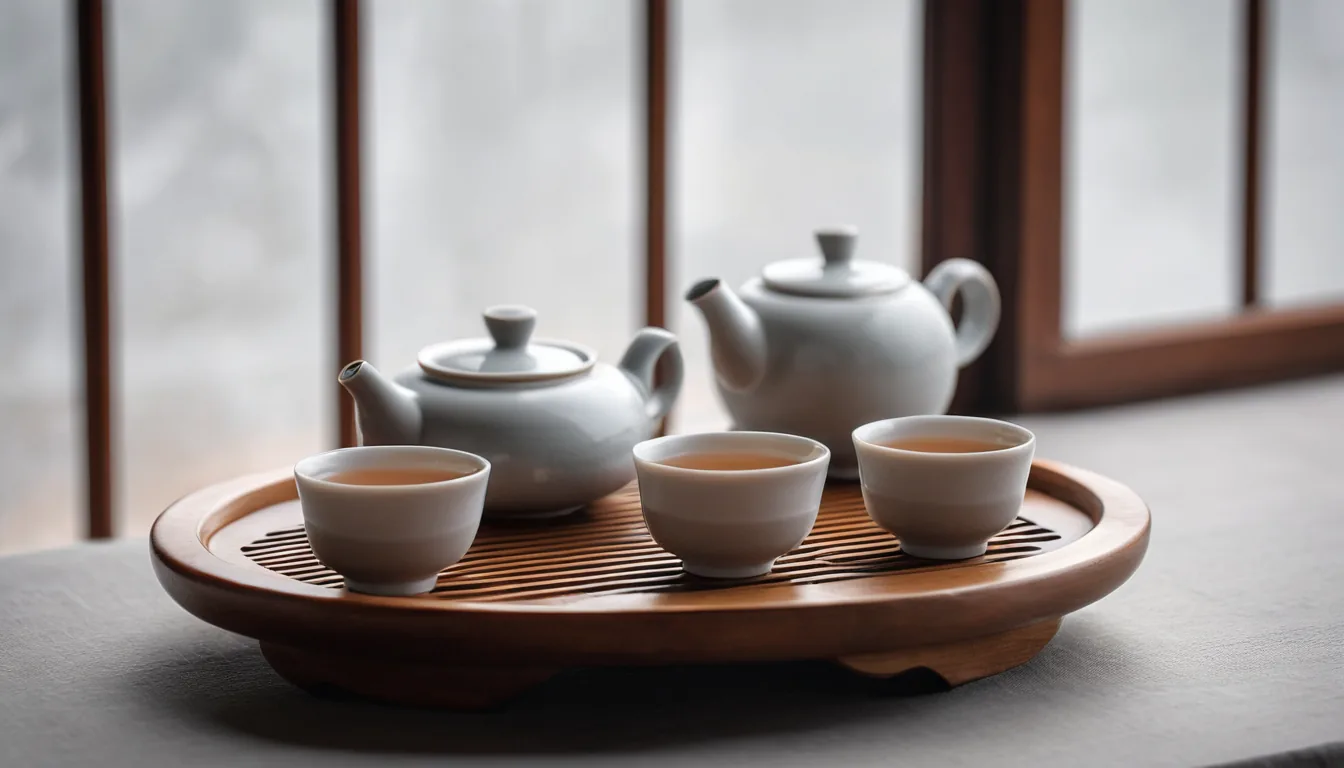
A tea tray is a work surface, a drain and a boundary. It catches the water you pour, keeps the cups in one place and tells you when the table is full. The best tray is the one that fits your table and your session. The material matters less than the drainage. A beautiful tray that pools water is a mess; a plain tray that drains is a tool.
Drainage and capacity
A gongfu session can pour 500 ml or more of water over the tray in an hour. A tray with a shallow reservoir overflows; a tray with a hidden chamber holds more. Check the capacity before the shape. A tray with a slatted top drains quickly but can leave leaf stuck between the slats. A tray with a flat top and a small drain is easier to wipe. Neither is universally better; match it to how much you spill.
Size and table fit
A tray that is too small forces the cups to the edge; a tray that is too large leaves no room for the kettle. Measure the table before buying. A 30 cm by 20 cm tray is enough for a gaiwan, two cups and a fairness pitcher; a 40 cm tray is better for a full set.
| Material | Strength | Weakness | Best for |
|---|---|---|---|
| Bamboo | Light, warm | Stains, dries slowly | Small sessions |
| Ceramic | Stable, easy clean | Heavy, can chip | Daily home use |
| Stone | Durable, cool | Very heavy | Permanent setup |
Material and heat
Bamboo is light and warm, but it absorbs water and can stain. Ceramic is stable and easy to wipe, but heavy. Stone is durable and cool, and it can crack if dropped. None of these changes the tea directly; they change how comfortable the session is. A metal tray conducts heat and can be noisy. A wooden tray can warp if it stays wet. If you use wood, dry it after every session and oil it occasionally.
- Measure the table and the kettle before buying.
- Check the reservoir capacity, not just the top.
- Choose a surface you can wipe in under a minute.
- Leave space for the kettle and the waste bowl.
Cleaning
Empty the reservoir after every session. A tray that holds water for days grows a biofilm and smells. Wipe the top with a clean cloth and dry the edges. Do not put a bamboo tray in a dishwasher. If the tray has a tube, check it for blockage. A slow drain is usually leaf, not design. Flush it with warm water and a soft brush.
The practical choice
For a small apartment, a bamboo tray with a removable reservoir is easy to store. For a permanent setup, ceramic or stone is more stable. For travel, a folding tray or a simple ceramic boat is enough. For the cups, see Types of Teacups; for brewing timing, see Tea Steeping Time. A tray with a removable top is easier to clean than a one-piece tray. Lift the top, rinse the reservoir, and dry both parts. If the top is fixed, use a soft brush around the drain and flush it with warm water. Think about the height of the tray. A tall tray raises the cups and changes the angle of the pour.
A low tray is easier to use at a dining table. The difference is small, but it matters over a long session. If you use a kettle at the table, leave a dry zone for it. A tray that covers the whole table leaves no place for the kettle, and a wet base is a safety problem. A tray is a boundary, not a tablecloth. A stone tray is heavy enough to stay put, but it can scratch a wooden table. Put a felt pad underneath. A bamboo tray is lighter and easier to move, but it needs drying. Match the material to the table, not to the photo.
For travel, a small ceramic boat or a folding tray is enough. It will not hold a full session, but it catches the drips and keeps the cups together. A travel tray should be light and easy to dry. A tray with a lip contains spills; a flat tray lets water run onto the table. For a first tray, choose a lip and a removable reservoir. The lip is more useful than the material. If you use a fairness pitcher, leave a lane for it. A tray that is packed with cups forces you to pour over the edge. A 5 cm empty strip at the front makes the session calmer.
A tray can be a sound board. Ceramic and stone are quiet; metal and thin wood amplify the clink of cups. If you brew early in the morning, a quiet tray is a kindness to the household. Do not buy a tray that is hard to lift when full. A full reservoir can weigh several kilograms. A tray with handles or a removable top is easier to empty without spilling. For a small table, a tray with a folding stand or a narrow footprint is better than a large board. Measure the space between the kettle and the edge; that is the real limit.
A practical note: change one variable at a time, keep the rest constant, and taste the result. A single comparison is worth more than a shelf of claims, and it is the only way to know what your own kitchen does.
The tray should make the session easier, not more formal. If you have to move three cups to reach the drain, the tray is too small. If you have to reach across the table to pour, it is too far. Put the tray where your hands already work.
A tray with a drain tube needs a container underneath. Check that the tube reaches the container and that the container is stable. A tube that drips onto the floor is worse than no tube at all.
A practical note: change one variable at a time, keep the rest constant, and taste the result. A single comparison is worth more than a shelf of claims, and it is the only way to know what your own kitchen does.
A tray is a small piece of furniture for a small ritual. Measure the space, choose a drain you can empty, and keep the surface dry. The best tray is the one that lets you forget the tray and pay attention to the tea.
If the tray is for a gift, choose one that is easy to clean and hard to tip. A heavy stone tray is beautiful and a poor gift for someone in a small flat. A bamboo tray with a removable top is lighter and more forgiving.
A good tool disappears into the routine. If you have to think about the tray or the pot more than the tea, the tool is taking up space that belongs to the leaf. Keep the routine short, keep the surface dry, and let the next session start without a repair job.
Choose a tray you can empty and dry.