- Why it is called snail spring
- Fruit trees over the bushes
- The five steps
- What it tastes like
- Brewing, with numbers
- Buying and storage
- Health, in proportion
- Frequently asked questions
- Is Biluochun the same as Pi Lo Chun?
- Why does the tea look cloudy?
- Do the fruit trees actually flavor the tea?
- Can I use boiling water?
- How many infusions should I expect?
- Is it picked before Qingming?
Biluochun is a green tea from the Dongting hills beside Lake Tai in Suzhou, Jiangsu, picked in late March as a bud with one opening leaf and rolled by hand into thin snail-like curls covered in white down. It grows under fruit trees rather than in open fields, and the resulting tea smells of peach and apricot as much as of tea. The firing runs from a hot wok down to a cool one in four temperature steps, and the whole process is finished within a few hours of picking.
Why it is called snail spring
The name describes the shape and the season: bi is the jade green of the leaf, luo is the spiral of a snail shell, and chun is spring. The older local name was xiasharenxiang, roughly frightens-people-fragrant, which is what pickers are said to have exclaimed when the leaf in their collecting cloth began to heat up and release its aroma on the walk down the hill.
The story attached to the modern name involves the Kangxi emperor, who visited the Lake Tai area on a southern tour in 1699 and is said to have found the local name unrefined. The tale is repeated in local records and in the national intangible heritage listing for the craft, which dates the renaming to that visit. Treat the anecdote as tradition rather than documented fact; the tea itself is what can be verified.
Fruit trees over the bushes
Dongting Mountain is not a mountain in the alpine sense. It is two low, hilly peninsulas and an island in Lake Tai, Dongshan and Xishan, where farmers have grown tea under peach, plum, apricot, loquat, chestnut, pomegranate and citrus for centuries. The trees shade the bushes, cut direct sun to dappled light, and slow leaf growth. The system is recognized as a Chinese agricultural heritage site, and it is the reason the tea smells the way it does.
Whether the fruit trees literally flavor the tea is disputed. What is not disputed is that shade and slow growth change the leaf: thinner cell walls, more amino acids, less catechin, and a finer aroma profile. A Biluochun grown in full sun from the same cultivar does not taste the same. The local cultivar is a sexually propagated population the growers call willow-leaf or bamboo-tip, chosen for its narrow, long leaf because a narrow leaf rolls into a tighter spiral.
The five steps
Picking starts around the spring equinox, earlier than most famous greens, and the standard is a bud with one opening leaf where the bud is longer than the leaf. A 500 g lot of first-grade tea takes roughly 65,000 buds. Because the leaf is picked so small, it must be sorted by hand before firing: workers pick out fish leaves, scale leaves, purple shoots and bits of stem, a step the local trade calls passing every leaf through the hall.
Firing happens in one wok at four descending temperatures. At 180 to 200 C the leaf is tossed and shaken for about five minutes to stop oxidation. The wok drops to roughly 75 C and the worker combines tossing with rolling and pressing, about ten minutes, until the leaf forms a strip. At about 55 C comes the step that defines the tea: the worker gathers the leaf into a ball in the palms, rolls it against the wok, then breaks it apart and shakes it out to cool. Repeat. This is what curls the leaf and lifts the down to the surface. Finally, at 40 to 50 C, the leaf is turned gently until nearly dry, then left spread in the residual heat to finish at under 7 percent moisture.
| Step | Temperature | Duration | Purpose |
|---|---|---|---|
| Kill-green | 180 to 200 C | about 5 minutes | Stop oxidation, remove raw smell |
| Shape | about 75 C | about 10 minutes | Form a strip, begin to tighten |
| Roll into balls | about 55 C | about 10 minutes | Curl the leaf, bring down to the surface |
| Dry | 40 to 50 C | until under 7 percent moisture | Fix aroma, finish the shape |
Published temperatures vary between workshops, and some accounts give the kill-green stage as high as 200 C with a shorter dwell. The direction of the curve is what matters: hot to cold, fast to slow, and no pause long enough for the leaf to stew.
What it tastes like
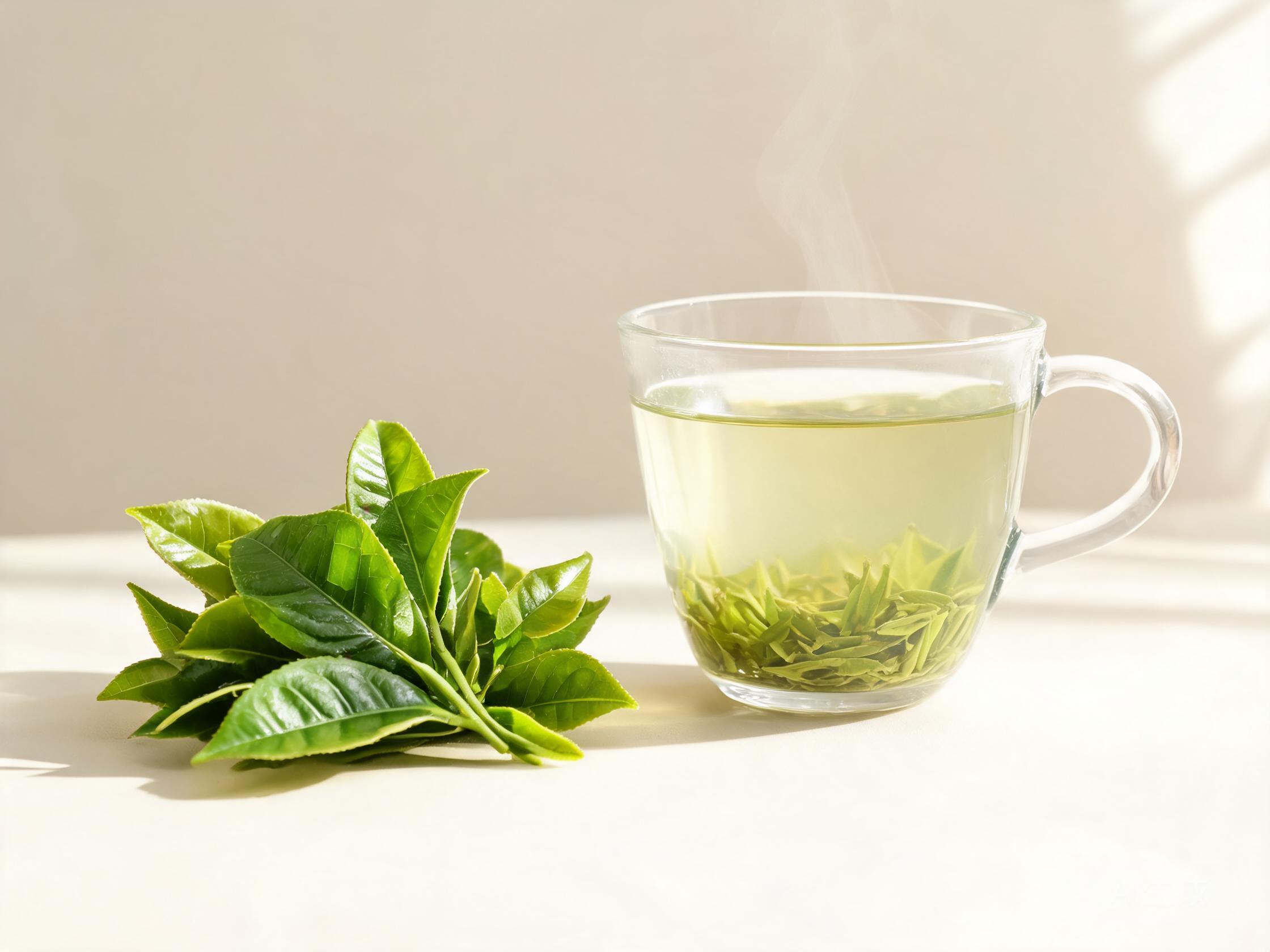
Dry leaf is a thin, tight spiral, silver-green under a dense white down, and it smells sweet and fruity before it is brewed. In the cup the liquor is pale yellow-green and slightly cloudy from the down, which is normal and not a defect. Aroma is peach, apricot and fresh hay. The taste is sweeter and rounder than Longjing, with less bite and a shorter finish.
The down matters to the experience. It carries aroma compounds and gives the liquor a faint silkiness, but it also means the tea goes flat faster than a down-free green. Biluochun is at its best in the first six months.
Brewing, with numbers
Use 3 g in a 150 ml glass, water at 75 to 80 C, and a first infusion of 60 to 75 seconds. Biluochun is more heat-sensitive than Longjing, because the leaf is smaller and thinner and the down insulates nothing. Boiling water turns it bitter in under a minute.
- 75 to 80 C, not 85. The leaf is finer than Longjing and scalds faster.
- 3 g per 150 ml. Down-rich tea looks like more leaf than it is, so weigh it once.
- Pour water first, then add leaf, so the down is not blasted off the surface.
- 60 to 75 seconds for the first infusion, 45 for the second. Two good cups is normal.
- Expect slight cloudiness. It comes from the down and is a sign of freshness, not of a dirty cup.
Buying and storage
Look for a tight, even spiral with no loose leaf, dense white down, and a smell of peach before brewing. Loose or open curls mean the rolling step was cut short. A dull grey surface or a smell of hay means the tea is old. Very dark green leaf with little down is usually from a different cultivar or a sun-grown garden, and it will not taste like Dongting tea.
Store it sealed, cold and dark. Because the leaf is small and dry, it absorbs moisture and odors quickly. A foil bag inside a tin in the refrigerator works for a few months; let it come to room temperature before opening, or condensation will ruin the leaf in a single morning. Do not keep it next to coffee or spices.
Health, in proportion
Biluochun contains catechins, caffeine and theanine like any green tea, and the shade-grown leaf may carry slightly more amino acid and less catechin than a sun-grown equivalent. That is a flavor fact, not a medical one. Studies link green tea consumption with various outcomes, but no tea has been shown to prevent or cure disease. If caffeine affects your sleep, stop by mid-afternoon.
Frequently asked questions
Is Biluochun the same as Pi Lo Chun?
Yes. Pi Lo Chun is an older romanization of the same name. You will also see Bi Luo Chun with spaces.
Why does the tea look cloudy?
The white down on the leaf suspends in the water. It is normal for high-grade Biluochun and is not a sign of poor quality or of dust.
Do the fruit trees actually flavor the tea?
There is no good evidence that fruit aroma passes from the trees into the leaf. What the trees do is shade the bushes and slow growth, which changes the leaf chemistry. The peach note comes from volatile compounds the leaf makes, not from the orchard.
Can I use boiling water?
You can, but the tea will turn bitter within a minute and lose the fruit aroma. Use 75 to 80 C.
How many infusions should I expect?
Two reliable ones, sometimes a thin third. The leaf is small and extracts fast.
Is it picked before Qingming?
The earliest pick usually starts around the spring equinox, which is earlier than Qingming. That early start is one reason the tea commands a high price.